First published in Russian in 1866, "The Gambler", by Fyodor Dostoyevsky, is a gripping narrative of the dangers of gambling. As was common with Dostoyevsky's other writings, he draws upon his own life in a semi-autobiographical way. Dostoyevksy himself suffered from a compulsion to gambling and had to complete "The Gambler" under a strict deadline to pay off his own debts. These first-hand experiences bring a depth of realism to the novel and to his portrayal of the main character, Alexei Ivanovitch, a young man who is working as a tutor to a Russian family living in a German hotel. This…mehr
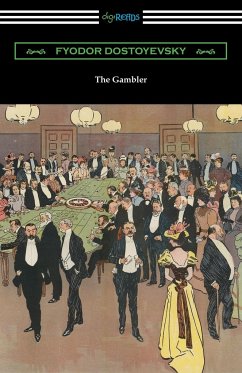
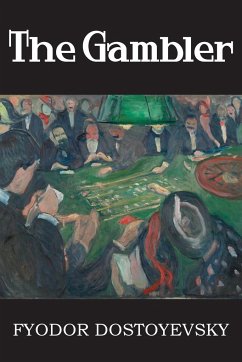
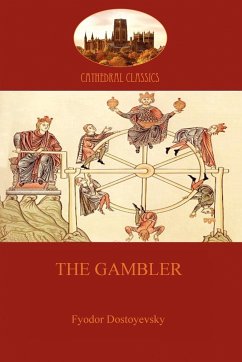
First published in Russian in 1866, "The Gambler", by Fyodor Dostoyevsky, is a gripping narrative of the dangers of gambling. As was common with Dostoyevsky's other writings, he draws upon his own life in a semi-autobiographical way. Dostoyevksy himself suffered from a compulsion to gambling and had to complete "The Gambler" under a strict deadline to pay off his own debts. These first-hand experiences bring a depth of realism to the novel and to his portrayal of the main character, Alexei Ivanovitch, a young man who is working as a tutor to a Russian family living in a German hotel. This wealthy family has money troubles of their own and as a result of his association with them and their reckless attitude towards money, Alexei becomes addicted to the game of roulette. Alexei wins and loses vast sums of money in his pursuit of love, wealth, and acceptance by the aristocracy that he works for. Yet, like his winnings, these relationships are transitory, superficial, and ultimately sacrificed for his addiction. "The Gambler" is an insightful look at the compulsive nature of the gambling addict and the tragic consequences of such an addiction. This edition follows the translation of C. J. Hogarth and is printed on premium acid-free paper.
Fyodor Mikhailovich Dostoyevsky (1821-1881) is one of the towering figures of world literature. His novels probe the depths of human psychology, explore the existential struggle between faith and nihilism, and confront the political and spiritual crises of 19th-century Russia.Born in Moscow to a stern army doctor and a devout, gentle mother, Dostoyevsky grew up surrounded by both suffering and literature. The death of his mother in 1837 and his father's violent demise two years later deeply affected him. Initially trained as a military engineer, Dostoyevsky soon abandoned this path for writing. His first novel, Poor Folk (1846), was acclaimed as a new voice of social compassion.In 1849, he was arrested for associating with the Petrashevsky Circle, a group of reformist intellectuals. After a mock execution, his sentence was commuted to hard labor in Siberia-a searing experience that reshaped his worldview, deepened his Christian faith, and gave him firsthand insight into human suffering and resilience. He recounted this ordeal in The House of the Dead.Returning from exile, Dostoyevsky faced financial and emotional turmoil. He lost his first wife and brother in 1864, struggled with gambling and epilepsy, but also produced some of his most powerful works: Notes from Underground, Crime and Punishment, The Idiot, and Demons. His marriage to Anna Grigoryevna Snitkina in 1867 brought stability; she managed his debts and supported his creative work.Dostoyevsky's final masterpiece, The Brothers Karamazov (1880), is a philosophical epic exploring free will, morality, and faith, culminating in the famous "Grand Inquisitor" parable. He died in 1881 in St. Petersburg, his funeral drawing a massive crowd.Dostoyevsky's legacy endures across disciplines-literature, theology, psychology, and philosophy. He is a central influence on existentialists, psychoanalysts, and generations of readers seeking to understand the human soul.
Es gelten unsere Allgemeinen Geschäftsbedingungen: www.buecher.de/agb
Impressum
www.buecher.de ist ein Internetauftritt der buecher.de internetstores GmbH
Geschäftsführung: Monica Sawhney | Roland Kölbl | Günter Hilger
Sitz der Gesellschaft: Batheyer Straße 115 - 117, 58099 Hagen
Postanschrift: Bürgermeister-Wegele-Str. 12, 86167 Augsburg
Amtsgericht Hagen HRB 13257
Steuernummer: 321/5800/1497
USt-IdNr: DE450055826