This book assesses Iran's role in contemporary geopolitics. In particular, it examines three main intertwining circles: Iran's development and political challenges, its relationships with neighbouring countries, as well as its relations with the major global powers - China, the European Union, Russia, and the United States. With contributions from over 20 authors, the book spans such critical aspects of contemporary geopolitics as modern history, natural resources, the economy, the social-political context, and strategic thinking. Particular focus is placed on Iran's relations with its…mehr
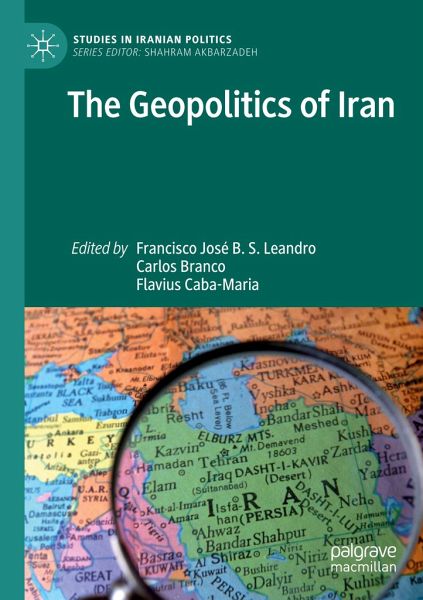
This book assesses Iran's role in contemporary geopolitics. In particular, it examines three main intertwining circles: Iran's development and political challenges, its relationships with neighbouring countries, as well as its relations with the major global powers - China, the European Union, Russia, and the United States.
With contributions from over 20 authors, the book spans such critical aspects of contemporary geopolitics as modern history, natural resources, the economy, the social-political context, and strategic thinking. Particular focus is placed on Iran's relations with its neighbours - Afghanistan, Iraq, Israel, Pakistan, and the Persian Gulf States. Furthermore, the book offers both a bilateral and multilateral dimension on how nuclear sanctions imposed on Iran have impacted its strategic planning, from the economic and military perspectives.
Francisco Leandro received a Ph.D. in political science and international relations from the Catholic University of Portugal (2010). He is currently Associate Professor and Assistant-Dean of the Institute for Research on Portuguese-Speaking Countries at the City University of Macau, China. His most recent books include Steps of Greatness: The Geopolitics of OBOR (2018), The Belt and Road Initiative: An Old Archetype of a New Development Model (2020, Palgrave MacMillan). He is a member of the OBSERVARE Lisbon, Portugal. Carlos Branco is a retired Major General of the Portuguese Army. He was Director of the War College Security and Defense Research Centre, Portugal. He is currently a researcher with the Portuguese Institute of International Relations, and an associate researcher with the National Defense Institute. His most recent book is From the End of the Cold War to Trump and COVID-19: Betrayed Promises of the Liberal Order (2020, Edições Colibri). Flavius Caba-Maria is President of the think tank, the Middle East Political and Economic Institute (MEPEI) in Bucharest, Romania. He has organised numerous international conferences, summer schools, and international seminars, through which current subjects and the main issues of the Middle East and its impact on Europe and relations with China have been discussed and debated.
Inhaltsangabe
Part I - Framing the Debate.- Chapter 1: Neighbours and Rivals: Iran and Great Power Diplomacy.- Chapter 2: The Evolution of Iran's Foreign Policy: International Balancing Act.- Chapter 3: Outlays of Iran's hegemonic-hybridized political system.- Chapter 4: Beating the (White) House: How a "Rogue" Iran Broke Free from the "Axis of Evil" and Became an Antifragile State.- Chapter 5: The International Financial Institutions: An Ajar Door to the External Financing of Iran.- Part II - Iran and the Great or Major Powers.- Chapter 6: The U.S. Factor in Iran's Geostrategic and Foreign Policy Calculations .- Chapter 7: Iran's Understanding of Strategic Stability - In the Light of Relations with the U.S. in the Middle East.- Chapter 8: Controversial Efficiency? The Experience of the U.S. Sanctions Against Iran.- Chapter 9: Iran-China Relations: A Game Changer in the Eastern World.- Chapter 10: Iran and Russia Relations: Conceptions of Cooperations.- Chapter 11: Iran relations:Deciphering the Limits of Strategic Engagement.- Chapter 12: Iran and the EU: The Role of Geostrategic Factors in the Post-JCPOA Era.- Part III - Iran and Neighbourhood.- Chapter 13: Iran-UAE Relations and Disputes Over the Sovereignty of Abu-Musa and Tunbs.- Chapter 14: Shia Geopolitics or Religious Tourism? Political Convergence of Iran and Iraq in the Light of Arbaeen Pilgrimage.- Chapter 15: De-Coding Fabric of Iran-Israeli Hostility in the Regional Context.- Chapter 16: Iran and Saudi Arabia: A Realpolitik?.- Chapter 17: Iran's National Security and Afghanistan Politics.- Chapter 18: Not All Plain Sailing: The Highs and Lows of Iran's Scramble for the Horn of Africa.- Chapter 19: Erzsébet N. RÓZSA - Iran-India Relations Before and After the U.S. Withdrawal from the Nuclear Deal and the Consequent Sanctions.- Chapter 20: New Development of Turkey-Iran Relations from the Perspective of Eurasianism.- Chapter 21: The Impact of the Nagorno-Karabakh Conflict on the Middle East Region:Iran's Policy of Strategic Retreat and the Dangers of a New Geopolitical Game in the Caucasus
Part I - Framing the Debate.- Chapter 1: Neighbours and Rivals: Iran and Great Power Diplomacy.- Chapter 2: The Evolution of Iran's Foreign Policy: International Balancing Act.- Chapter 3: Outlays of Iran's hegemonic-hybridized political system.- Chapter 4: Beating the (White) House: How a "Rogue" Iran Broke Free from the "Axis of Evil" and Became an Antifragile State.- Chapter 5: The International Financial Institutions: An Ajar Door to the External Financing of Iran.- Part II - Iran and the Great or Major Powers.- Chapter 6: The U.S. Factor in Iran's Geostrategic and Foreign Policy Calculations .- Chapter 7: Iran's Understanding of Strategic Stability - In the Light of Relations with the U.S. in the Middle East.- Chapter 8: Controversial Efficiency? The Experience of the U.S. Sanctions Against Iran.- Chapter 9: Iran-China Relations: A Game Changer in the Eastern World.- Chapter 10: Iran and Russia Relations: Conceptions of Cooperations.- Chapter 11: Iran relations:Deciphering the Limits of Strategic Engagement.- Chapter 12: Iran and the EU: The Role of Geostrategic Factors in the Post-JCPOA Era.- Part III - Iran and Neighbourhood.- Chapter 13: Iran-UAE Relations and Disputes Over the Sovereignty of Abu-Musa and Tunbs.- Chapter 14: Shia Geopolitics or Religious Tourism? Political Convergence of Iran and Iraq in the Light of Arbaeen Pilgrimage.- Chapter 15: De-Coding Fabric of Iran-Israeli Hostility in the Regional Context.- Chapter 16: Iran and Saudi Arabia: A Realpolitik?.- Chapter 17: Iran's National Security and Afghanistan Politics.- Chapter 18: Not All Plain Sailing: The Highs and Lows of Iran's Scramble for the Horn of Africa.- Chapter 19: Erzsébet N. RÓZSA - Iran-India Relations Before and After the U.S. Withdrawal from the Nuclear Deal and the Consequent Sanctions.- Chapter 20: New Development of Turkey-Iran Relations from the Perspective of Eurasianism.- Chapter 21: The Impact of the Nagorno-Karabakh Conflict on the Middle East Region:Iran's Policy of Strategic Retreat and the Dangers of a New Geopolitical Game in the Caucasus
Es gelten unsere Allgemeinen Geschäftsbedingungen: www.buecher.de/agb
Impressum
www.buecher.de ist ein Internetauftritt der buecher.de internetstores GmbH
Geschäftsführung: Monica Sawhney | Roland Kölbl | Günter Hilger
Sitz der Gesellschaft: Batheyer Straße 115 - 117, 58099 Hagen
Postanschrift: Bürgermeister-Wegele-Str. 12, 86167 Augsburg
Amtsgericht Hagen HRB 13257
Steuernummer: 321/5800/1497
USt-IdNr: DE450055826