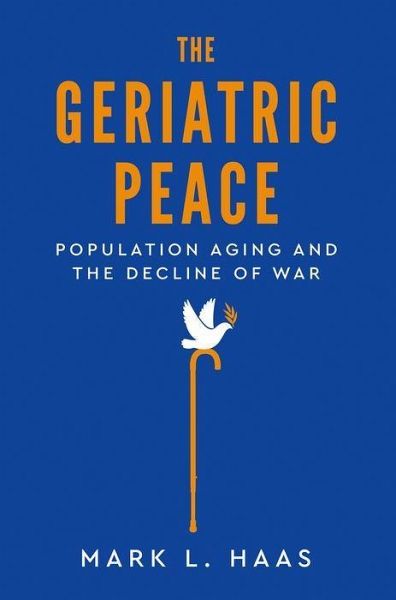
The vast majority of the world's countries are experiencing a demographic revolution: dramatic, sustained, and likely irreversible population aging. States' median ages are steadily increasing as the number of people ages 65 and older skyrockets. Analysts and policymakers frequently decry population aging's domestic costs, especially likely slowing economic growth and massive new public expenditures for elderly welfare. But aging has a major yet largely unrecognised international benefit: it significantly reduces the likelihood of international war. Although wars continue to rage in parts of…mehr
The vast majority of the world's countries are experiencing a demographic revolution: dramatic, sustained, and likely irreversible population aging. States' median ages are steadily increasing as the number of people ages 65 and older skyrockets. Analysts and policymakers frequently decry population aging's domestic costs, especially likely slowing economic growth and massive new public expenditures for elderly welfare. But aging has a major yet largely unrecognised international benefit: it significantly reduces the likelihood of international war. Although wars continue to rage in parts of the world, almost none involve aged countries. This book provides a comprehensive and groundbreaking argument why population aging will be a powerful force for peace.
Mark L. Haas is the Duquesne Professor of Political Science at Duquesne University in Pittsburgh. He formerly was a National Security Fellow at the Olin Institute for Strategic Studies and an International Security Fellow at the Belfer Center for Science and International Affairs, both at Harvard University. Haas received his Ph.D. in political science from the University of Virginia and his B.A. in political science, economics, and history from Duke University.
Inhaltsangabe
* Dedication * Acknowledgements * List of Figures and Tables * Chapter 1. Population Aging: Inevitable, and a Force for Peace * Chapter 2. Population Aging and Reduced Capabilities for War * Chapter 3. Population Aging and Reduced Preferences for War * Chapter 4. Population Aging and Underbalancing in Japan * Chapter 5. Population Aging, the Decline of China's Power, and Preferences for Peace * Chapter 6. Population Aging in the United States: International Dominance and Domestic Polarization * Chapter 7. Population Aging in Russia: Old, Aggressive, and Power Handicapped * Chapter 8. Conclusion
Es gelten unsere Allgemeinen Geschäftsbedingungen: www.buecher.de/agb
Impressum
www.buecher.de ist ein Internetauftritt der buecher.de internetstores GmbH
Geschäftsführung: Monica Sawhney | Roland Kölbl | Günter Hilger
Sitz der Gesellschaft: Batheyer Straße 115 - 117, 58099 Hagen
Postanschrift: Bürgermeister-Wegele-Str. 12, 86167 Augsburg
Amtsgericht Hagen HRB 13257
Steuernummer: 321/5800/1497
USt-IdNr: DE450055826