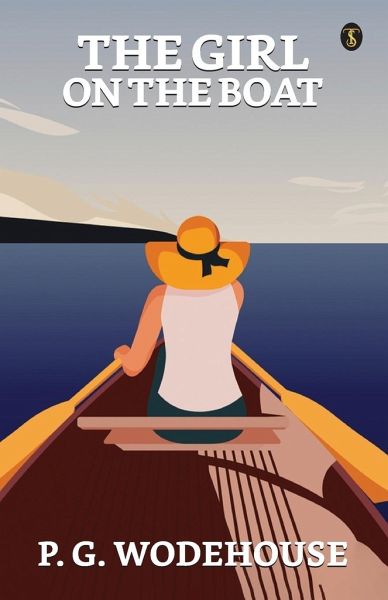
""The Girl on the Boat"" is a delightful comedic novel written by the renowned British author P.G. Wodehouse. Set in the early 20th century, this lighthearted story takes readers on a hilarious journey filled with romantic mishaps, mistaken identities, and laugh-out-loud moments. The plot follows the charming and lovable characters as they navigate a series of comical misunderstandings aboard a transatlantic liner. Maud Marsh, the girl on the boat, finds herself caught in a whirlwind of romantic entanglements involving various suitors, including the bumbling George Bevan and the dashing Lord…mehr
""The Girl on the Boat"" is a delightful comedic novel written by the renowned British author P.G. Wodehouse. Set in the early 20th century, this lighthearted story takes readers on a hilarious journey filled with romantic mishaps, mistaken identities, and laugh-out-loud moments. The plot follows the charming and lovable characters as they navigate a series of comical misunderstandings aboard a transatlantic liner. Maud Marsh, the girl on the boat, finds herself caught in a whirlwind of romantic entanglements involving various suitors, including the bumbling George Bevan and the dashing Lord Percy. With Wodehouse's trademark wit and clever wordplay, ""The Girl on the Boat"" is a delightful blend of romance and humour. The author's keen observations of human foibles and his knack for creating memorable characters make this novel a true gem of comedic literature.
English writer Pelham Grenville Wodehouse, or P.G. Wodehouse, was born on October 15, 1881, and died on February 14, 1975. He was well known for his clever and light-hearted writing, especially for the novels and short tales he wrote that starred Bertie Wooster and Jeeves and were set in the picturesque English countryside. Before turning to creating plays and books, Wodehouse started out as a humourist for different periodicals. He wrote a large amount of literature, which included several plays, essays, short tales, and more than 90 novels. His writing frequently captured the eccentricities and vices of the upper class in Britain, presenting them in a humorous and light-hearted way. Wodehouse's conduct during World War II caused criticism in his later years, notwithstanding his popularity. While residing in France in 1940, he was detained by the Germans and gave a number of radio transmissions from Berlin that were heavily criticised for showing support for the Nazis. Even though Wodehouse insisted that his acts were innocent rather than treasonous, the broadcasts caused a great deal of controversy and allegations of betrayal.
Es gelten unsere Allgemeinen Geschäftsbedingungen: www.buecher.de/agb
Impressum
www.buecher.de ist ein Internetauftritt der buecher.de internetstores GmbH
Geschäftsführung: Monica Sawhney | Roland Kölbl | Günter Hilger
Sitz der Gesellschaft: Batheyer Straße 115 - 117, 58099 Hagen
Postanschrift: Bürgermeister-Wegele-Str. 12, 86167 Augsburg
Amtsgericht Hagen HRB 13257
Steuernummer: 321/5800/1497
USt-IdNr: DE450055826