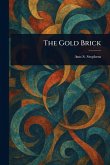
The gold brick explores the tension between personal integrity and professional ambition in the shifting world of journalism and public influence. As the central figure embraces newfound financial success, the narrative exposes how prosperity can blur convictions and challenge the values that once shaped identity. The novel examines the quiet unraveling of purpose as external rewards threaten internal clarity, portraying how career advancement often requires compromises that erode creative independence and ethical consistency. The struggle is not only between past and present loyalties but…mehr
The gold brick explores the tension between personal integrity and professional ambition in the shifting world of journalism and public influence. As the central figure embraces newfound financial success, the narrative exposes how prosperity can blur convictions and challenge the values that once shaped identity. The novel examines the quiet unraveling of purpose as external rewards threaten internal clarity, portraying how career advancement often requires compromises that erode creative independence and ethical consistency. The struggle is not only between past and present loyalties but also between authenticity and the demands of affiliation with power. Through this lens, the story raises questions about the cost of aligning with institutions that may conflict with one's ideals and the subtle transformations that occur when security is prioritized over principle. Relationships grow strained under the weight of shifting priorities, and the pursuit of recognition becomes a mirror for deeper uncertainties. The novel ultimately reveals the emotional and moral price of success when ideals are tested by influence, expectation, and ambition.
Brand Whitlock was an American journalist, attorney, novelist, and political figure whose work bridged public service and literary expression. Born on March 4, 1869, in the United States, he gained prominence as an advocate for civic reform and social justice. He served as mayor of Toledo, Ohio, for four consecutive terms from 1906 to 1914, elected as an Independent, where he was known for his progressive policies and resistance to political corruption. A strong proponent of Georgist economic ideas, he emphasized land value taxation and economic equity throughout his political career. After his tenure as mayor, he was appointed United States Ambassador to Belgium, serving from 1919 to 1921, a period marked by diplomatic reconstruction following World War I. Whitlock was also a prolific writer, producing novels, memoirs, and essays that explored legal, political, and moral issues in American life. His literary and political contributions reflected a commitment to ethical leadership and civic responsibility, leaving a legacy grounded in both reformist action and thoughtful reflection.
Es gelten unsere Allgemeinen Geschäftsbedingungen: www.buecher.de/agb
Impressum
www.buecher.de ist ein Internetauftritt der buecher.de internetstores GmbH
Geschäftsführung: Monica Sawhney | Roland Kölbl | Günter Hilger
Sitz der Gesellschaft: Batheyer Straße 115 - 117, 58099 Hagen
Postanschrift: Bürgermeister-Wegele-Str. 12, 86167 Augsburg
Amtsgericht Hagen HRB 13257
Steuernummer: 321/5800/1497
USt-IdNr: DE450055826