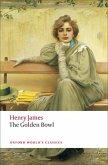
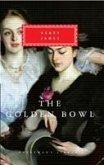
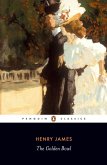
The Golden Bowl is a book written by Sir Henry James in 1904, the novel is written in an interesting way and consists of amazing characters. The "primary period" of James's career, which some reviewers have regarded as being set in England, comes to an end with this nuanced, in-depth analysis of marriage and adultery. The Golden Bowl explores the complicated relationships between a father, a daughter, and each of their husbands. Nearly all of the book is devoted to exploring the major characters' consciousness, which is done with sometimes-obsessive detail but sometimes with perceptive impact.…mehr
The Golden Bowl is a book written by Sir Henry James in 1904, the novel is written in an interesting way and consists of amazing characters. The "primary period" of James's career, which some reviewers have regarded as being set in England, comes to an end with this nuanced, in-depth analysis of marriage and adultery. The Golden Bowl explores the complicated relationships between a father, a daughter, and each of their husbands. Nearly all of the book is devoted to exploring the major characters' consciousness, which is done with sometimes-obsessive detail but sometimes with perceptive impact. Prince Amerigo is in London for his marriage to Maggie Verver, the only child of the fabulously wealthy Adam Verver. He runs across Charlotte Stant again, another young American who was formerly his mistress while he lived in Rome. Adam and Charlotte Verver are on their way to the United States when the book concludes. The phrase "if ever the silver string be loosed, or the golden bowl is broken" appears in Ecclesiastes 12 and serves as the title. Author Colm Toibin called it Henry James's best work. The Modern Library ranked it 32nd on its list of the 100 best novels.
Henry James (15 April 1843 - 28 February 1916) was an American-born British writer. He is regarded as one of the key figures of 19th century literary realism. He is best known for a number of novels showing Americans encountering Europe and Europeans. His method of writing from a character's point of view allowed him to explore issues related to consciousness and perception, and his style in later works has been compared to impressionist painting. His imaginative use of point of view, interior monologue and unreliable narrators brought a new depth to narrative fiction. James contributed significantly to literary criticism, particularly in his insistence that writers be allowed the greatest possible freedom in presenting their view of the world. James claimed that a text must first and foremost be realistic and contain a representation of life that is recognisable to its readers. Good novels, to James, show life in action and are, most importantly, interesting. In addition to his voluminous works of fiction he published articles and books of travel, biography, autobiography, and criticism, and wrote plays. James alternated between America and Europe for the first twenty years of his life; eventually he settled in England, becoming a British subject in 1915, one year before his death. James was nominated for the Nobel Prize in Literature in 1911, 1912, and 1916.
Es gelten unsere Allgemeinen Geschäftsbedingungen: www.buecher.de/agb
Impressum
www.buecher.de ist ein Internetauftritt der buecher.de internetstores GmbH
Geschäftsführung: Monica Sawhney | Roland Kölbl | Günter Hilger
Sitz der Gesellschaft: Batheyer Straße 115 - 117, 58099 Hagen
Postanschrift: Bürgermeister-Wegele-Str. 12, 86167 Augsburg
Amtsgericht Hagen HRB 13257
Steuernummer: 321/5800/1497
USt-IdNr: DE450055826