
Andere Kunden interessierten sich auch für
 About The Holy Bible12,00 €
 Notes on the Book of Deuteronomy22,90 €
 Notes on the Book of Deuteronomy22,90 €
 The Assembly of God22,90 €
 The Origin And Permanent Value Of The Old Testament17,00 €
 The Way to God and How to Find It12,00 €
 Why I Preach the Second Coming15,00 €
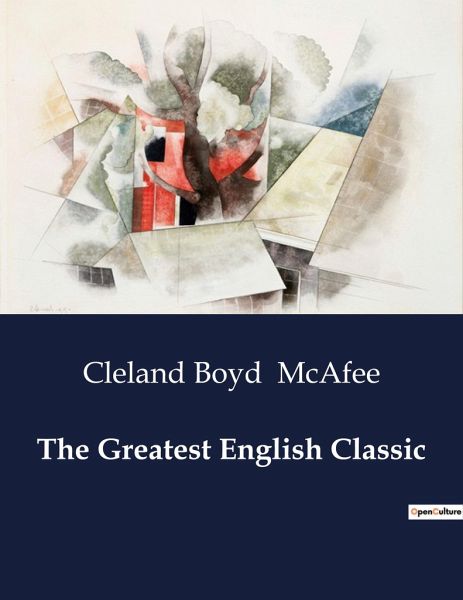
"The Greatest English Classic" by Cleland Boyd McAfee is an in-depth exploration of the King James Version (KJV) of the Bible, focusing on its historical development and profound impact on English literature and society. The text begins by contextualizing the KJV within the broader tradition of religious texts, highlighting the unique status of the Bible as a book that transcends its original languages to gain greater influence in translations. McAfee traces the history of Bible translations, starting with the Septuagint, a Greek rendering of Hebrew scriptures, and moving through the Latin Vulgate, which dominated for centuries. The narrative then shifts to the English context, detailing the pioneering efforts of John Wiclif and William Tindale, who translated the Bible into English despite significant opposition. Wiclif's translation, completed in 1382, marked the first complete English Bible, while Tindale's work laid the foundation for the KJV, with a substantial portion of his translations retained in the final version. The text also examines the socio-political factors influencing these translations, such as the English Reformation and the rise of Protestantism, which fueled the demand for an English Bible. The culmination of these efforts was the Hampton Court Conference in 1604, where King James I authorized the creation of a new translation, leading to the publication of the KJV in 1611. McAfee emphasizes the KJV's literary excellence and its enduring influence on English-speaking cultures, noting its role in shaping the English language and its status as a literary masterpiece.