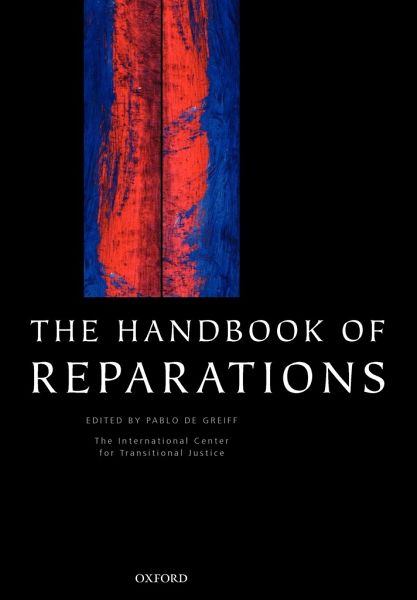
Offering the most comprehensive book-length study to-date of reparation programmes, this Handbook contains an innovative blend of case-study analysis, thematic papers, and national legislation documents from leading scholars and practitioners.
Offering the most comprehensive book-length study to-date of reparation programmes, this Handbook contains an innovative blend of case-study analysis, thematic papers, and national legislation documents from leading scholars and practitioners.
Pablo De Greiff is Director of Research at the International Center for Transitional Justice (ICTJ). Originally from Colombia, he obtained his B.A. at Yale and his Ph.D. in philosophy at Northwestern University. As Director of the ICTJ's Research Unit, he has overseen a global reparations project and has been actively engaged in disseminating the results via papers, conferences, and technical assistance in Guatemala, Peru, and to the United Nations. Prior to joining ICTJ, he was associate professor in the Department of Philosophy at the State University of New York at Buffalo. He has written extensively on transitions to democracy, democratic theory, and the relationship between morality, politics, and law. From 2000 to 2001, he was the recipient of a fellowship from the National Endowment for the Humanities, and was a Laurance S. Rockefeller Fellow at the Center for Human Values at Princeton University.
Inhaltsangabe
* Part I: Case Studies * 1: MarÃa JosÃ(c) Guembe: Economic Reparations for Grave Human Rights Violations: The Argentine Experience * 2: Elizabeth Lira: The Reparations Policy for Human Rights Violations in Chile * 3: Ignacio Cano, PatrÃcia Ferreira: The Reparations Program in Brazil * 4: Alex Segovia: The Reparations Proposals of the Truth Commissions in El Salvador and Haiti: A History of Non-Compliance * 5: Chris Colvin: Overview of the Reparations Program in South Africa * 6: Diana Cammack: Reparations in Malawi * 7: Eric Yamamoto, Liann Ebesugawa: Report on Redress: The Japanese-American Internment * 8: Samuel Issacharoff, Anna Morawiec Mansfield: Compensation for the Victims of September 11th * 9: Hans van Houtte, Hans Das and Bart Delmartino: The United Nations Compensation Commission * 10: Ariel Colonomos, Andrea Armstrong: German Reparations to the Jews after World War Two: A Turning Point in the History of Reparations * 11: John Authers: Making Good Again: Compensation for Nazi Concentration Camp Inmates * Part II: Thematic Studies * 12: Pablo de Greiff: Justice and Reparations * 13: Richard Falk: Reparations, International Law, and Global Justice: A New Frontier * 14: Arturo Carrillo: The Relevance of Inter-American Human Rights Law and Practice to Repairing the Past * 15: Jaime Malamud-Goti, Lucas Grosman: Reparations and Civil Litigation: Compensation for Human Rights Violations in Transitional Democracies * 16: Brandon Hamber: Narrowing the Micro and Macro: A Psychological Perspective on Reparations in Societies in Transition * 17: M.Brinton Lykes, Marcie Mersky: Reparations and Mental Health: Psychosocial Interventions towards Healing, Human Agency, and Rethreading Social Realities * 18: Colleen Duggan Adila M. Abusharaf: Reparation of Sexual Violence in Democratic Transitions: The Search for Gender Justice * 19: Alex Segovia: Financing Reparations Programs: Reflections from International Experience * 20: Hans Dieter Seibel with Andrea Armstrong: Reparations and Microfinance Schemes * Part III: Primary Documents and Legislation from Case Studies * 21: Argentina * 22: Nunca Más: The Report of the Argentine National Commission on the Disappeared, * Part VI: Recommendations and Conclusions, 'Recommendations' * 23: Brazil * 24: El Salvador * 25: Haiti * 26: South Africa * 27: Malawi * 28: US: Japanese-American Internment * 29: US: September 11, 2001 * 30: Germany: Jewish Victims of the Holocaust * 31: Germany: Forced and Slave Labor
* Part I: Case Studies * 1: MarÃa JosÃ(c) Guembe: Economic Reparations for Grave Human Rights Violations: The Argentine Experience * 2: Elizabeth Lira: The Reparations Policy for Human Rights Violations in Chile * 3: Ignacio Cano, PatrÃcia Ferreira: The Reparations Program in Brazil * 4: Alex Segovia: The Reparations Proposals of the Truth Commissions in El Salvador and Haiti: A History of Non-Compliance * 5: Chris Colvin: Overview of the Reparations Program in South Africa * 6: Diana Cammack: Reparations in Malawi * 7: Eric Yamamoto, Liann Ebesugawa: Report on Redress: The Japanese-American Internment * 8: Samuel Issacharoff, Anna Morawiec Mansfield: Compensation for the Victims of September 11th * 9: Hans van Houtte, Hans Das and Bart Delmartino: The United Nations Compensation Commission * 10: Ariel Colonomos, Andrea Armstrong: German Reparations to the Jews after World War Two: A Turning Point in the History of Reparations * 11: John Authers: Making Good Again: Compensation for Nazi Concentration Camp Inmates * Part II: Thematic Studies * 12: Pablo de Greiff: Justice and Reparations * 13: Richard Falk: Reparations, International Law, and Global Justice: A New Frontier * 14: Arturo Carrillo: The Relevance of Inter-American Human Rights Law and Practice to Repairing the Past * 15: Jaime Malamud-Goti, Lucas Grosman: Reparations and Civil Litigation: Compensation for Human Rights Violations in Transitional Democracies * 16: Brandon Hamber: Narrowing the Micro and Macro: A Psychological Perspective on Reparations in Societies in Transition * 17: M.Brinton Lykes, Marcie Mersky: Reparations and Mental Health: Psychosocial Interventions towards Healing, Human Agency, and Rethreading Social Realities * 18: Colleen Duggan Adila M. Abusharaf: Reparation of Sexual Violence in Democratic Transitions: The Search for Gender Justice * 19: Alex Segovia: Financing Reparations Programs: Reflections from International Experience * 20: Hans Dieter Seibel with Andrea Armstrong: Reparations and Microfinance Schemes * Part III: Primary Documents and Legislation from Case Studies * 21: Argentina * 22: Nunca Más: The Report of the Argentine National Commission on the Disappeared, * Part VI: Recommendations and Conclusions, 'Recommendations' * 23: Brazil * 24: El Salvador * 25: Haiti * 26: South Africa * 27: Malawi * 28: US: Japanese-American Internment * 29: US: September 11, 2001 * 30: Germany: Jewish Victims of the Holocaust * 31: Germany: Forced and Slave Labor
Es gelten unsere Allgemeinen Geschäftsbedingungen: www.buecher.de/agb
Impressum
www.buecher.de ist ein Internetauftritt der buecher.de internetstores GmbH
Geschäftsführung: Monica Sawhney | Roland Kölbl | Günter Hilger
Sitz der Gesellschaft: Batheyer Straße 115 - 117, 58099 Hagen
Postanschrift: Bürgermeister-Wegele-Str. 12, 86167 Augsburg
Amtsgericht Hagen HRB 13257
Steuernummer: 321/5800/1497
USt-IdNr: DE450055826