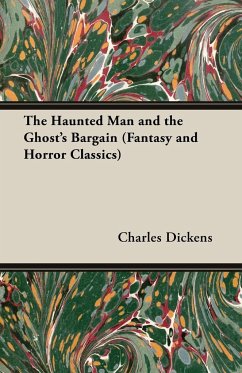
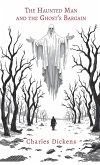
What if you could erase every painful memory from your past? And what if your deepest scars are the source of your compassion? Redlaw, a lonely, grief-stricken professor, is haunted not by a traditional ghost, but by the relentless, crushing memories of loss, injury, and regret. One bleak Christmas Eve, a spectral double of himself appears, offering him a terrible bargain: the gift of Oblivion. The phantom ghost promises to wipe away every memory of sorrow and injustice that has ever tormented Redlaw. However, this magical gift comes with a fearful contagion: Redlaw must pass the curse of…mehr
What if you could erase every painful memory from your past? And what if your deepest scars are the source of your compassion? Redlaw, a lonely, grief-stricken professor, is haunted not by a traditional ghost, but by the relentless, crushing memories of loss, injury, and regret. One bleak Christmas Eve, a spectral double of himself appears, offering him a terrible bargain: the gift of Oblivion. The phantom ghost promises to wipe away every memory of sorrow and injustice that has ever tormented Redlaw. However, this magical gift comes with a fearful contagion: Redlaw must pass the curse of forgetfulness to everyone he meets. As Redlaw sheds his grief, he discovers that the people around him--from his simple-minded servant to the troubled souls he attempts to help--also lose their capacity for empathy, kindness, and moral reflection. Without the painful memories of the past, humanity descends into cruel indifference and base self-interest. Charles Dickens delivers a profound and atmospheric Christmas tale that goes far beyond the surface of a ghost story. The Haunted Man and the Ghost's Bargain is a masterful allegory about the vital necessity of suffering, proving that the memories we wish most to forget are often what make us human.
Charles Dickens (1812-1870) was a prominent English novelist and social critic, celebrated for his vivid storytelling and keen observations of Victorian society. Born on February 7, 1812, in Portsmouth, England, Dickens experienced a difficult childhood marked by financial instability and a stint in a workhouse. These early experiences deeply influenced his writing and social consciousness. Dickens's novels are renowned for their memorable characters, intricate plots, and sharp social commentary. His works often critique the social and economic injustices of his time, including the harsh conditions faced by the poor and the inadequacies of the legal and educational systems. Dickens's writing is characterized by its rich, descriptive prose and its ability to blend humor with serious social issues. In addition to his novels, Dickens was an active public figure, engaging in various social causes and reform efforts. He was a passionate advocate for children's rights, labor reforms, and improvements to the criminal justice system. Charles Dickens passed away on June 9, 1870, but his legacy endures through his substantial contributions to literature and social reform. His works continue to be widely read and adapted, reflecting his lasting impact on both literary and social spheres.
Es gelten unsere Allgemeinen Geschäftsbedingungen: www.buecher.de/agb
Impressum
www.buecher.de ist ein Internetauftritt der buecher.de internetstores GmbH
Geschäftsführung: Monica Sawhney | Roland Kölbl | Günter Hilger
Sitz der Gesellschaft: Batheyer Straße 115 - 117, 58099 Hagen
Postanschrift: Bürgermeister-Wegele-Str. 12, 86167 Augsburg
Amtsgericht Hagen HRB 13257
Steuernummer: 321/5800/1497
USt-IdNr: DE450055826