Andere Kunden interessierten sich auch für
 The Book of the Ancient Romans: An Introduction to the History and Civilization of Rome from the Traditional Date of the Founding of the City to its F15,99 €
 The Seven Kings of Rome, Abridged From the First Book of Livy, With Grammatical Notes by J. Wright18,99 €
 The History of Rome20,99 €
 The History of Rome; Volume 128,99 €
 The History of Rome, Book II20,99 €
 The History of Rome, Book V26,99 €
 The History of Rome, Book III23,99 €



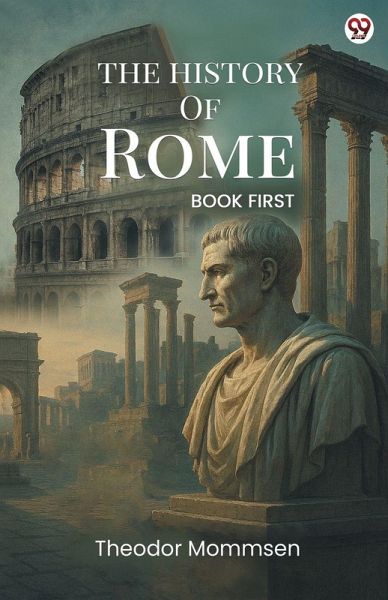
The history of Rome: Book First presents a detailed examination of the forces that shaped the early development of Roman civilization within the broader Mediterranean context. Beginning with the ancient landscapes of Italy, the work draws attention to the interplay between environment and early human movement, tracing how geographic isolation and exposure informed the cultural trajectories of the peninsula s early inhabitants. It considers the emergence of distinct ethnic identities and their interactions as foundational to later unification and expansion. Rather than focusing solely on conquests or dates, the narrative emphasizes the layered complexity of social and political evolution. It challenges the reader to consider how ideas of identity, language, and governance emerged organically within a diverse landscape. The focus on deeper cultural undercurrents instead of simple chronology allows for a fuller understanding of how Rome came to dominate its neighbors, not just through military might but through adaptation and integration. This volume frames Rome not as a sudden power, but as the result of longstanding, dynamic development within a vibrant region of competing influences.
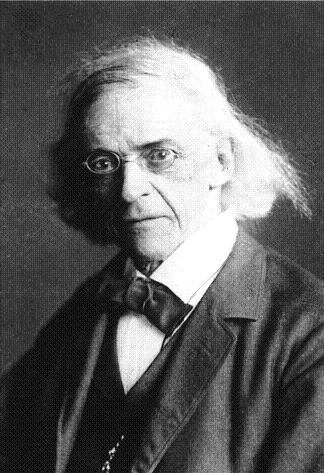
Theodor Mommsen was born on November 30, 1817, in Garding, Germany, to Jens Mommsen, a Lutheran minister, and Sophie Elisabeth Mommsen. Raised in a household that valued education and intellectual discipline, he developed a passion for classical studies early on. He pursued law and philology at the University of Kiel, where his interest in Roman history deepened. Mommsen's academic journey took him to Italy, where he conducted fieldwork that shaped his understanding of ancient civilizations. A brilliant historian and jurist, he became known for his work on Roman law and epigraphy. He held academic positions in Leipzig, Zurich, Breslau, and ultimately Berlin, where he was a professor at the University of Berlin. Beyond academia, Mommsen was politically active and supported liberal causes and German unification. He was elected to the Prussian and German parliaments. In 1902, he received the Nobel Prize in Literature for his monumental work The History of Rome, celebrated for its scholarly rigor and vivid prose. He married Marie Reimer in 1854, and they had several children. He remained intellectually active until his death on November 1, 1903, in Charlottenburg, Berlin, leaving a lasting legacy in classical scholarship and historical writing.