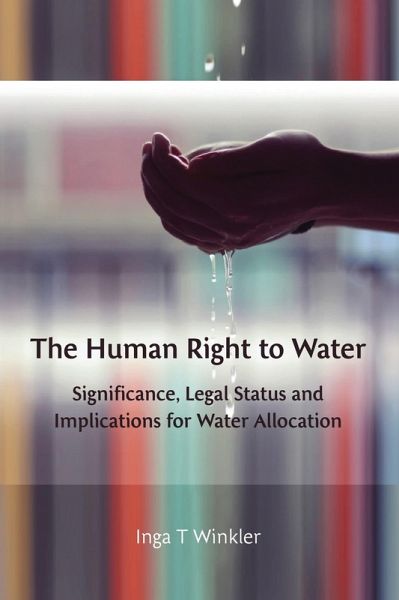
The United Nations General Assembly and the Human Rights Council recognised the human right to water in 2010.This book clarifies the legal status and meaning of the right to water through a detailed analysis of its legal foundations, legal nature, normative content and corresponding State obligations.
The United Nations General Assembly and the Human Rights Council recognised the human right to water in 2010.This book clarifies the legal status and meaning of the right to water through a detailed analysis of its legal foundations, legal nature, normative content and corresponding State obligations.
1 Introduction I. Lack of Access to Water II. The Question of Prioritisation III. The Emergence of the Human Right to Water IV. Scope and Outline of the Book 2 Background: Water Availability and Competing Demands I. Water Availability and Quality II. Competing Water Demands - A Challenge for Allocation III. Conclusion: A Question of Prioritisation 3 Legal Foundations of the Human Right to Water I. Human Rights Treaties II. Customary International Law III. General Principles IV. Conclusion 4 Legal Characteristics of the Human Right to Water I. Legal Nature of the Right to Water II. Obligations Arising from the Right to Water III. Normative Content of the Right to Water IV. Conclusion 5 Human Rights Implications for Water Allocation I. Introductory Remarks II. Framework for Prioritisation III. Different Water Uses and Their Link to Human Rights IV. Conclusion: Priorities in Water Allocation 6 Benefits of Understanding Water as a Human Right I. General Benefits of the Human Rights Framework II. Possibility of Judicial Enforcement III. Conclusion 7 Conclusion and Outlook Bibliography United Nations Documents Conference Reports General Assembly Economic and Social Council Commission on Human Rights Human Rights Council Sub-Commission on the Promotion and Protection of Human Rights Human Rights Committee Committee on Economic, Social and Cultural Rights Committee on the Rights of the Child Other Bodies Miscellaneous Documents
1 Introduction I. Lack of Access to Water II. The Question of Prioritisation III. The Emergence of the Human Right to Water IV. Scope and Outline of the Book 2 Background: Water Availability and Competing Demands I. Water Availability and Quality II. Competing Water Demands - A Challenge for Allocation III. Conclusion: A Question of Prioritisation 3 Legal Foundations of the Human Right to Water I. Human Rights Treaties II. Customary International Law III. General Principles IV. Conclusion 4 Legal Characteristics of the Human Right to Water I. Legal Nature of the Right to Water II. Obligations Arising from the Right to Water III. Normative Content of the Right to Water IV. Conclusion 5 Human Rights Implications for Water Allocation I. Introductory Remarks II. Framework for Prioritisation III. Different Water Uses and Their Link to Human Rights IV. Conclusion: Priorities in Water Allocation 6 Benefits of Understanding Water as a Human Right I. General Benefits of the Human Rights Framework II. Possibility of Judicial Enforcement III. Conclusion 7 Conclusion and Outlook Bibliography United Nations Documents Conference Reports General Assembly Economic and Social Council Commission on Human Rights Human Rights Council Sub-Commission on the Promotion and Protection of Human Rights Human Rights Committee Committee on Economic, Social and Cultural Rights Committee on the Rights of the Child Other Bodies Miscellaneous Documents
Es gelten unsere Allgemeinen Geschäftsbedingungen: www.buecher.de/agb
Impressum
www.buecher.de ist ein Internetauftritt der buecher.de internetstores GmbH
Geschäftsführung: Monica Sawhney | Roland Kölbl | Günter Hilger
Sitz der Gesellschaft: Batheyer Straße 115 - 117, 58099 Hagen
Postanschrift: Bürgermeister-Wegele-Str. 12, 86167 Augsburg
Amtsgericht Hagen HRB 13257
Steuernummer: 321/5800/1497
USt-IdNr: DE450055826