
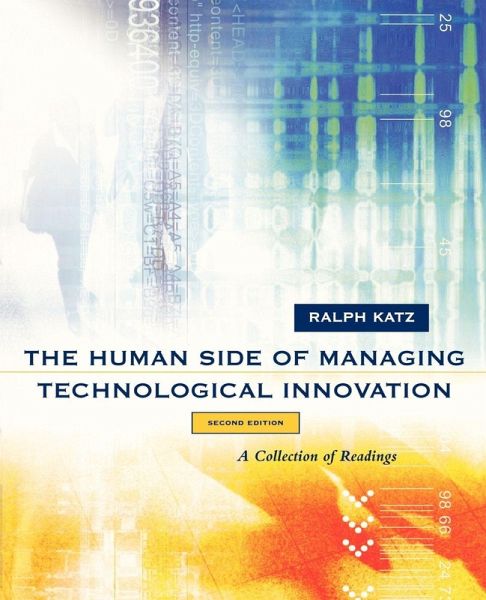
Ralph KatzA Collection of Readings
The Human Side of Managing Technological Innovation
A Collection of Readings
Ed. by Ralph Katz
Ralph KatzA Collection of Readings
The Human Side of Managing Technological Innovation
A Collection of Readings
Ed. by Ralph Katz
- Broschiertes Buch
- Merkliste
- Auf die Merkliste
- Bewerten Bewerten
- Teilen
- Produkt teilen
- Produkterinnerung
- Produkterinnerung
Designed for courses within MBA engineering and executive education programs, The Human Side of Managing Technical Information, Second Edition, provides a variety of approaches and perspectives on issues critical to the effective leadership of technical professionals and cross-functional teams throughout the innovation process. Updated throughout, the second edition's collection of articles cover such topics as motivating professionals, measuring productivity,organizing and leading cross-functional development teams, enhancing creativity, developing human resource capabilities, and using…mehr
Andere Kunden interessierten sich auch für
 Peter ThielZero to One13,47 €
 Bekir Emre KurtulmusThe Dark Side of Leadership46,99 €
 Michael HoeckCooperation and Technological Endowment in International Joint Ventures: German Firms in China38,99 €
 Leo HannonThe Legal Side of Private Security87,99 €
 Annette B. RoterThe Dark Side of the Workplace167,99 €
 Luciana Carvalho SeThe 21st Century WikiBrain: Overexposure and Addition to Technological Stimuli18,95 €
 Charles McMillanThe Transformation of Boeing from Technological Leadership to Financial Engineering and Decline61,99 €
-
-
-






Designed for courses within MBA engineering and executive education programs, The Human Side of Managing Technical Information, Second Edition, provides a variety of approaches and perspectives on issues critical to the effective leadership of technical professionals and cross-functional teams throughout the innovation process.
Updated throughout, the second edition's collection of articles cover such topics as motivating professionals, measuring productivity,organizing and leading cross-functional development teams, enhancing creativity, developing human resource capabilities, and using technology as a strategic resource. These articles represent the thoughts and ideas of researchers and practitioners seeking a richer understanding of the complex interplay between the specialized knowledge and skills of creative
professionals and the realistic pressures and constraints required by successful business organizations.
Updated throughout, the second edition's collection of articles cover such topics as motivating professionals, measuring productivity,organizing and leading cross-functional development teams, enhancing creativity, developing human resource capabilities, and using technology as a strategic resource. These articles represent the thoughts and ideas of researchers and practitioners seeking a richer understanding of the complex interplay between the specialized knowledge and skills of creative
professionals and the realistic pressures and constraints required by successful business organizations.
Produktdetails
- Produktdetails
- Verlag: Oxford University Press
- 2nd ed.
- Seitenzahl: 752
- Erscheinungstermin: 1. Januar 2003
- Englisch
- Abmessung: 235mm x 191mm x 40mm
- Gewicht: 1377g
- ISBN-13: 9780195135312
- ISBN-10: 0195135318
- Artikelnr.: 15001985
- Herstellerkennzeichnung
- Libri GmbH
- Europaallee 1
- 36244 Bad Hersfeld
- gpsr@libri.de
- Verlag: Oxford University Press
- 2nd ed.
- Seitenzahl: 752
- Erscheinungstermin: 1. Januar 2003
- Englisch
- Abmessung: 235mm x 191mm x 40mm
- Gewicht: 1377g
- ISBN-13: 9780195135312
- ISBN-10: 0195135318
- Artikelnr.: 15001985
- Herstellerkennzeichnung
- Libri GmbH
- Europaallee 1
- 36244 Bad Hersfeld
- gpsr@libri.de
* Chapters new to this edition are in boldface.
* I. THE MOTIVATION AND LEADERSHIP OF TECHNICAL PROFESSIONALS
* >R>
* 1: Ralph Katz: Motivating Professionals in Organizations,
* 2: Robert Kelley and Janet Caplan: How Bell Labs Creates Star
Performers,
* 3: Ralph Katz: Organizational Socialization and the Reduction of
Uncertainty,
* The Management of Creativity in Organizations
* 4: Albert Shapero: Managing Creative Professionals,
* 5: Russ Mitchell: How to Manage Geeks,
* 6: Min Basadur: Managing Creativity: A Japanese Model,
* 7: Charlan Jeanne Nemeth: Managing Innovation: When Less Is More,
* The Transition from Technical Specialist to Managerial Leadership
* 8: Michael Badawy: Why Managers Fail,
* 9: Tony Schwarz: "How Do You Feel?"
* 10: David Nadler and Michael Tushman: Beyond the Charismatic Leader:
Leadership and Organizational Change,
* II. THE MANAGEMENT OF INNOVATIVE GROUPS AND PROJECT TEAMS
* The Management of High Performing Technical Teams
* 11: Ralph Katz: How a Team at Digital Equipment Designed the 'Alpha'
Chip,
* 12: David Bank: The Java Saga,
* 13: Harold Leavitt and Jean Lipman-Blumen: Hot Groups,
* The Management of Crossfunctional Groups and Project Teams
* 14: Jon Katzenbach and Douglas Smith: The Discipline of Teams,
* 15: Ralph Katz: Managing Creative Performance in RandD Teams,
* Managing Organizational Roles and Structures in Project Groups
* 16: Kim Clark and Steven Wheelwright: Organizing and Leading
"Heavyweight" Development Teams,
* 17: Jeffrey Pinto and Om Kharbanda: Lessons for an Accidental
Profession,
* 18: Ralph Katz and Thomas Allen: How Project Performance is
Influenced by the Locus of Power in the RandD Mix,
* III. LEADERSHIP ROLES IN THE INNOVATION PROCESS
* Formal Problem-Solving Roles in Leading Innovation
* 19: Stefn Thomke: Enlightened Experimentation: The New Imperative for
Innovation,
* 20: Alan MacCormack: How Internet Companies Build Software,
* 21: Edward F. McDonough III and David Cedrone: Meeting the Challenge
of Global Team Management,
* Informal Critical Roles in Leading Innovation
* 22: Edward Roberts and Alan Fusfeld: Critical Functions: Needed Roles
in the Innovation Process,
* 23: Gifford Pinchot III: Innovation through Intrapreneuring,
* 24: Anthony Townsend, Samuel DeMarie, and Anthony R. Hendrickson:
Virtual Teams: Technology and the Workplace of the Future,
* IV. MANAGING KNOWLEDGE WORK WITHIN INNOVATIVE ORGANIZATIONS
* Managing Technical Communications and Technology Transfer
* 25: Thomas Allen: Distinguishing Science from Technology,
* 26: Thomas Allen: Communication Networks in RandD Laboratories,
* 27: Ralph Katz and Michael Tushman: A Study of the Influence of
Technical Gatekeeping on Project Performance and Career Outcomes in
an RandD Facilty,
* 28: Richard McDermott: Why Information Technology Inspired But Cannot
Deliver Knowledge Management,
* Managing Performance and Productivity in Technical Groups and
Organizational Settings
* 29: Dennis Sleven: Project Management,
* 30: Robert Szakonyi: Measuring RandD Effectiveness,
* 31: James Tipping, Eugene Zeffren, and Alan Fusfeld: Assessing the
Value of Your Technology,
* 32: John R. Hauser and Florian Zettelmeyer: Metrics to Evaluate
R,D,andE,
* V. MANAGING INNOVATIVE CLIMATES IN ORGANIZATIONS
* Managing Innovative Climates
* 33: Thomas Peters: A Skunkworks Tale,
* 34: David Maister: The One-Firm Firm: What Makes It Successful,
* 35: P. Ranganath Nayak and John Ketteringham: 3M's Post-it Notes: A
Managed or Accidental Innovation?
* 36: Anne Cooper Funderburg: Making Teflon Stick,
* Maintaining Innovative Climates
* 37: Lucien Rhodes: That's Easy for You to Say,
* 38: Ralph Katz and Thomas Allen: Organizational Issues in the
Introduction of New Technologies,
* 39: Richard Leifer, Gina Colarelli, and Mark Price: Implementing
Radical Innovation in Mature Firms: The Role of Hubs,
* 40: Karen Anne Zien and Sheldon A Buckler: Dreams to Market: Crafting
a Culture of Innovation,
* VI. THE MANAGEMENT OF ORGANIZATIONAL PROCESSSES FOR INNOVATION
* Decision-making Process
* 41: William Pasmore: Managing Organizational Deliberations in
Nonroutine Work,
* 42: Kathleen Eisenhardt: Speed and Strategic Choice: How Managers
Accelerate Decision Making,
* 43: Eric Kessler, Paul Bierly, and Shanthi Gopalakrishnan: Vasa
Syndrome: Insights From a 17th-Century New Product Disaster,
* Organizational Practices, Policies, and Rewards
* 44: Douglas M. McCracken: Winning the Talent War for Women,
* 45: Alan Webber: Danger: Toxic Company,
* 46: Ralph Katz and Thomas Allen: Managing Dual Ladder Systems in
RDandE Settings,
* Managing Across Functions for Rapid Product Development
* 47: Christopher Meyer: A Six-Step Framework for Becoming a
Fast-Cycle-Time Competitor,
* 48: Preston Smith and Donald Reinertsen: Shortening the Product
Development Cycle,
* 49: Gerard Tellis and Peter Golder: First to Market, First to Fail?
Real Causes of Enduring Market Leadership,
* VII. MANAGING THE INNOVATION PROCESS IN ORGANIZATIONS
* Managing the Cross-functional Relationships to Enhance New Product
Development
* 50: William Souder: Managing Relations between RandD and Marketing in
New Product Development Projects,
* 51: Robert Cooper: Examining Some Myths about New Product "Winners,"
* 52: Clayton Christensen: The Rules of Innovation,
* I. THE MOTIVATION AND LEADERSHIP OF TECHNICAL PROFESSIONALS
* >R>
* 1: Ralph Katz: Motivating Professionals in Organizations,
* 2: Robert Kelley and Janet Caplan: How Bell Labs Creates Star
Performers,
* 3: Ralph Katz: Organizational Socialization and the Reduction of
Uncertainty,
* The Management of Creativity in Organizations
* 4: Albert Shapero: Managing Creative Professionals,
* 5: Russ Mitchell: How to Manage Geeks,
* 6: Min Basadur: Managing Creativity: A Japanese Model,
* 7: Charlan Jeanne Nemeth: Managing Innovation: When Less Is More,
* The Transition from Technical Specialist to Managerial Leadership
* 8: Michael Badawy: Why Managers Fail,
* 9: Tony Schwarz: "How Do You Feel?"
* 10: David Nadler and Michael Tushman: Beyond the Charismatic Leader:
Leadership and Organizational Change,
* II. THE MANAGEMENT OF INNOVATIVE GROUPS AND PROJECT TEAMS
* The Management of High Performing Technical Teams
* 11: Ralph Katz: How a Team at Digital Equipment Designed the 'Alpha'
Chip,
* 12: David Bank: The Java Saga,
* 13: Harold Leavitt and Jean Lipman-Blumen: Hot Groups,
* The Management of Crossfunctional Groups and Project Teams
* 14: Jon Katzenbach and Douglas Smith: The Discipline of Teams,
* 15: Ralph Katz: Managing Creative Performance in RandD Teams,
* Managing Organizational Roles and Structures in Project Groups
* 16: Kim Clark and Steven Wheelwright: Organizing and Leading
"Heavyweight" Development Teams,
* 17: Jeffrey Pinto and Om Kharbanda: Lessons for an Accidental
Profession,
* 18: Ralph Katz and Thomas Allen: How Project Performance is
Influenced by the Locus of Power in the RandD Mix,
* III. LEADERSHIP ROLES IN THE INNOVATION PROCESS
* Formal Problem-Solving Roles in Leading Innovation
* 19: Stefn Thomke: Enlightened Experimentation: The New Imperative for
Innovation,
* 20: Alan MacCormack: How Internet Companies Build Software,
* 21: Edward F. McDonough III and David Cedrone: Meeting the Challenge
of Global Team Management,
* Informal Critical Roles in Leading Innovation
* 22: Edward Roberts and Alan Fusfeld: Critical Functions: Needed Roles
in the Innovation Process,
* 23: Gifford Pinchot III: Innovation through Intrapreneuring,
* 24: Anthony Townsend, Samuel DeMarie, and Anthony R. Hendrickson:
Virtual Teams: Technology and the Workplace of the Future,
* IV. MANAGING KNOWLEDGE WORK WITHIN INNOVATIVE ORGANIZATIONS
* Managing Technical Communications and Technology Transfer
* 25: Thomas Allen: Distinguishing Science from Technology,
* 26: Thomas Allen: Communication Networks in RandD Laboratories,
* 27: Ralph Katz and Michael Tushman: A Study of the Influence of
Technical Gatekeeping on Project Performance and Career Outcomes in
an RandD Facilty,
* 28: Richard McDermott: Why Information Technology Inspired But Cannot
Deliver Knowledge Management,
* Managing Performance and Productivity in Technical Groups and
Organizational Settings
* 29: Dennis Sleven: Project Management,
* 30: Robert Szakonyi: Measuring RandD Effectiveness,
* 31: James Tipping, Eugene Zeffren, and Alan Fusfeld: Assessing the
Value of Your Technology,
* 32: John R. Hauser and Florian Zettelmeyer: Metrics to Evaluate
R,D,andE,
* V. MANAGING INNOVATIVE CLIMATES IN ORGANIZATIONS
* Managing Innovative Climates
* 33: Thomas Peters: A Skunkworks Tale,
* 34: David Maister: The One-Firm Firm: What Makes It Successful,
* 35: P. Ranganath Nayak and John Ketteringham: 3M's Post-it Notes: A
Managed or Accidental Innovation?
* 36: Anne Cooper Funderburg: Making Teflon Stick,
* Maintaining Innovative Climates
* 37: Lucien Rhodes: That's Easy for You to Say,
* 38: Ralph Katz and Thomas Allen: Organizational Issues in the
Introduction of New Technologies,
* 39: Richard Leifer, Gina Colarelli, and Mark Price: Implementing
Radical Innovation in Mature Firms: The Role of Hubs,
* 40: Karen Anne Zien and Sheldon A Buckler: Dreams to Market: Crafting
a Culture of Innovation,
* VI. THE MANAGEMENT OF ORGANIZATIONAL PROCESSSES FOR INNOVATION
* Decision-making Process
* 41: William Pasmore: Managing Organizational Deliberations in
Nonroutine Work,
* 42: Kathleen Eisenhardt: Speed and Strategic Choice: How Managers
Accelerate Decision Making,
* 43: Eric Kessler, Paul Bierly, and Shanthi Gopalakrishnan: Vasa
Syndrome: Insights From a 17th-Century New Product Disaster,
* Organizational Practices, Policies, and Rewards
* 44: Douglas M. McCracken: Winning the Talent War for Women,
* 45: Alan Webber: Danger: Toxic Company,
* 46: Ralph Katz and Thomas Allen: Managing Dual Ladder Systems in
RDandE Settings,
* Managing Across Functions for Rapid Product Development
* 47: Christopher Meyer: A Six-Step Framework for Becoming a
Fast-Cycle-Time Competitor,
* 48: Preston Smith and Donald Reinertsen: Shortening the Product
Development Cycle,
* 49: Gerard Tellis and Peter Golder: First to Market, First to Fail?
Real Causes of Enduring Market Leadership,
* VII. MANAGING THE INNOVATION PROCESS IN ORGANIZATIONS
* Managing the Cross-functional Relationships to Enhance New Product
Development
* 50: William Souder: Managing Relations between RandD and Marketing in
New Product Development Projects,
* 51: Robert Cooper: Examining Some Myths about New Product "Winners,"
* 52: Clayton Christensen: The Rules of Innovation,
* Chapters new to this edition are in boldface.
* I. THE MOTIVATION AND LEADERSHIP OF TECHNICAL PROFESSIONALS
* >R>
* 1: Ralph Katz: Motivating Professionals in Organizations,
* 2: Robert Kelley and Janet Caplan: How Bell Labs Creates Star
Performers,
* 3: Ralph Katz: Organizational Socialization and the Reduction of
Uncertainty,
* The Management of Creativity in Organizations
* 4: Albert Shapero: Managing Creative Professionals,
* 5: Russ Mitchell: How to Manage Geeks,
* 6: Min Basadur: Managing Creativity: A Japanese Model,
* 7: Charlan Jeanne Nemeth: Managing Innovation: When Less Is More,
* The Transition from Technical Specialist to Managerial Leadership
* 8: Michael Badawy: Why Managers Fail,
* 9: Tony Schwarz: "How Do You Feel?"
* 10: David Nadler and Michael Tushman: Beyond the Charismatic Leader:
Leadership and Organizational Change,
* II. THE MANAGEMENT OF INNOVATIVE GROUPS AND PROJECT TEAMS
* The Management of High Performing Technical Teams
* 11: Ralph Katz: How a Team at Digital Equipment Designed the 'Alpha'
Chip,
* 12: David Bank: The Java Saga,
* 13: Harold Leavitt and Jean Lipman-Blumen: Hot Groups,
* The Management of Crossfunctional Groups and Project Teams
* 14: Jon Katzenbach and Douglas Smith: The Discipline of Teams,
* 15: Ralph Katz: Managing Creative Performance in RandD Teams,
* Managing Organizational Roles and Structures in Project Groups
* 16: Kim Clark and Steven Wheelwright: Organizing and Leading
"Heavyweight" Development Teams,
* 17: Jeffrey Pinto and Om Kharbanda: Lessons for an Accidental
Profession,
* 18: Ralph Katz and Thomas Allen: How Project Performance is
Influenced by the Locus of Power in the RandD Mix,
* III. LEADERSHIP ROLES IN THE INNOVATION PROCESS
* Formal Problem-Solving Roles in Leading Innovation
* 19: Stefn Thomke: Enlightened Experimentation: The New Imperative for
Innovation,
* 20: Alan MacCormack: How Internet Companies Build Software,
* 21: Edward F. McDonough III and David Cedrone: Meeting the Challenge
of Global Team Management,
* Informal Critical Roles in Leading Innovation
* 22: Edward Roberts and Alan Fusfeld: Critical Functions: Needed Roles
in the Innovation Process,
* 23: Gifford Pinchot III: Innovation through Intrapreneuring,
* 24: Anthony Townsend, Samuel DeMarie, and Anthony R. Hendrickson:
Virtual Teams: Technology and the Workplace of the Future,
* IV. MANAGING KNOWLEDGE WORK WITHIN INNOVATIVE ORGANIZATIONS
* Managing Technical Communications and Technology Transfer
* 25: Thomas Allen: Distinguishing Science from Technology,
* 26: Thomas Allen: Communication Networks in RandD Laboratories,
* 27: Ralph Katz and Michael Tushman: A Study of the Influence of
Technical Gatekeeping on Project Performance and Career Outcomes in
an RandD Facilty,
* 28: Richard McDermott: Why Information Technology Inspired But Cannot
Deliver Knowledge Management,
* Managing Performance and Productivity in Technical Groups and
Organizational Settings
* 29: Dennis Sleven: Project Management,
* 30: Robert Szakonyi: Measuring RandD Effectiveness,
* 31: James Tipping, Eugene Zeffren, and Alan Fusfeld: Assessing the
Value of Your Technology,
* 32: John R. Hauser and Florian Zettelmeyer: Metrics to Evaluate
R,D,andE,
* V. MANAGING INNOVATIVE CLIMATES IN ORGANIZATIONS
* Managing Innovative Climates
* 33: Thomas Peters: A Skunkworks Tale,
* 34: David Maister: The One-Firm Firm: What Makes It Successful,
* 35: P. Ranganath Nayak and John Ketteringham: 3M's Post-it Notes: A
Managed or Accidental Innovation?
* 36: Anne Cooper Funderburg: Making Teflon Stick,
* Maintaining Innovative Climates
* 37: Lucien Rhodes: That's Easy for You to Say,
* 38: Ralph Katz and Thomas Allen: Organizational Issues in the
Introduction of New Technologies,
* 39: Richard Leifer, Gina Colarelli, and Mark Price: Implementing
Radical Innovation in Mature Firms: The Role of Hubs,
* 40: Karen Anne Zien and Sheldon A Buckler: Dreams to Market: Crafting
a Culture of Innovation,
* VI. THE MANAGEMENT OF ORGANIZATIONAL PROCESSSES FOR INNOVATION
* Decision-making Process
* 41: William Pasmore: Managing Organizational Deliberations in
Nonroutine Work,
* 42: Kathleen Eisenhardt: Speed and Strategic Choice: How Managers
Accelerate Decision Making,
* 43: Eric Kessler, Paul Bierly, and Shanthi Gopalakrishnan: Vasa
Syndrome: Insights From a 17th-Century New Product Disaster,
* Organizational Practices, Policies, and Rewards
* 44: Douglas M. McCracken: Winning the Talent War for Women,
* 45: Alan Webber: Danger: Toxic Company,
* 46: Ralph Katz and Thomas Allen: Managing Dual Ladder Systems in
RDandE Settings,
* Managing Across Functions for Rapid Product Development
* 47: Christopher Meyer: A Six-Step Framework for Becoming a
Fast-Cycle-Time Competitor,
* 48: Preston Smith and Donald Reinertsen: Shortening the Product
Development Cycle,
* 49: Gerard Tellis and Peter Golder: First to Market, First to Fail?
Real Causes of Enduring Market Leadership,
* VII. MANAGING THE INNOVATION PROCESS IN ORGANIZATIONS
* Managing the Cross-functional Relationships to Enhance New Product
Development
* 50: William Souder: Managing Relations between RandD and Marketing in
New Product Development Projects,
* 51: Robert Cooper: Examining Some Myths about New Product "Winners,"
* 52: Clayton Christensen: The Rules of Innovation,
* I. THE MOTIVATION AND LEADERSHIP OF TECHNICAL PROFESSIONALS
* >R>
* 1: Ralph Katz: Motivating Professionals in Organizations,
* 2: Robert Kelley and Janet Caplan: How Bell Labs Creates Star
Performers,
* 3: Ralph Katz: Organizational Socialization and the Reduction of
Uncertainty,
* The Management of Creativity in Organizations
* 4: Albert Shapero: Managing Creative Professionals,
* 5: Russ Mitchell: How to Manage Geeks,
* 6: Min Basadur: Managing Creativity: A Japanese Model,
* 7: Charlan Jeanne Nemeth: Managing Innovation: When Less Is More,
* The Transition from Technical Specialist to Managerial Leadership
* 8: Michael Badawy: Why Managers Fail,
* 9: Tony Schwarz: "How Do You Feel?"
* 10: David Nadler and Michael Tushman: Beyond the Charismatic Leader:
Leadership and Organizational Change,
* II. THE MANAGEMENT OF INNOVATIVE GROUPS AND PROJECT TEAMS
* The Management of High Performing Technical Teams
* 11: Ralph Katz: How a Team at Digital Equipment Designed the 'Alpha'
Chip,
* 12: David Bank: The Java Saga,
* 13: Harold Leavitt and Jean Lipman-Blumen: Hot Groups,
* The Management of Crossfunctional Groups and Project Teams
* 14: Jon Katzenbach and Douglas Smith: The Discipline of Teams,
* 15: Ralph Katz: Managing Creative Performance in RandD Teams,
* Managing Organizational Roles and Structures in Project Groups
* 16: Kim Clark and Steven Wheelwright: Organizing and Leading
"Heavyweight" Development Teams,
* 17: Jeffrey Pinto and Om Kharbanda: Lessons for an Accidental
Profession,
* 18: Ralph Katz and Thomas Allen: How Project Performance is
Influenced by the Locus of Power in the RandD Mix,
* III. LEADERSHIP ROLES IN THE INNOVATION PROCESS
* Formal Problem-Solving Roles in Leading Innovation
* 19: Stefn Thomke: Enlightened Experimentation: The New Imperative for
Innovation,
* 20: Alan MacCormack: How Internet Companies Build Software,
* 21: Edward F. McDonough III and David Cedrone: Meeting the Challenge
of Global Team Management,
* Informal Critical Roles in Leading Innovation
* 22: Edward Roberts and Alan Fusfeld: Critical Functions: Needed Roles
in the Innovation Process,
* 23: Gifford Pinchot III: Innovation through Intrapreneuring,
* 24: Anthony Townsend, Samuel DeMarie, and Anthony R. Hendrickson:
Virtual Teams: Technology and the Workplace of the Future,
* IV. MANAGING KNOWLEDGE WORK WITHIN INNOVATIVE ORGANIZATIONS
* Managing Technical Communications and Technology Transfer
* 25: Thomas Allen: Distinguishing Science from Technology,
* 26: Thomas Allen: Communication Networks in RandD Laboratories,
* 27: Ralph Katz and Michael Tushman: A Study of the Influence of
Technical Gatekeeping on Project Performance and Career Outcomes in
an RandD Facilty,
* 28: Richard McDermott: Why Information Technology Inspired But Cannot
Deliver Knowledge Management,
* Managing Performance and Productivity in Technical Groups and
Organizational Settings
* 29: Dennis Sleven: Project Management,
* 30: Robert Szakonyi: Measuring RandD Effectiveness,
* 31: James Tipping, Eugene Zeffren, and Alan Fusfeld: Assessing the
Value of Your Technology,
* 32: John R. Hauser and Florian Zettelmeyer: Metrics to Evaluate
R,D,andE,
* V. MANAGING INNOVATIVE CLIMATES IN ORGANIZATIONS
* Managing Innovative Climates
* 33: Thomas Peters: A Skunkworks Tale,
* 34: David Maister: The One-Firm Firm: What Makes It Successful,
* 35: P. Ranganath Nayak and John Ketteringham: 3M's Post-it Notes: A
Managed or Accidental Innovation?
* 36: Anne Cooper Funderburg: Making Teflon Stick,
* Maintaining Innovative Climates
* 37: Lucien Rhodes: That's Easy for You to Say,
* 38: Ralph Katz and Thomas Allen: Organizational Issues in the
Introduction of New Technologies,
* 39: Richard Leifer, Gina Colarelli, and Mark Price: Implementing
Radical Innovation in Mature Firms: The Role of Hubs,
* 40: Karen Anne Zien and Sheldon A Buckler: Dreams to Market: Crafting
a Culture of Innovation,
* VI. THE MANAGEMENT OF ORGANIZATIONAL PROCESSSES FOR INNOVATION
* Decision-making Process
* 41: William Pasmore: Managing Organizational Deliberations in
Nonroutine Work,
* 42: Kathleen Eisenhardt: Speed and Strategic Choice: How Managers
Accelerate Decision Making,
* 43: Eric Kessler, Paul Bierly, and Shanthi Gopalakrishnan: Vasa
Syndrome: Insights From a 17th-Century New Product Disaster,
* Organizational Practices, Policies, and Rewards
* 44: Douglas M. McCracken: Winning the Talent War for Women,
* 45: Alan Webber: Danger: Toxic Company,
* 46: Ralph Katz and Thomas Allen: Managing Dual Ladder Systems in
RDandE Settings,
* Managing Across Functions for Rapid Product Development
* 47: Christopher Meyer: A Six-Step Framework for Becoming a
Fast-Cycle-Time Competitor,
* 48: Preston Smith and Donald Reinertsen: Shortening the Product
Development Cycle,
* 49: Gerard Tellis and Peter Golder: First to Market, First to Fail?
Real Causes of Enduring Market Leadership,
* VII. MANAGING THE INNOVATION PROCESS IN ORGANIZATIONS
* Managing the Cross-functional Relationships to Enhance New Product
Development
* 50: William Souder: Managing Relations between RandD and Marketing in
New Product Development Projects,
* 51: Robert Cooper: Examining Some Myths about New Product "Winners,"
* 52: Clayton Christensen: The Rules of Innovation,