

Andere Kunden interessierten sich auch für
 Impact des écoles juridiques sur les coutumes de l'Afrique59,99 €
 The Central African Republic put to the test of transitional justice29,99 €
 Kurdish customs in the Barzan region56,99 €
 Enforcement of decisions of the African Court on Human and Peoples' Rights27,99 €
 Congolese customs law32,99 €
 Basic institutions of criminal procedure43,99 €
 Legal Analysis of the Use of AI in European Schools and Universities40,99 €







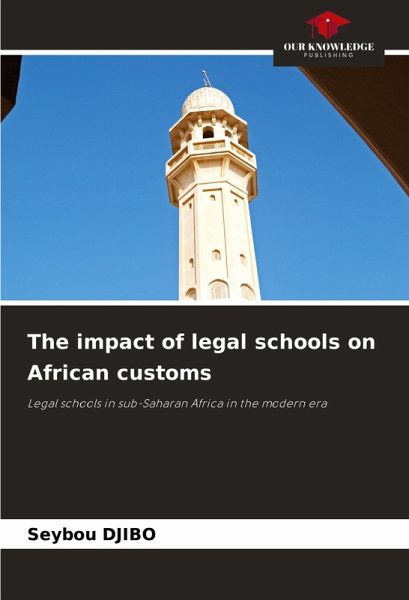
This book develops a number of points that highlight the introduction of Islam and its law in sub-Saharan Africa.It should be pointed out that Islamic law took root in sub-Saharan Africa without abrogating the ancestral law typical of Africa, with which it coexists in perfect harmony. So the aim of Islamic law was not to erase African legal customs for its own sake, but rather to integrate new principles that enhance the living, enriching part of African culture. In sub-Saharan Africa, there are several legal schools known in literary Arabic as "al-Madhâhib al-Fiqhiyya". Among these legal schools, Seybou DJIBO cited Sunni schools such as Hanafism, Malikism, Shâfi'îsm, Hanbalism and Wahhabism, which is so feared, perhaps because of its ideology, which some describe as archaic, backward and hermetically sealed. He also cited Kharidjite schools such as Ibadism, and Shiite schools such as Imâmisme, Ismaïlisme Khôdja and Bohorâ, which are particularly widespread in East Africa.