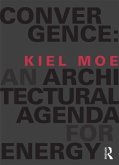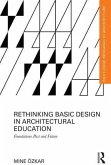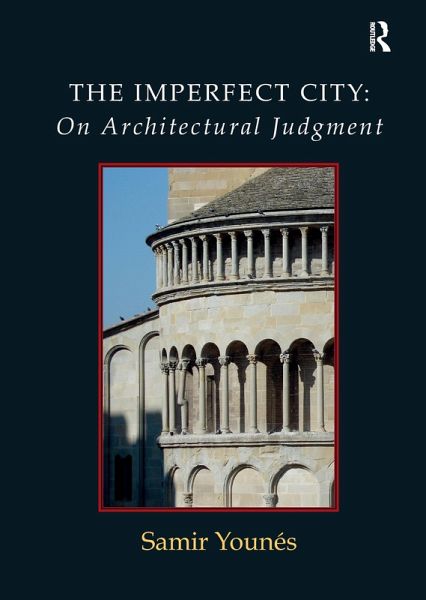
When architects judge the success or failure of a building, the range of ways and criteria which can be used for this evaluation causes many contentious and discordant arguments. Proposing that the increase in number and intensity of such arguments threatens to destabilize the very grounds upon which judgment is supposed to rest, this book examines architectural judgment in its historical, cultural, political, and psychological dimensions and their convergence on that most expressive part of architecture, namely: architectural character.
Samir Younés is a Professor of architecture at the University of Notre Dame where he was Director of Rome Studies in Architecture. He is also the author of The True, the Fictive, and the Real. The Historical Dictionary of Architecture of Quatremère de Quincy.
Inhaltsangabe
Contents: Introduction Part 1 External Criteria for Architectural Judgment: Architectural judgment based on history, part 1 Architectural judgment based on history, part 2 Architectural judgment based on history, part 3 On the nature of modernity Political content and architectural form Desire, imitation, and conflict. Part 2 Internal Criteria for Architectural Judgment. The Faces of Character: Architectural expression: form, quality and purpose Character, imitation and invention: a discussion of three historic moments The limits of architectural expression Conclusion: the usefulness of conflict for judgment Bibliography Index.
Es gelten unsere Allgemeinen Geschäftsbedingungen: www.buecher.de/agb
Impressum
www.buecher.de ist ein Internetauftritt der buecher.de internetstores GmbH
Geschäftsführung: Monica Sawhney | Roland Kölbl | Günter Hilger
Sitz der Gesellschaft: Batheyer Straße 115 - 117, 58099 Hagen
Postanschrift: Bürgermeister-Wegele-Str. 12, 86167 Augsburg
Amtsgericht Hagen HRB 13257
Steuernummer: 321/5800/1497
USt-IdNr: DE450055826