Andere Kunden interessierten sich auch für
") FRANKENSTEIN or The Modern Prometheus (Uncensored 1818 Edition - Wisehouse Classics)12,99 €
FRANKENSTEIN or The Modern Prometheus (Uncensored 1818 Edition - Wisehouse Classics)12,99 €") FRANKENSTEIN or The Modern Prometheus (The Revised 1831 Edition - Wisehouse Classics)12,99 €
FRANKENSTEIN or The Modern Prometheus (The Revised 1831 Edition - Wisehouse Classics)12,99 €") The Hound of the Baskervilles (Wisehouse Classics Edition)11,99 €
The Hound of the Baskervilles (Wisehouse Classics Edition)11,99 €") The Most Dangerous Game (Wisehouse Classics Edition)7,99 €
The Most Dangerous Game (Wisehouse Classics Edition)7,99 €") The Scarlet Letter (Wisehouse Classics Edition)12,99 €
The Scarlet Letter (Wisehouse Classics Edition)12,99 €") The Picture of Dorian Gray (Wisehouse Classics - with original illustrations by Eugene Dété)12,99 €
The Picture of Dorian Gray (Wisehouse Classics - with original illustrations by Eugene Dété)12,99 €") The Adventures of Tom Sawyer (Wisehouse Classics Edition)11,99 €
The Adventures of Tom Sawyer (Wisehouse Classics Edition)11,99 €
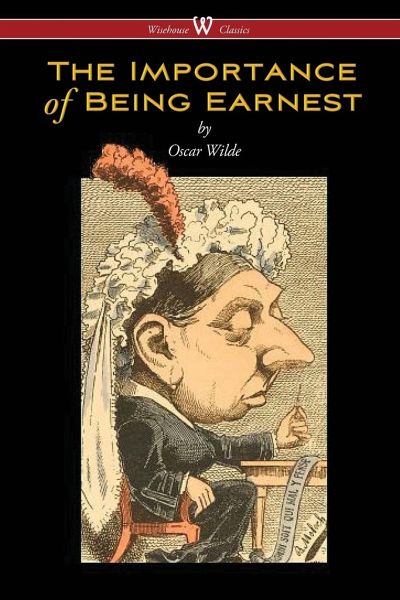
THE IMPORTANCE OF BEING EARNEST, A Trivial Comedy for Serious People is a play by Oscar Wilde. First performed on 14 February 1895 at the St James's Theatre in London, it is a farcical comedy in which the protagonists maintain fictitious personæ to escape burdensome social obligations. Working within the social conventions of late Victorian London, the play's major themes are the triviality with which it treats institutions as serious as marriage, and the resulting satire of Victorian ways. Contemporary reviews all praised the play's humour, though some were cautious about its explicit lack of social messages, while others foresaw the modern consensus that it was the culmination of Wilde's artistic career so far. Its high farce and witty dialogue have helped make THE IMPORTANCE OF BEING EARNEST Wilde's most enduringly popular play. The successful opening night marked the climax of Wilde's career but also heralded his downfall. The Marquess of Queensberry, whose son Lord Alfred Douglas was Wilde's lover, planned to present the writer with a bouquet of rotten vegetables and disrupt the show. Wilde was tipped off and Queensberry was refused admission. Soon afterwards their feud came to a climax in court, where Wilde's homosexual double life was revealed to the Victorian public and he was eventually sentenced to imprisonment. His notoriety caused the play, despite its early success, to be closed after 86 performances. After his release, he published the play from exile in Paris, but he wrote no further comic or dramatic work. (more on www.wisehouse-classics.com)
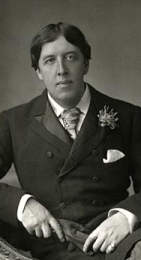
Known for his flamboyant dress, his wit, and glittering conversational skill, Oscar Wilde, or Oscar Fingal O'Flahertie Wills Wilde, was born October 16, 1854, in Dublin, Ireland. Oscar's father was knighted in 1864 for his work as the author of a National Census Report, and was Ireland's leading ear and eye surgeon. His mother Jane Francesca Elgee was a poet and authority on Celtic myth and folklore and a skilled linguist. Wilde attended the Portora Royal School at Enniskillen and was awarded the Royal School Scholarship to attend Trinity College in Dublin. From there, he studied at Magdalen College in Oxford where his poem "Ravenna" won the Newdigate Prize for the best English verse composition by an Oxford undergraduate. After graduation, he moved to London, focused on poetry and became a spokesman for aestheticism. He published his first collection, Poems, in 1881. In 1882, he traveled to New York City and embarked on an American lecture tour, delivering 140 lectures in just nine months. He also met with leading American scholars and literary figures, including Henry W. Longfellow, Oliver Wendell Holmes and Walt Whitman.