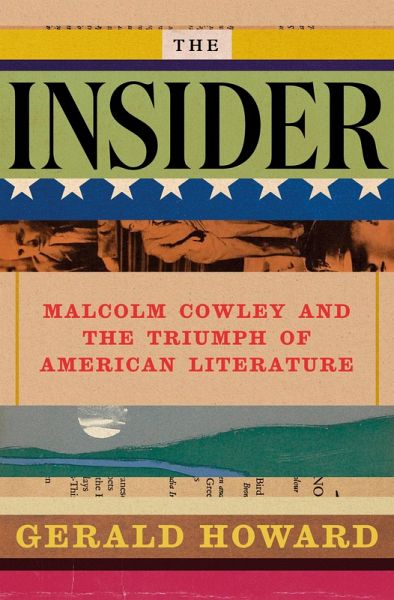
A finalist for the 2026 Andrew Carnegie Medal for Excellence in Nonfiction • Named a Best Book of the Year by The New Yorker A delightful and majestic reckoning with the ascent of American fiction in the twentieth century through the prism of the under-known man who had an astonishing amount to do with it Malcolm Cowley is not a household name today, but the American literary canon would look very different without him. A prototypical “man of letters” of his generation—Harvard University, a volunteer in the French ambulance corps in World War I, a rite of passage in Paris after the war—he…mehr
A finalist for the 2026 Andrew Carnegie Medal for Excellence in Nonfiction • Named a Best Book of the Year by The New Yorker A delightful and majestic reckoning with the ascent of American fiction in the twentieth century through the prism of the under-known man who had an astonishing amount to do with it Malcolm Cowley is not a household name today, but the American literary canon would look very different without him. A prototypical “man of letters” of his generation—Harvard University, a volunteer in the French ambulance corps in World War I, a rite of passage in Paris after the war—he became one of the few truly influential critics of the 1920s and ’30s, along with his close New Republic colleague Edmund Wilson. Cowley’s early support of Hemingway, Fitzgerald, and their set—and indeed for framing this group in generational terms in the first place—secured his place in literary history. Most people are lucky to be part of a single game-changing era in their careers; for Cowley, it happened again and again. After emerging from the political fray of the thirties badly damaged, he retreated behind the scenes as a tastemaker whose import has awaited Gerald Howard to be brought into full view. The process of canon formation is a murky business, and Cowley was a prime mover in it for the better part of four decades, through the Lost Generation, the Beat Generation, and the counterculture of the sixties. Without him, the odds would be much longer that the names William Faulkner, Jack Kerouac, and Ken Kesey, to name just three, would have ever echoed. In The Insider, Gerald Howard gives an intimate accounting of the fever graph of a fascinating and multifaceted career in the literary trade that uses that career to tell a much bigger story of how American literature took the course that it did from the 1920s to the 1960s. It’s a story of an art form, and an industry, and a country experiencing wrenching change, and the people who made a home in the storm and in no small part shaped it. Howard’s own career as a literary weathermaker is justly acclaimed, and he has brought all his talents of head and heart to bear in crafting this extraordinary book. It’s a gift to booklovers and a major contribution to the cultural history of this country.
Gerald Howard retired in 2021 as executive editor and vice president of Doubleday Books. He received the 2009 Maxwell E. Perkins Award for Distinguished Achievement in the Field of Fiction and has worked over the years with authors such as Paul Auster, Don DeLillo, David Foster Wallace, Debby Applegate, Hanya Yanagihara, Pat Barker, Sean Wilentz, and Bill Bryson. Howard’s essays and reviews have appeared in Bookforum, The New York Times Book Review, The American Scholar, London Review of Books, n+1, Slate, and other publications.
Inhaltsangabe
CONTENTS INTRODUCTION: The Cowley Era..................1 ONE. Boy in Sunlight...................................11 TWO. Scholarship Boy.................................28 THREE. The Long Furlough...........................53 FOUR. Lost and Found.................................74 FIVE. Home Again, Home Again....................116 SIX. Roaring Boy.........................................139 SEVEN. To the Barricades.............................170 EIGHT. Literary Politics.................................215 NINE. The Bitterest Thirties..........................258 TEN. Pasts, Usable and Not..........................302 ELEVEN. The Portable Malcolm Cowley...........336 TWELVE. The Literary Situation....................370 THIRTEEN. The Counterculture Cowley..........412 FOURTEEN. The Long Retrospective..............460 EPILOGUE: Politics and Memory....................479 Acknowledgments.......................................485 Sources.....................................................489 Notes........................................................493 Index........................................................515
CONTENTS INTRODUCTION: The Cowley Era..................1 ONE. Boy in Sunlight...................................11 TWO. Scholarship Boy.................................28 THREE. The Long Furlough...........................53 FOUR. Lost and Found.................................74 FIVE. Home Again, Home Again....................116 SIX. Roaring Boy.........................................139 SEVEN. To the Barricades.............................170 EIGHT. Literary Politics.................................215 NINE. The Bitterest Thirties..........................258 TEN. Pasts, Usable and Not..........................302 ELEVEN. The Portable Malcolm Cowley...........336 TWELVE. The Literary Situation....................370 THIRTEEN. The Counterculture Cowley..........412 FOURTEEN. The Long Retrospective..............460 EPILOGUE: Politics and Memory....................479 Acknowledgments.......................................485 Sources.....................................................489 Notes........................................................493 Index........................................................515
Es gelten unsere Allgemeinen Geschäftsbedingungen: www.buecher.de/agb
Impressum
www.buecher.de ist ein Internetauftritt der buecher.de internetstores GmbH
Geschäftsführung: Monica Sawhney | Roland Kölbl | Günter Hilger
Sitz der Gesellschaft: Batheyer Straße 115 - 117, 58099 Hagen
Postanschrift: Bürgermeister-Wegele-Str. 12, 86167 Augsburg
Amtsgericht Hagen HRB 13257
Steuernummer: 321/5800/1497
USt-IdNr: DE450055826