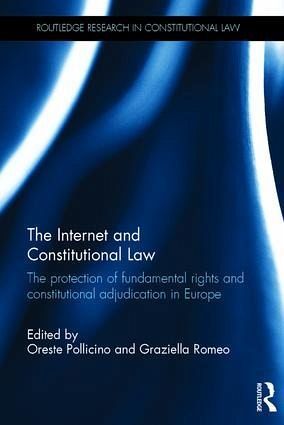
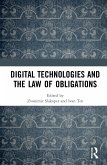
This book analyses emerging constitutional principles addressing the regulation of the internet at both the national and the supranational level. It addresses the European Court of Human Rights and the European Court of Justice case law, before going on to explore Constitutional or Supreme Courts' decisions in individual jurisdictions in Europe and the US. The contributions to the volume discuss the possibility of the "constitutionalization" of internet law, calling into question the thesis of the so-called anarchic nature of the internet.
This book analyses emerging constitutional principles addressing the regulation of the internet at both the national and the supranational level. It addresses the European Court of Human Rights and the European Court of Justice case law, before going on to explore Constitutional or Supreme Courts' decisions in individual jurisdictions in Europe and the US. The contributions to the volume discuss the possibility of the "constitutionalization" of internet law, calling into question the thesis of the so-called anarchic nature of the internet.
Oreste Pollicino is an Associate Professor of Comparative Law at Bocconi University Milan, Italy. His research interests include European and Comparative Constitutional Law; Media Law; Internet Law; Fundamental Rights. He published a number of books and essays in the field of European and Comparative Constitutional Law, including The Interaction between Europe's Legal Systems: Judicial Dialogue and the Creation of Supranational Laws, 2012, Edward Elgar Publishing; Modeling the Liability of Internet Service Providers: Google versus Vividown: A Constitutional Perspective, Egea, 2013. Graziella Romeo is an Assistant Professor of Constitutional Law at Bocconi University Milan, Italy. Her research interests include Fundamental Rights, Constitutional Adjudication, Methods of argumentation of Constitutional Courts. She published a number of essays in the field of constitutional law, including Measuring Cosmopolitanism in Europe. Standards of Judicial Scrutiny Over Non-Citizens' Rights, in Cambridge J. Int'l Comp. L., 2014, vol. 3; Looking back in anger and forward in trust: the complicate patchwork of the damages regime for infringements of rights in Italy, in Baginska (ed.), Berlin, 2015.
Inhaltsangabe
Introduction Part I: Section 1: The theoretical framework and the jurisdiction conundrum in a comparative perspective 1. Judicial Reasoning and New Technologies: Framing, Newness, Fundamental Rights and the Internet András Sajó and Clare Ryan 2. The boundaries of jurisdiction in cybercrime and constitutional protection: the European perspective Catherine Van de Heyning 3. The US perspective on the constitutional protection of the Internet: jurisdiction, privacy and equality on line Molly Land Section 2: European Standards for protection of fundamental rights in the Internet 4. Freedom of expression in the Internet: trends of the case law of the European Court of Human Rights Juan Barata Mir and Marco Bassini 5. The Court of Justice of the European Union and the illusion of balancing in Internet-related disputes Filippo Fontanelli Part II: Models of constitutional adjudication on internet issues: a comparative perspective 6. Protection of fundamental rights and the Internet: a comparison between Italian and French systems of constitutional adjudication Paolo Passaglia 7. Protection of fundamental rights and the Internet: a comparative appraisal of Germany and Central European constitutional case law András Jori 8. Constitutional adjudication on Internet issues in Poland Krystyna Kowalik 9. The protection of digital expression in the UK: old principles in a new world Jacob Rowbottom 10. The constitutional ripeness of principles in Internet law in the Netherlands Gert-Jan Leenknegt 11. Internet Law, protection of fundamental rights and the role of constitutional adjudication: concluding remarks Oreste Pollicino and Graziella Romeo
Introduction Part I: Section 1: The theoretical framework and the jurisdiction conundrum in a comparative perspective 1. Judicial Reasoning and New Technologies: Framing, Newness, Fundamental Rights and the Internet András Sajó and Clare Ryan 2. The boundaries of jurisdiction in cybercrime and constitutional protection: the European perspective Catherine Van de Heyning 3. The US perspective on the constitutional protection of the Internet: jurisdiction, privacy and equality on line Molly Land Section 2: European Standards for protection of fundamental rights in the Internet 4. Freedom of expression in the Internet: trends of the case law of the European Court of Human Rights Juan Barata Mir and Marco Bassini 5. The Court of Justice of the European Union and the illusion of balancing in Internet-related disputes Filippo Fontanelli Part II: Models of constitutional adjudication on internet issues: a comparative perspective 6. Protection of fundamental rights and the Internet: a comparison between Italian and French systems of constitutional adjudication Paolo Passaglia 7. Protection of fundamental rights and the Internet: a comparative appraisal of Germany and Central European constitutional case law András Jori 8. Constitutional adjudication on Internet issues in Poland Krystyna Kowalik 9. The protection of digital expression in the UK: old principles in a new world Jacob Rowbottom 10. The constitutional ripeness of principles in Internet law in the Netherlands Gert-Jan Leenknegt 11. Internet Law, protection of fundamental rights and the role of constitutional adjudication: concluding remarks Oreste Pollicino and Graziella Romeo
Es gelten unsere Allgemeinen Geschäftsbedingungen: www.buecher.de/agb
Impressum
www.buecher.de ist ein Internetauftritt der buecher.de internetstores GmbH
Geschäftsführung: Monica Sawhney | Roland Kölbl | Günter Hilger
Sitz der Gesellschaft: Batheyer Straße 115 - 117, 58099 Hagen
Postanschrift: Bürgermeister-Wegele-Str. 12, 86167 Augsburg
Amtsgericht Hagen HRB 13257
Steuernummer: 321/5800/1497
USt-IdNr: DE450055826