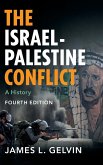
The Israel-Palestine conflict is frequently characterised by the violence between the two sides, beneath which lie a whole series of issues and disagreements. This book uniquely brings together Israeli and Palestinian viewpoints on key topics, providing an invaluable guide to the latest thinking on the major topics that the peace process will be based around.
The Israel-Palestine conflict is frequently characterised by the violence between the two sides, beneath which lie a whole series of issues and disagreements. This book uniquely brings together Israeli and Palestinian viewpoints on key topics, providing an invaluable guide to the latest thinking on the major topics that the peace process will be based around.
Elizabeth G. Matthews is Assistant Professor in the Department of Political Science at California State University San Marcos, USA. She has written a number of books and articles on world politics and US foreign policy, and is co-editor of the Routledge UCLA Center for Middle East Development (CMED) series. David Newman is professor of Political Geography in the Department of Politics and Government at Ben Gurion University, and co-editor of the International Journal of Geopolitics. He is currently the Dean of the Faculty of Humanities and Social Sciences at Ben-Gurion University. His research focuses on Geopolitics, Borders and the territorial dimensions of ethnic and national conflict and he has written extensively on topics relating to territory and borders in Israel-Palestine. Mohammed S. Dajani Daoudi holds two doctorate degrees from the University of South Carolina at Columbia and the University of Texas at Austin. He is the founding director of the American Studies Center at al-Quds University, the Wasatia Movement - Palestine, and the Jerusalem Studies and Research Institute, and is the author of numerous books and academic articles in English and Arabic.
Inhaltsangabe
Introduction Part 1: Issues 1. Refugees i. Israel and the Palestinian Refugee Issue ii. Palestinian Refugees 2. Borders, Territory, and Settlements iii. From Bilateralism to Unilateralism: The Changing Territorial Discourses of Israeli-Palestine Conflict Resolution iv. A Palestinian Perspective on the Israeli-Palestinian Conflict on Settlements, Territory and Borders 3. Water v. Are the Conflicts Over the Shared Water Resources Between Israelis and Palestinians an Obstacle to Peace? vi. Palestine Water: Between Challenges and Realities Part 2: Concepts 4. Democratization and the Domestic Political Environment vii. The Effects of Conflict: National Security, UNSC Resolution 1325, and Women in Israel viii. Democratization in Palestine: From Civil Society Democracy to a Transitional Democracy 5. Human Rights ix. Merging the Human Rights Dimension into Peace-Making: Is It Good for the Jews? x. Fatah and Hamas Human Rights Violations in the Palestinian Occupied Territories from April 2006 to December 2007 6. Peace Culture and Education xi. Challenges for Constructing Peace Culture and Peace Education xii. Culture of Peace and Education: The Palestinian Context
Introduction Part 1: Issues 1. Refugees i. Israel and the Palestinian Refugee Issue ii. Palestinian Refugees 2. Borders, Territory, and Settlements iii. From Bilateralism to Unilateralism: The Changing Territorial Discourses of Israeli-Palestine Conflict Resolution iv. A Palestinian Perspective on the Israeli-Palestinian Conflict on Settlements, Territory and Borders 3. Water v. Are the Conflicts Over the Shared Water Resources Between Israelis and Palestinians an Obstacle to Peace? vi. Palestine Water: Between Challenges and Realities Part 2: Concepts 4. Democratization and the Domestic Political Environment vii. The Effects of Conflict: National Security, UNSC Resolution 1325, and Women in Israel viii. Democratization in Palestine: From Civil Society Democracy to a Transitional Democracy 5. Human Rights ix. Merging the Human Rights Dimension into Peace-Making: Is It Good for the Jews? x. Fatah and Hamas Human Rights Violations in the Palestinian Occupied Territories from April 2006 to December 2007 6. Peace Culture and Education xi. Challenges for Constructing Peace Culture and Peace Education xii. Culture of Peace and Education: The Palestinian Context
Es gelten unsere Allgemeinen Geschäftsbedingungen: www.buecher.de/agb
Impressum
www.buecher.de ist ein Internetauftritt der buecher.de internetstores GmbH
Geschäftsführung: Monica Sawhney | Roland Kölbl | Günter Hilger
Sitz der Gesellschaft: Batheyer Straße 115 - 117, 58099 Hagen
Postanschrift: Bürgermeister-Wegele-Str. 12, 86167 Augsburg
Amtsgericht Hagen HRB 13257
Steuernummer: 321/5800/1497
USt-IdNr: DE450055826