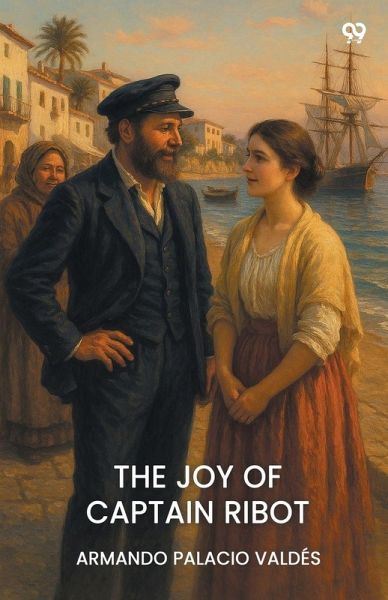
The joy of Captain Ribot explores the tension between duty and desire within a vivid Mediterranean setting. The central figure, a seasoned mariner, embodies a life shaped by routine and discipline, yet encounters with new surroundings and unfamiliar emotions begin to shift his internal compass. As he transitions from the mechanical regularity of sea voyages to unexpected involvement in the lives of others, the narrative emphasizes moments of quiet transformation. Through gestures of kindness, unplanned heroism, and gradually deepening emotional ties, the novel reveals how personal connections…mehr
The joy of Captain Ribot explores the tension between duty and desire within a vivid Mediterranean setting. The central figure, a seasoned mariner, embodies a life shaped by routine and discipline, yet encounters with new surroundings and unfamiliar emotions begin to shift his internal compass. As he transitions from the mechanical regularity of sea voyages to unexpected involvement in the lives of others, the narrative emphasizes moments of quiet transformation. Through gestures of kindness, unplanned heroism, and gradually deepening emotional ties, the novel reveals how personal connections challenge established roles. The contrast between seafaring rigor and the warmth of domestic experience frames a deeper examination of purpose and identity. The protagonist is not only tested by circumstance but quietly drawn into reflection by the presence of those whose lives are governed by entirely different rhythms. This early portion gently sets up questions of affection, belonging, and sacrifice, inviting consideration of how joy may lie not in grand adventures but in subtle, human exchanges that alter the course of even the most steadfast lives.
Armando Palacio Vald s was born on October 4, 1853, in Entrialgo, Spain, to Silverio Palacio, a lawyer, and Eduarda Rodr guez-Vald s, an aristocrat. He was the eldest of three brothers, all of whom became writers. Palacio Vald s began his literary career writing for the Revista Europea, where his critical essays gained public acclaim and led to his appointment as the editor of the journal. His early works, particularly Los Oradores del Ateneo (1878) and Los Novelistas Espa oles (1878), showcased his sharp intellect and refined humor. His novel El Se orito Octavio (1881) revealed his keen observational skills and hinted at his potential as a novelist. Palacio Vald s achieved widespread recognition with Marta y Maria (1883), a portrayal of a conflict between religious duty and earthly passion. His later works, such as Jos (1885) and La Hermana San Sulpicio (1889), continued to blend romance, social issues, and the complexities of human emotions. Palacio Vald s' writing often delved into the lives of ordinary people, capturing their struggles, dreams, and relationships with a realistic and emotional depth. He passed away on January 29, 1938, in Madrid, leaving behind a significant literary legacy in Spanish literature.
Es gelten unsere Allgemeinen Geschäftsbedingungen: www.buecher.de/agb
Impressum
www.buecher.de ist ein Internetauftritt der buecher.de internetstores GmbH
Geschäftsführung: Monica Sawhney | Roland Kölbl | Günter Hilger
Sitz der Gesellschaft: Batheyer Straße 115 - 117, 58099 Hagen
Postanschrift: Bürgermeister-Wegele-Str. 12, 86167 Augsburg
Amtsgericht Hagen HRB 13257
Steuernummer: 321/5800/1497
USt-IdNr: DE450055826