Andere Kunden interessierten sich auch für
 Slovenly Peter: or, Cheerful Stories and Funny Pictures for Good Little Folks; Illustrations Colored by Hand After the Original Style17,99 €
") Puck of Pook's Hill - Complete Collection of Puck's Magical Stories (with Original Illustrations)9,99 €
Puck of Pook's Hill - Complete Collection of Puck's Magical Stories (with Original Illustrations)9,99 € Understood Betsy: With Original Illustrations by ADA Clendenin Williamson7,49 €
 The Works Of Rudyard Kipling: The Second Jungle Book23,99 €
 The Jungle Book & the Second Jungle Book9,49 €
 The Butterflies of New England: With Original Descriptions of One Hundred and Six Species, Accompanied by an Appendix Containing Descriptions of One H17,99 €
 Fables, Original and Selected: By the Most Esteemed European and Oriental Authors: With an Introductory Dissertation On the History of Fable, Compris24,99 €
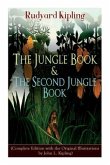


Rudyard Kipling's "The Jungle Book & The Second Jungle Book" presents a rich tapestry of narratives that intertwine the natural world with deep moral themes. Through a series of compelling tales, Kipling masterfully employs vivid imagery and rhythmic prose to explore the complex interactions between humans and animals, steeped in the lush setting of the Indian jungle. The original illustrations heighten the reader's imaginative experience, visually complementing the intricate folklore and fables that reflect colonialist influences and the sublime power of nature. Kipling, born in India to British parents and later immersed in English society, draws heavily on his multicultural background to shape these stories. His experiences in British India, along with his appreciation for the diverse traditions of the region, inform his portrayals of animal characters such as Baloo the bear and Bagheera the panther. Kipling's storytelling is influenced by the oral traditions of India, showcasing his desire to bridge cultural divides through shared narratives and moral lessons. This timeless collection transcends age and cultural boundaries, making it essential reading for anyone intrigued by the interplay of civilization and the wild. Readers are invited to lose themselves in its pages and discover profound truths about identity, belonging, and the laws that govern nature.
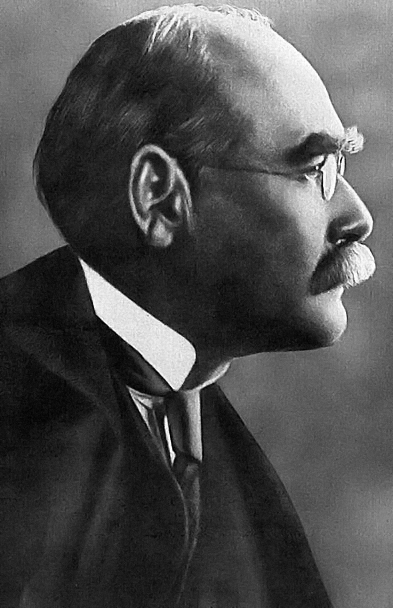
Rudyard Kipling (1865-1936) was a prolific English writer and poet, born in Bombay, India, during the British Raj. He is best known for his rich storytelling, which often incorporated his experiences of and views on the British Empire. Kipling's most renowned works include 'The Jungle Book' (1894) and 'The Second Jungle Book' (1895), which are collections of stories that exhibit his inventive use of anthropomorphism, weaving tales about the adventures of Mowgli, a boy raised by wolves, and other feral characters in the Indian jungle. These narrations not only display his creative prose style but also delve into the rudimentary laws and ethos of the wild, juxtaposed with imperialistic themes that explore the moral fabric of civilization and nature. Kipling's storytelling espouses a narrative technique that comfortably straddles the lines between fable, myth, and allegory, often tinged with a didactic quality that was aimed at the moral instruction of his readers. His narratives have had a lasting impact on Western perceptions of childhood, the jungle, and the animal kingdom, and continue to be celebrated for their imaginative prowess and linguistic dexterity. For his contribution to literature, Kipling was awarded the Nobel Prize in Literature in 1907, becoming the first English-language recipient to be so honored.