161,99 €
inkl. MwSt.
Versandkostenfrei*Erscheint vorauss. 28. Januar 2026
Melden Sie sich
hier
hier
für den Produktalarm an, um über die Verfügbarkeit des Produkts informiert zu werden.

81 °P sammeln
Andere Kunden interessierten sich auch für
 Law and Democracy in Neil MacCormick's Legal and Political Theory113,99 €
 Law and Democracy in Neil Maccormick's Legal and Political Theory113,99 €
 The Law and Politics of Constitution Making179,99 €
 Relevance of Duties in the Contemporary World98,99 €
 Justice before the Law22,99 €
 The Palgrave Handbook on the Philosophy of Punishment151,99 €
 Aurel Kolnai's the War Against the West Reconsidered177,99 €




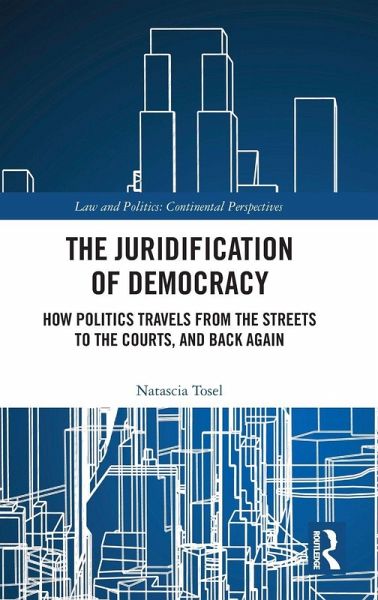
This book examines what it identifies as an increasing juridification of politics. This term refers to the use of law by both state and non-state social actors to advance their political demands and strategies. Juridification is often portrayed as a depoliticising, even democratising, process; it is frequently attributed to the logics of neoliberal governance. In this view, a small number of litigants appealing to a few unelected judges for political change seems to bypass representative institutions and, with them, the democratic will. This book challenges that narrative. By tracing the genealogy of juridification and examining its performative role in present-day democratic practices, it offers a more nuanced understanding of the relationship between juridification and democracy. Combining theoretical inquiry with case studies of human rights adjudication, it reveals how courts have become arenas of political struggle where the supralegal values of democracy are named, claimed, and contested, and how this process reverberates far beyond the courtroom, supplementing rather than supplanting democratic decision-making. The Juridification of Democracy will appeal to scholars and postgraduate students in the fields of political theory, law, critical theory, continental philosophy, socio-legal studies, and social and juridical anthropology.