
The Language of Comparative Constitutional Law
Questioning Hegemonies
Herausgeber: Arban, Erika; Yun, Jeong-In; Visser, Maartje De
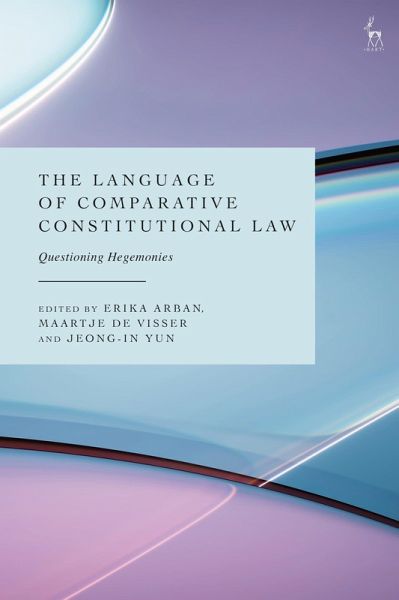
The Language of Comparative Constitutional Law
Questioning Hegemonies
Herausgeber: Arban, Erika; Yun, Jeong-In; Visser, Maartje De
- Gebundenes Buch
Andere Kunden interessierten sich auch für
 John BrighamConstitutional Language70,99 €
 Defining the Field of Comparative Constitutional Law88,99 €
 Contagion, Technology, and Law at the Limits58,99 €
 Comparative Law in Asia137,99 €
 Paul BurgessAI and the Rule of Law56,99 €
 David FeldmanKey Ideas in Constitutional Law57,99 €
 Michael Zander KcThe Law-Making Process146,99 €
-
-
-
Produktdetails
- Verlag: Hart Publishing
- Seitenzahl: 350
- Erscheinungstermin: 2. Oktober 2025
- Englisch
- Abmessung: 240mm x 161mm x 23mm
- Gewicht: 690g
- ISBN-13: 9781509983933
- ISBN-10: 1509983937
- Artikelnr.: 72896596
- Herstellerkennzeichnung
- Libri GmbH
- Europaallee 1
- 36244 Bad Hersfeld
- gpsr@libri.de
1. Language Matters
Erika Arban (University of Melbourne
Australia)
Maartje De Visser (Singapore Management University)
Jeong-In Yun (Korea University) Part I: Language Barriers and Epistemic Imbalances 2. Causes
Consequences
and Mitigation of Language Barriers in the Global Constitutional Dialogue: Insights from Japan
Masahiko Kinoshita (Kobe University
Japan) 3. Teaching Comparative Constitutional Law in English in a Non-English-Speaking Country: The Case of Italy
Francesco Biagi (University of Bologna
Italy) 4. Blind Spots
Misunderstandings
and Enlightenment: German Experiences with English as Lingua Franca of Comparative Constitutional Law
Michael Goldhammer (EBS University
Germany) 5. (Re)Inventing Constitutional Concepts
Joel I Colon-Rios (University of Essex
UK) 6. What is in a Name? The Case of the Impossible Translation of the Concept of "Forma di Stato"
Graziella Romeo (Bocconi University
Italy) and Elisa Bertolini (Bocconi University
Italy) 7. How European Integration became Constitutional: The Role of American Scholars and the Transplant of American Federal Concepts
Leonardo Pierdominici (University of Bologna
Italy) Part II: Language Biases and Contextual Dilemmas 8. English Language Bias in Comparative Constitutional Law Scholarship
Odile Ammann (University of Lausanne
Switzerland) 9. The Uses of Ubuntu under the South African Constitution
Nomfundo Ramalekana (University of Cape Town
South Africa) 10. Linguistic Colonial Continuity
Modernity and National Integration in India
Vikram A Narayam (Humboldt University
Berlin) and Uday Vir Garg (Freie Universität Berlin
Germany) 11. Constitution-Building and Catch-Up Modernisation in Central Asia: From Semantic to Cognitive Dissonance
Aziz Ismatov (Aichi Prefectural University
Japan) 12. Towards a Cross-Linguistic Epistemology: Translanguaging as a Method of Comparative Constitutional Law
Konrad Lachmayer (Sigmund Freud University
Austria) 13. Untangling Buzzwords: Making Sense of the Vocabulary in the Anglosphere Literature of Constitutional Law
Ilker Gökhan Sen (University of Oslo
Norway) Part III: Legal Translation
Multilingualism and the Discursive Way 14. In Defense of Multilingualism: The Contribution of Legal Linguistics and Comparative science to the Affirmation of Multilingualism
Claudia Marchese (University of Naples
Italy) 15. The Role of English in EU's Institutional Multilingualism
Jaap Baaij (Utrecht University
the Netherlands) 16. Comparative Law in a Multilingual Constitutional Space
And its Limits: Language and Law in the European Union
Francesco Palermo (University of Verona
Italy) 17. Comparative Law
Comparative Constitutional Law
and Linguistic Sensitivity
Jaakko Husa (University of Helsinki
Finland) 18. The 'Language of the Law' and the 'Sentiment of the Language'
A Cultural Challenge to Enrich Global English for Comparative Legal Studies with National Identities
Giovanna Tieghi (University of Padua
Italy) 19. Bridging Borders through Translation: Corpus Linguistics and Metaphor Analysis in Comparative Constitutional Law
Lucja Biel (University of Warsaw
Poland)
Hanem El-Farahaty (University of Leeds
UK)
Francesca Seracini (Catholic University of the Sacred Heart
Italy) 20. Discursive Comparative Constitutional Law
Ngoc Son Bui (University of Oxford
UK)
Erika Arban (University of Melbourne
Australia)
Maartje De Visser (Singapore Management University)
Jeong-In Yun (Korea University) Part I: Language Barriers and Epistemic Imbalances 2. Causes
Consequences
and Mitigation of Language Barriers in the Global Constitutional Dialogue: Insights from Japan
Masahiko Kinoshita (Kobe University
Japan) 3. Teaching Comparative Constitutional Law in English in a Non-English-Speaking Country: The Case of Italy
Francesco Biagi (University of Bologna
Italy) 4. Blind Spots
Misunderstandings
and Enlightenment: German Experiences with English as Lingua Franca of Comparative Constitutional Law
Michael Goldhammer (EBS University
Germany) 5. (Re)Inventing Constitutional Concepts
Joel I Colon-Rios (University of Essex
UK) 6. What is in a Name? The Case of the Impossible Translation of the Concept of "Forma di Stato"
Graziella Romeo (Bocconi University
Italy) and Elisa Bertolini (Bocconi University
Italy) 7. How European Integration became Constitutional: The Role of American Scholars and the Transplant of American Federal Concepts
Leonardo Pierdominici (University of Bologna
Italy) Part II: Language Biases and Contextual Dilemmas 8. English Language Bias in Comparative Constitutional Law Scholarship
Odile Ammann (University of Lausanne
Switzerland) 9. The Uses of Ubuntu under the South African Constitution
Nomfundo Ramalekana (University of Cape Town
South Africa) 10. Linguistic Colonial Continuity
Modernity and National Integration in India
Vikram A Narayam (Humboldt University
Berlin) and Uday Vir Garg (Freie Universität Berlin
Germany) 11. Constitution-Building and Catch-Up Modernisation in Central Asia: From Semantic to Cognitive Dissonance
Aziz Ismatov (Aichi Prefectural University
Japan) 12. Towards a Cross-Linguistic Epistemology: Translanguaging as a Method of Comparative Constitutional Law
Konrad Lachmayer (Sigmund Freud University
Austria) 13. Untangling Buzzwords: Making Sense of the Vocabulary in the Anglosphere Literature of Constitutional Law
Ilker Gökhan Sen (University of Oslo
Norway) Part III: Legal Translation
Multilingualism and the Discursive Way 14. In Defense of Multilingualism: The Contribution of Legal Linguistics and Comparative science to the Affirmation of Multilingualism
Claudia Marchese (University of Naples
Italy) 15. The Role of English in EU's Institutional Multilingualism
Jaap Baaij (Utrecht University
the Netherlands) 16. Comparative Law in a Multilingual Constitutional Space
And its Limits: Language and Law in the European Union
Francesco Palermo (University of Verona
Italy) 17. Comparative Law
Comparative Constitutional Law
and Linguistic Sensitivity
Jaakko Husa (University of Helsinki
Finland) 18. The 'Language of the Law' and the 'Sentiment of the Language'
A Cultural Challenge to Enrich Global English for Comparative Legal Studies with National Identities
Giovanna Tieghi (University of Padua
Italy) 19. Bridging Borders through Translation: Corpus Linguistics and Metaphor Analysis in Comparative Constitutional Law
Lucja Biel (University of Warsaw
Poland)
Hanem El-Farahaty (University of Leeds
UK)
Francesca Seracini (Catholic University of the Sacred Heart
Italy) 20. Discursive Comparative Constitutional Law
Ngoc Son Bui (University of Oxford
UK)
1. Language Matters
Erika Arban (University of Melbourne
Australia)
Maartje De Visser (Singapore Management University)
Jeong-In Yun (Korea University) Part I: Language Barriers and Epistemic Imbalances 2. Causes
Consequences
and Mitigation of Language Barriers in the Global Constitutional Dialogue: Insights from Japan
Masahiko Kinoshita (Kobe University
Japan) 3. Teaching Comparative Constitutional Law in English in a Non-English-Speaking Country: The Case of Italy
Francesco Biagi (University of Bologna
Italy) 4. Blind Spots
Misunderstandings
and Enlightenment: German Experiences with English as Lingua Franca of Comparative Constitutional Law
Michael Goldhammer (EBS University
Germany) 5. (Re)Inventing Constitutional Concepts
Joel I Colon-Rios (University of Essex
UK) 6. What is in a Name? The Case of the Impossible Translation of the Concept of "Forma di Stato"
Graziella Romeo (Bocconi University
Italy) and Elisa Bertolini (Bocconi University
Italy) 7. How European Integration became Constitutional: The Role of American Scholars and the Transplant of American Federal Concepts
Leonardo Pierdominici (University of Bologna
Italy) Part II: Language Biases and Contextual Dilemmas 8. English Language Bias in Comparative Constitutional Law Scholarship
Odile Ammann (University of Lausanne
Switzerland) 9. The Uses of Ubuntu under the South African Constitution
Nomfundo Ramalekana (University of Cape Town
South Africa) 10. Linguistic Colonial Continuity
Modernity and National Integration in India
Vikram A Narayam (Humboldt University
Berlin) and Uday Vir Garg (Freie Universität Berlin
Germany) 11. Constitution-Building and Catch-Up Modernisation in Central Asia: From Semantic to Cognitive Dissonance
Aziz Ismatov (Aichi Prefectural University
Japan) 12. Towards a Cross-Linguistic Epistemology: Translanguaging as a Method of Comparative Constitutional Law
Konrad Lachmayer (Sigmund Freud University
Austria) 13. Untangling Buzzwords: Making Sense of the Vocabulary in the Anglosphere Literature of Constitutional Law
Ilker Gökhan Sen (University of Oslo
Norway) Part III: Legal Translation
Multilingualism and the Discursive Way 14. In Defense of Multilingualism: The Contribution of Legal Linguistics and Comparative science to the Affirmation of Multilingualism
Claudia Marchese (University of Naples
Italy) 15. The Role of English in EU's Institutional Multilingualism
Jaap Baaij (Utrecht University
the Netherlands) 16. Comparative Law in a Multilingual Constitutional Space
And its Limits: Language and Law in the European Union
Francesco Palermo (University of Verona
Italy) 17. Comparative Law
Comparative Constitutional Law
and Linguistic Sensitivity
Jaakko Husa (University of Helsinki
Finland) 18. The 'Language of the Law' and the 'Sentiment of the Language'
A Cultural Challenge to Enrich Global English for Comparative Legal Studies with National Identities
Giovanna Tieghi (University of Padua
Italy) 19. Bridging Borders through Translation: Corpus Linguistics and Metaphor Analysis in Comparative Constitutional Law
Lucja Biel (University of Warsaw
Poland)
Hanem El-Farahaty (University of Leeds
UK)
Francesca Seracini (Catholic University of the Sacred Heart
Italy) 20. Discursive Comparative Constitutional Law
Ngoc Son Bui (University of Oxford
UK)
Erika Arban (University of Melbourne
Australia)
Maartje De Visser (Singapore Management University)
Jeong-In Yun (Korea University) Part I: Language Barriers and Epistemic Imbalances 2. Causes
Consequences
and Mitigation of Language Barriers in the Global Constitutional Dialogue: Insights from Japan
Masahiko Kinoshita (Kobe University
Japan) 3. Teaching Comparative Constitutional Law in English in a Non-English-Speaking Country: The Case of Italy
Francesco Biagi (University of Bologna
Italy) 4. Blind Spots
Misunderstandings
and Enlightenment: German Experiences with English as Lingua Franca of Comparative Constitutional Law
Michael Goldhammer (EBS University
Germany) 5. (Re)Inventing Constitutional Concepts
Joel I Colon-Rios (University of Essex
UK) 6. What is in a Name? The Case of the Impossible Translation of the Concept of "Forma di Stato"
Graziella Romeo (Bocconi University
Italy) and Elisa Bertolini (Bocconi University
Italy) 7. How European Integration became Constitutional: The Role of American Scholars and the Transplant of American Federal Concepts
Leonardo Pierdominici (University of Bologna
Italy) Part II: Language Biases and Contextual Dilemmas 8. English Language Bias in Comparative Constitutional Law Scholarship
Odile Ammann (University of Lausanne
Switzerland) 9. The Uses of Ubuntu under the South African Constitution
Nomfundo Ramalekana (University of Cape Town
South Africa) 10. Linguistic Colonial Continuity
Modernity and National Integration in India
Vikram A Narayam (Humboldt University
Berlin) and Uday Vir Garg (Freie Universität Berlin
Germany) 11. Constitution-Building and Catch-Up Modernisation in Central Asia: From Semantic to Cognitive Dissonance
Aziz Ismatov (Aichi Prefectural University
Japan) 12. Towards a Cross-Linguistic Epistemology: Translanguaging as a Method of Comparative Constitutional Law
Konrad Lachmayer (Sigmund Freud University
Austria) 13. Untangling Buzzwords: Making Sense of the Vocabulary in the Anglosphere Literature of Constitutional Law
Ilker Gökhan Sen (University of Oslo
Norway) Part III: Legal Translation
Multilingualism and the Discursive Way 14. In Defense of Multilingualism: The Contribution of Legal Linguistics and Comparative science to the Affirmation of Multilingualism
Claudia Marchese (University of Naples
Italy) 15. The Role of English in EU's Institutional Multilingualism
Jaap Baaij (Utrecht University
the Netherlands) 16. Comparative Law in a Multilingual Constitutional Space
And its Limits: Language and Law in the European Union
Francesco Palermo (University of Verona
Italy) 17. Comparative Law
Comparative Constitutional Law
and Linguistic Sensitivity
Jaakko Husa (University of Helsinki
Finland) 18. The 'Language of the Law' and the 'Sentiment of the Language'
A Cultural Challenge to Enrich Global English for Comparative Legal Studies with National Identities
Giovanna Tieghi (University of Padua
Italy) 19. Bridging Borders through Translation: Corpus Linguistics and Metaphor Analysis in Comparative Constitutional Law
Lucja Biel (University of Warsaw
Poland)
Hanem El-Farahaty (University of Leeds
UK)
Francesca Seracini (Catholic University of the Sacred Heart
Italy) 20. Discursive Comparative Constitutional Law
Ngoc Son Bui (University of Oxford
UK)