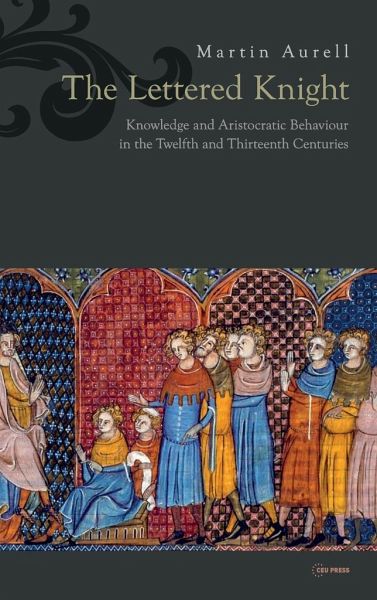
The encounter between knight and science could seem a paradox. It is nonetheless related with the intellectual Renaissance of Twelfth-Century, an essential movement for Western history. The knight is not only fighting in battles, but also moving in sophisticated courts. He is interested on Latin classics and reading, and even on his own poetry. He supports "jongleurs" and minstrels and he likes to have literary conversations with clerics, who try to reform his behaviour, which is often brutal. These lettered warriors, while improving they culture, learn how to repress their own violence and…mehr
The encounter between knight and science could seem a paradox. It is nonetheless related with the intellectual Renaissance of Twelfth-Century, an essential movement for Western history. The knight is not only fighting in battles, but also moving in sophisticated courts. He is interested on Latin classics and reading, and even on his own poetry. He supports "jongleurs" and minstrels and he likes to have literary conversations with clerics, who try to reform his behaviour, which is often brutal. These lettered warriors, while improving they culture, learn how to repress their own violence and they are initiated to courtesy: selected language, measured gestures, elegance in dress, and manners at table. Their association with women, who are often learned, becomes more gallant. A mental revolution is acting among lay elites, who, in contact with clergy, use their weapons for common welfare. This new conduct is a sign of modernity.
Martin Aurell is Professor of Medieval History at the University of Poitiers and Director of the Centre d'Etudes Supérieures de Civilisation Médiévale. He has been a member of the Institute for Advanced Study of Princeton (1999) and of the Institut Universitaire de France (2002-2012). He is the editor of the review Cahiers de Civilisation Médiévale. He works on nobility, chivalry, kinship and power in Catalonia, Provence, Languedoc, and in the Angevine Empire.
Inhaltsangabe
1.Introduction 1.1 The Renaissance of the twelfth century 1.2 Scholasticism, reading and writing 1.3 'Literature' and orality 1.4 The lettered and the unlettered 1.5 The cleric and the knight 1.6 Courtesy and the civilisation of mores2. Knighthood and Literacy 2.1 Schooling and teaching children to read and write 2.1.1 Sons faced with the choice of taking up arms or the calling of the cloister 2.1.2 The first teachers: family, private tutors, and courtly clerics 2.1.3 In the monastic, cathedral and parish schools 2.1.4 From cloister to secular life 2.1.5 Italian precocity and pragmatic knowledge 2.1.6 Methods of learning, new programs and the spread of writing in the vernacular 2.2 The Latin of the knights 2.2.1 The Latin skills of Anglo-Norman knights 2.2.2 The Italian educated nobility 2.2.3 Semi-literate laymen 2.2.4 Book collectors and patrons3. Knighthood and Literary Creation 3.1 The court and literary social life 3.1.1 Castles transformed into palaces Halls, rooms and gardens A literary setting 3.1.2 Literature intended for performance Ladies holding salon Dancing, jeux partis and dialogues 3.1.3 Minstrels and professional performers Wide-ranging skills The dissemination of political songs Rivalry with the knights and clerics A more positive image 3.2 The Knight Writers 3.2.1 Songs: a preference for the brief genre The troubadours on love and war Northern trouveres and Germanic Minnesänger 3.2.2 Romances, sagas and other fictional genres: a rare form of writing The Grail, love and war in French The German ministerials Italy, compilers and encyclopaedists Snorri Sturluson's sagas Impiety or religiosity? 3.2.3 History and memory: telling the Crusade Overseas adventure in oc and oïl The Catalan-Italian wars around the Mediterranean 3.3 Learned Women 3.3.1 The education of girls Preceptors and schools Convent education Disparate educational levels 3.3.2 Women readers The indispensable Psalter Receiving love poems and letters 3.3.3 Women writers Women epistolarians Marie de France Trobairitz, hagiographers and visionaries 3.3.4 The superiority of feminine knowledge? 4. Clerical Instruction and Civilizing Knightly Mores 4.1 War and the codifying of violence 4.1.1 The moral of the story 4.1.2 Rebuking greed, violence and vanity Pillaging and murder Hunting, tournaments and games 4.1.3 The chivalrous ideal Warring under the king for peace and justice The knighthood and dubbing Sparing human lives The crusade as armed pilgrimage The paradox of the soldier monks 4.1.4 The internalisation of persuasive arguments? 4.2 Manners: mastering movement and speech 4.2.1 Courteous clerics 4.2.2 Instructional books on civility 4.2.3 Clothing and attire Cleanliness and elegance Shame and immodesty 4.2.4 Self-control in gestures 4.2.5 Table manners 4.2.6 The art of pleasant conversation 4.3 Love: refinement and self-control 4.3.1 The patient, enduring and meek lover 4.3.2 Perfecting oneself through love 4.3.3 Classical knowledge and courtly love The debate on knights and clerks in love 4.4 Religion: the warrior's piety 4.4.1 The lettered knights and theological thought 4.4.2 Courtliness and piety 4.4.3 Mass attendance and the dangers of Pharisaism 4.4.4 Meditating at church, invoking the Holy Virgin, and other forms of devotion 4.4.5 Love for fellow-men, alms and voluntary poverty 4.4.6 Confession and penance 4.4.7 The knight's ....
1.Introduction 1.1 The Renaissance of the twelfth century 1.2 Scholasticism, reading and writing 1.3 'Literature' and orality 1.4 The lettered and the unlettered 1.5 The cleric and the knight 1.6 Courtesy and the civilisation of mores2. Knighthood and Literacy 2.1 Schooling and teaching children to read and write 2.1.1 Sons faced with the choice of taking up arms or the calling of the cloister 2.1.2 The first teachers: family, private tutors, and courtly clerics 2.1.3 In the monastic, cathedral and parish schools 2.1.4 From cloister to secular life 2.1.5 Italian precocity and pragmatic knowledge 2.1.6 Methods of learning, new programs and the spread of writing in the vernacular 2.2 The Latin of the knights 2.2.1 The Latin skills of Anglo-Norman knights 2.2.2 The Italian educated nobility 2.2.3 Semi-literate laymen 2.2.4 Book collectors and patrons3. Knighthood and Literary Creation 3.1 The court and literary social life 3.1.1 Castles transformed into palaces Halls, rooms and gardens A literary setting 3.1.2 Literature intended for performance Ladies holding salon Dancing, jeux partis and dialogues 3.1.3 Minstrels and professional performers Wide-ranging skills The dissemination of political songs Rivalry with the knights and clerics A more positive image 3.2 The Knight Writers 3.2.1 Songs: a preference for the brief genre The troubadours on love and war Northern trouveres and Germanic Minnesänger 3.2.2 Romances, sagas and other fictional genres: a rare form of writing The Grail, love and war in French The German ministerials Italy, compilers and encyclopaedists Snorri Sturluson's sagas Impiety or religiosity? 3.2.3 History and memory: telling the Crusade Overseas adventure in oc and oïl The Catalan-Italian wars around the Mediterranean 3.3 Learned Women 3.3.1 The education of girls Preceptors and schools Convent education Disparate educational levels 3.3.2 Women readers The indispensable Psalter Receiving love poems and letters 3.3.3 Women writers Women epistolarians Marie de France Trobairitz, hagiographers and visionaries 3.3.4 The superiority of feminine knowledge? 4. Clerical Instruction and Civilizing Knightly Mores 4.1 War and the codifying of violence 4.1.1 The moral of the story 4.1.2 Rebuking greed, violence and vanity Pillaging and murder Hunting, tournaments and games 4.1.3 The chivalrous ideal Warring under the king for peace and justice The knighthood and dubbing Sparing human lives The crusade as armed pilgrimage The paradox of the soldier monks 4.1.4 The internalisation of persuasive arguments? 4.2 Manners: mastering movement and speech 4.2.1 Courteous clerics 4.2.2 Instructional books on civility 4.2.3 Clothing and attire Cleanliness and elegance Shame and immodesty 4.2.4 Self-control in gestures 4.2.5 Table manners 4.2.6 The art of pleasant conversation 4.3 Love: refinement and self-control 4.3.1 The patient, enduring and meek lover 4.3.2 Perfecting oneself through love 4.3.3 Classical knowledge and courtly love The debate on knights and clerks in love 4.4 Religion: the warrior's piety 4.4.1 The lettered knights and theological thought 4.4.2 Courtliness and piety 4.4.3 Mass attendance and the dangers of Pharisaism 4.4.4 Meditating at church, invoking the Holy Virgin, and other forms of devotion 4.4.5 Love for fellow-men, alms and voluntary poverty 4.4.6 Confession and penance 4.4.7 The knight's ....
Es gelten unsere Allgemeinen Geschäftsbedingungen: www.buecher.de/agb
Impressum
www.buecher.de ist ein Internetauftritt der buecher.de internetstores GmbH
Geschäftsführung: Monica Sawhney | Roland Kölbl | Günter Hilger
Sitz der Gesellschaft: Batheyer Straße 115 - 117, 58099 Hagen
Postanschrift: Bürgermeister-Wegele-Str. 12, 86167 Augsburg
Amtsgericht Hagen HRB 13257
Steuernummer: 321/5800/1497
USt-IdNr: DE450055826


![The Monk Knight of St. John [microform]: a Tale of the Crusades](https://bilder.buecher.de/produkte/65/65489/65489992m.jpg "The Monk Knight of St. John [microform]: a Tale of the Crusades")