
Andere Kunden interessierten sich auch für
 The Selected Letters of D. H. Lawrence49,99 €
 The Letters of D. H. Lawrence130,99 €
 The Essential Novels of D. H. Lawrence38,99 €
 The Essential Novels of D. H. Lawrence34,99 €
 The Collected Supernatural and Weird Fiction of D. H. Lawrence-Three Novelettes-'Glad Ghosts, ' the Man Who Died, ' the Border Line'-And Five Short St20,99 €
 The Collected Supernatural and Weird Fiction of D. H. Lawrence-Three Novelettes-'Glad Ghosts, ' 'The Man Who Died, ' 'The Border Line'-And Five Short30,99 €
 The Saint Lawrence And Atlantic Railroad24,99 €

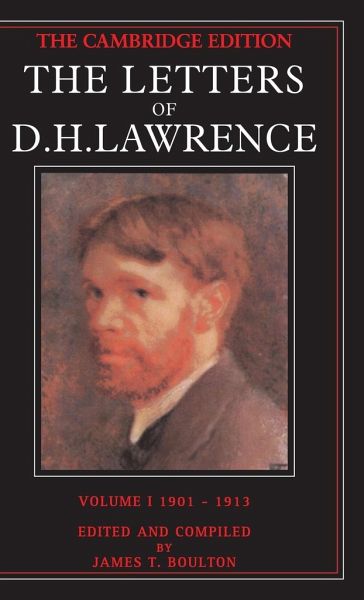
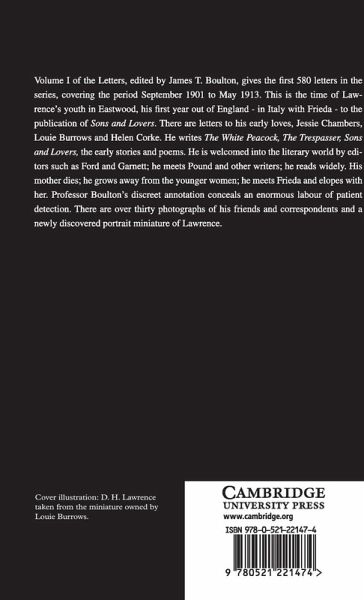
Volume I of the Letters, edited by James T. Boulton, gives the first 580 letters in the series, covering the period September 1901 to May 1913. This is the time of Lawrence's youth in Eastwood, his first year out of England - in Italy with Frieda - to the publication of Sons and Lovers. There are letters to his early loves, Jessie Chambers, Louie Burrows and Helen Corke. He writes The White Peacock, The Trespasser, Sons and Lovers, the early stories and poems. He is welcomed into the literary world by editors such as Ford and Garnett; he meets Pound and other writers; he reads widely. His mother dies; he grows away from the younger women; he meets Frieda and elopes with her. Professor Boulton's discreet annotation conceals an enormous labour of patient detection. There are over thirty photographs of his friends and correspondents and a newly discovered portrait miniature of Lawrence.