

Andere Kunden interessierten sich auch für
 Making Republicans Liberal45,99 €
 The Death of Public School23,99 €
 Latinos and the Liberal City45,99 €
 Great Society26,99 €
 Whistling Dixie42,99 €
 Conservatism, Consumer Choice, and the Food and Drug Administration during the Reagan Era123,99 €
 Money, Power, and the People30,99 €


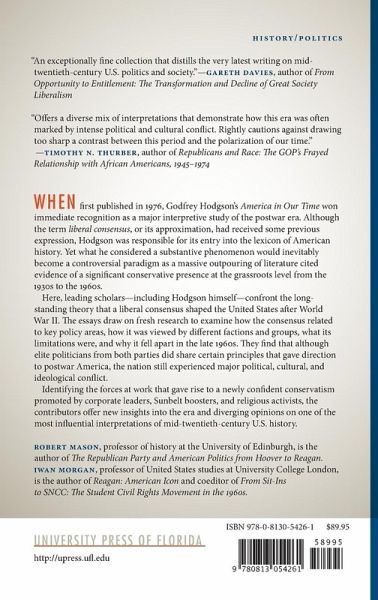
Confronting Godfrey Hodgson’s long-standing theory that a “liberal consensus” shaped the United States after World War II, this volume finds that although elite politicians from both parties did share certain principles that gave direction to postwar America, the nation still experienced major political, cultural, and ideological conflict during this time. Here, leading scholars—including Hodgson himself—draw on fresh research to examine how the consensus related to key policy areas, how it was viewed by different factions and groups, what its limitations were, and why it fell apart in the late 1960s. They offer new insights into the era and diverging opinions on one of the most influential interpretations of mid-twentieth-century U.S. history.