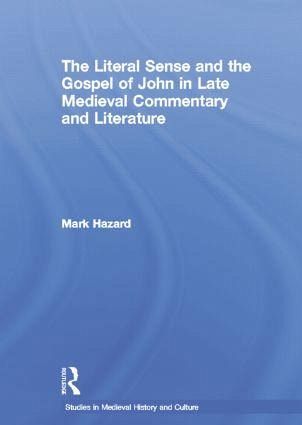
Focusing on the famous Medieval commentator Nicolas of Lyra and the anonymous Middle English biblical adaptation of the Gospel of John, the Cursor Mundi, this book examines the development of the analytical tools of biblical literary criticism showing how late Medieval commentators negotiated the paradoxical interdependence of the literal and spiritual senses, as transmitted by traditional and inherited vocabularies, through a focus on narrative structure. Mark Hazard combines an enlightening account of the actual practice of professional commentators, the history of Gospel interpretation and…mehr
Focusing on the famous Medieval commentator Nicolas of Lyra and the anonymous Middle English biblical adaptation of the Gospel of John, the Cursor Mundi, this book examines the development of the analytical tools of biblical literary criticism showing how late Medieval commentators negotiated the paradoxical interdependence of the literal and spiritual senses, as transmitted by traditional and inherited vocabularies, through a focus on narrative structure. Mark Hazard combines an enlightening account of the actual practice of professional commentators, the history of Gospel interpretation and cultural history to reveal that remarkable shift in the treatment of the Bible that modern scholars would regard as having laid the groundwork for the historical-critical methods in biblical research. As such this book sheds light not only on the 14th century practice of biblical interpretation, but will also be of value to those currenlty engaged in reading and writing about the bible.
Acknowledgments Preface Note on Abbreviations Chapter One: Introduction Chapter Two: Nicholas of Lyra and the Narrative of John's Gospel The Gospel's Visionary Basis The Narrative Quality of the Gospels John's Visionary Authority Methods Gospel Structure and Literal Meaning Circumstances: the Wedding at Cana Psychology and the Literal: the Samaritan Woman Narrative Control and History The Logic of Narrative Incident: the Woman Taken in Adultery Miracles and Divine Rhetoric: Lazarus Structure, History, and the Teaching Purpose of Christ: the Pool at Bethesda Incarnate Meaning and the Legend of the Cross The Meaning of Christ's Weakness Chapter Three: The Cursor Mundi, Narrative and Sacred History Religious Purpose and Esthetic Pleasure Narrative and the History of the Universe Peter Comestor, Eden, and the Tree of Life The Vision of the Wands Allegories The Legend of the Cross The Infancy Miracles and the Harshness of the Visible Presence The Ministry of Christ, the Gospel of John, and Herman of Valenciennes The Passion and Self-Revelation Judas and the Prophesying Chicken Chapter Four: The Four Daughters of God, the Last Judgment, and the Scope of the Real The Last Judgment and Literalism The Four Daughters of God and Wisdom Literature The Meditationes Vitae Christi and Apocrypha The English Mystery Cycles and the Gospel of John The Towneley Last Judgment The Mixed Mode of Piers Plowman Notes Bibliography Index
Es gelten unsere Allgemeinen Geschäftsbedingungen: www.buecher.de/agb
Impressum
www.buecher.de ist ein Internetauftritt der buecher.de internetstores GmbH
Geschäftsführung: Monica Sawhney | Roland Kölbl | Günter Hilger
Sitz der Gesellschaft: Batheyer Straße 115 - 117, 58099 Hagen
Postanschrift: Bürgermeister-Wegele-Str. 12, 86167 Augsburg
Amtsgericht Hagen HRB 13257
Steuernummer: 321/5800/1497
USt-IdNr: DE450055826