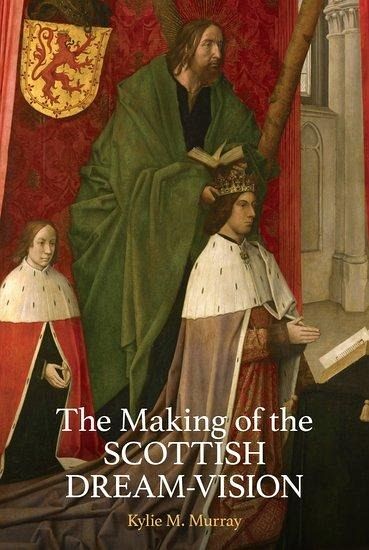
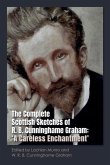
This book is about how Scotland responded to the dream-vision, Medieval Europe's most widely known literary form and precursor of the novel. Studies abound in Continental and English dream-vision writing: Dante's Divine Comedy, France's Romance of the Rose, and a host of English dream-visions, especially Chaucer. This book shows for the first time that dream-vision was a central aspect of Scotland's literary and intellectual culture across several centuries and languages. It therefore invites new understandings of Medieval and Early Modern Scotland. Moreover, its innovative approach to the…mehr
This book is about how Scotland responded to the dream-vision, Medieval Europe's most widely known literary form and precursor of the novel. Studies abound in Continental and English dream-vision writing: Dante's Divine Comedy, France's Romance of the Rose, and a host of English dream-visions, especially Chaucer. This book shows for the first time that dream-vision was a central aspect of Scotland's literary and intellectual culture across several centuries and languages. It therefore invites new understandings of Medieval and Early Modern Scotland. Moreover, its innovative approach to the dream-vision itself looks beyond dream-poetry which is the sole focus of other studies of the genre. Instead, it shows how dream-vision intersected with prose and verse writings, with romance, chronicle, epic, theological works and more. In so doing, it yields a new angle of studying the dream-vision which could be applied to other nations, making this book significant to scholars of global medieval literature.
After completing her first degree at St Andrews University with the Lorimer Prize for Scottish Literature, Kylie Murray completed graduate research in Older Scottish Literature, kindly funded by the AHRC and Scottish International Education Trust at Lincoln College Oxford. Next, she held a British Academy Post-Doctoral Fellowship and Junior Research Fellowship at Balliol College, Oxford, during which she identified Scotland's oldest secular book. Passionate about sharing the excitement of pre-Union Scotland as widely as possible, Kylie Murray is an AHRC/BBC New Generation Thinker, and also gave the first ever British Academy Chatterton Lecture on an Older Scots poet.
Inhaltsangabe
* Introduction * Understanding Dream and Vision in the Middle Ages * Approaching Scotland as Case Study * Chapter 1: Prior Engagements: Scotland's Early Reception of Dream and Vision * Historical Writing and Identities in Latin and Scots * Devotional Texts and Contexts * French Texts and Contexts * English Texts and Contexts * Chapter 2: The Kingis Quair and its Manuscript Context * The Kingis Quair: a new Scottish dream-vision * The Kingis Quair's Reception and Authorship * The Manuscript Context and Revisionary Readings of Chaucer's 'Dream Poetry' * Troilus and Criseyde in Scotland * Chapter 3: Bower's Scotichronicon and the Prose-Latin Dream-Vision * Mystical Visions: Katherine of Alexandria and Bridget of Sweden * Visions of Royal Scottish Sanctity: Margaret Canmore (1045-93) and Waltheof, abbot of Melrose (d.1159) * Visions as Reflection and Refraction of the Speculum Principis * Advice to All: Clerical Visions of Appetite and Greed * From Latin Prose to Older Scots Verse: The Reception of Bower's Dream-Vision * Appendix: Table of Dream and Visionary Narratives in the Scotichronicon * Chapter 4: Prophetic and Nationalist Dream-Visions * Thomas of Erceldoune and Envisioning the Scottish 'History of the Future' * Wallace's Nightmare * Wallace's Dream-Vision of Scotland * 'Worthy Even of Enemy Praise': Wallace's Heavenly Ascent and its Afterlives * Chapter 5: Rethinking Scotland's Amatory Dream-Vision * Lancelot of the Laik: Dream-Vision Prologues and Arthurian Advice * From Courtly Love to Courtly Injustice: Henryson's Testament of Cresseid * From love at first sight to loss at last sight: Henryson's Testament and Orpheus * Anti- or Extra-Amatory? The Dream-Visions of Douglas and Dunbar * Epilogue: 'Mak vpwark and clois our buke' * Bibliography
* Introduction * Understanding Dream and Vision in the Middle Ages * Approaching Scotland as Case Study * Chapter 1: Prior Engagements: Scotland's Early Reception of Dream and Vision * Historical Writing and Identities in Latin and Scots * Devotional Texts and Contexts * French Texts and Contexts * English Texts and Contexts * Chapter 2: The Kingis Quair and its Manuscript Context * The Kingis Quair: a new Scottish dream-vision * The Kingis Quair's Reception and Authorship * The Manuscript Context and Revisionary Readings of Chaucer's 'Dream Poetry' * Troilus and Criseyde in Scotland * Chapter 3: Bower's Scotichronicon and the Prose-Latin Dream-Vision * Mystical Visions: Katherine of Alexandria and Bridget of Sweden * Visions of Royal Scottish Sanctity: Margaret Canmore (1045-93) and Waltheof, abbot of Melrose (d.1159) * Visions as Reflection and Refraction of the Speculum Principis * Advice to All: Clerical Visions of Appetite and Greed * From Latin Prose to Older Scots Verse: The Reception of Bower's Dream-Vision * Appendix: Table of Dream and Visionary Narratives in the Scotichronicon * Chapter 4: Prophetic and Nationalist Dream-Visions * Thomas of Erceldoune and Envisioning the Scottish 'History of the Future' * Wallace's Nightmare * Wallace's Dream-Vision of Scotland * 'Worthy Even of Enemy Praise': Wallace's Heavenly Ascent and its Afterlives * Chapter 5: Rethinking Scotland's Amatory Dream-Vision * Lancelot of the Laik: Dream-Vision Prologues and Arthurian Advice * From Courtly Love to Courtly Injustice: Henryson's Testament of Cresseid * From love at first sight to loss at last sight: Henryson's Testament and Orpheus * Anti- or Extra-Amatory? The Dream-Visions of Douglas and Dunbar * Epilogue: 'Mak vpwark and clois our buke' * Bibliography
Es gelten unsere Allgemeinen Geschäftsbedingungen: www.buecher.de/agb
Impressum
www.buecher.de ist ein Internetauftritt der buecher.de internetstores GmbH
Geschäftsführung: Monica Sawhney | Roland Kölbl | Günter Hilger
Sitz der Gesellschaft: Batheyer Straße 115 - 117, 58099 Hagen
Postanschrift: Bürgermeister-Wegele-Str. 12, 86167 Augsburg
Amtsgericht Hagen HRB 13257
Steuernummer: 321/5800/1497
USt-IdNr: DE450055826