
Andere Kunden interessierten sich auch für
 Trapping Wild Animals in Malay Jungles28,99 €
 In Malay Forests32,99 €
 The Environmental Apocalypse151,99 €
 Liberty and the Ecological Crisis173,99 €
 Forest Policy and Governance in the United States151,99 €
 Eco-Performance, Art, and Spatial Justice in the US150,99 €
 The Age of Sustainability174,99 €

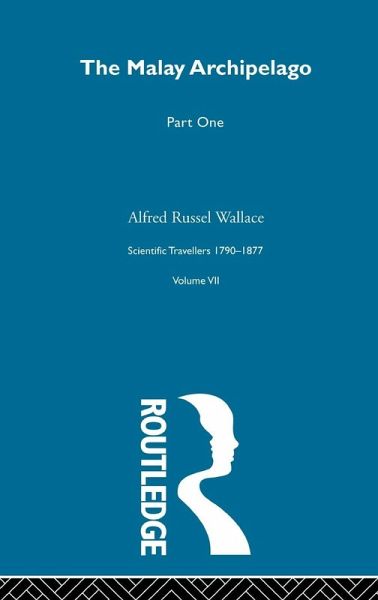
"The Malay Archipelago" is perhaps the most celebrated of all writings on Indonesia. Attracting huge public interest at the time of publication, this two-part work ranks with the nineteenth century's most important travel writing and Wallace's name continues to be inextricably linked to the area. Wallace was best known for his discovery and description of the faunal discontinuity that now bears his name, "Wallace's Line," extending between the islands of Bali and Lombok and Borneo and Sulawesi, described here in "The Malay Archipelago." This led to his theory of natural selection, which was presented to the Linnaean Society in 1858.
Dedicated to Charles Darwin, The Malay Archipelago- the land of the Orang-utan and the Bird of Paradise is a narrative of travel with studies of man and nature. This is part one of two volumes.
Dedicated to Charles Darwin, The Malay Archipelago- the land of the Orang-utan and the Bird of Paradise is a narrative of travel with studies of man and nature. This is part one of two volumes.