

Andere Kunden interessierten sich auch für
 The Man Who Laughs33,99 €
 The Man Who Laughs by Victor Hugo, Fiction, Historical, Classics, Literary28,99 €
 The Man Who Laughs38,99 €
 The Man Who Laughs26,99 €
 The Man Who Laughs13,99 €
 The Man Who Laughs40,99 €
 The Man Who Laughs82,90 €

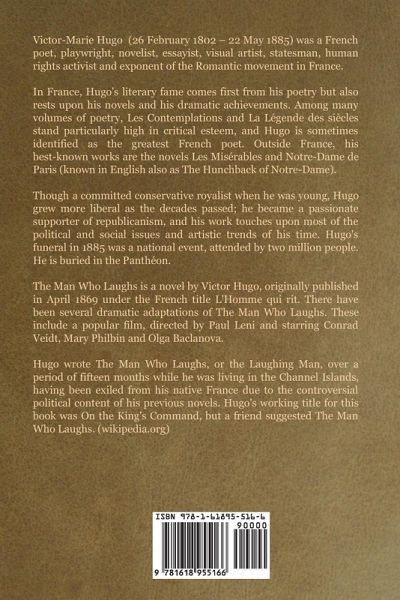
The Man Who Laughs is a novel by Victor Hugo, originally published in April 1869 under the French title L'Homme qui rit. There have been several dramatic adaptations of The Man Who Laughs. These include a popular film, directed by Paul Leni and starring Conrad Veidt, Mary Philbin and Olga Baclanova. Hugo wrote The Man Who Laughs, or the Laughing Man, over a period of fifteen months while he was living in the Channel Islands, having been exiled from his native France due to the controversial political content of his previous novels. Hugo's working title for this book was On the King's Command, but a friend suggested The Man Who Laughs.