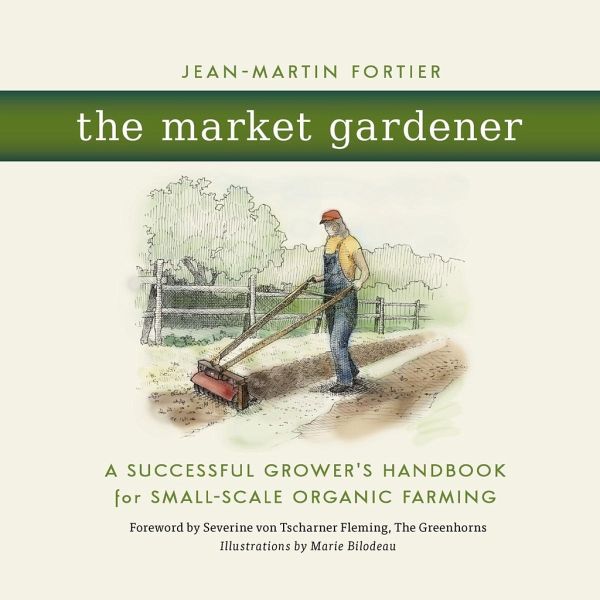
Transform 1.5 acres into a 6 figure annual income through proven small-scale organic farming methods. Jean-Martin Fortier demonstrates how he and his wife built a thriving market garden operation feeding 200+ families while maintaining work-life balance using low-tech, high-yield techniques that work in any climate. Why This System Works Where Others Fail: Unlike industrial farming that requires massive acreage and equipment, this micro-farming approach maximizes profits per square foot through intensive, sustainable methods. Based on 10+ years of real-world success, these techniques have been…mehr
Transform 1.5 acres into a 6 figure annual income through proven small-scale organic farming methods. Jean-Martin Fortier demonstrates how he and his wife built a thriving market garden operation feeding 200+ families while maintaining work-life balance using low-tech, high-yield techniques that work in any climate. Why This System Works Where Others Fail: Unlike industrial farming that requires massive acreage and equipment, this micro-farming approach maximizes profits per square foot through intensive, sustainable methods. Based on 10+ years of real-world success, these techniques have been replicated by thousands of growers worldwide. What You'll Master: * Profitable crop selection - which vegetables generate $15-20 per square foot annually * Efficient farm layout - design systems that minimize work while maximizing yields * Tool and equipment choices - cost-effective alternatives to expensive machinery * Four-season production - extend harvests for year-round income streams * Direct marketing strategies - command premium prices through CSA and farmers markets * Financial planning templates - track profits, plan cash flow, and scale systematically Proven Results from Real Farmers: Over 200,000 copies sold worldwide have helped farmers like you transition from hobby gardening to profitable small-scale agriculture. Jean-Martin's students report achieving financial independence on 2-5 acres using these exact methods. Start building your profitable market garden operation today. This isn't theory - it's a complete playbook from someone who's actually making a living from small-scale farming.
Jean-Martin Fortier is a farmer, author, educator, and advocate for regenerative, human-scale, profitable agriculture. For over 20 years he and his wife Maude-Helene Desroches have operated les Jardins de la Grelinette, a successful 2-acre microfarm.The Market Gardener, has sold a quarter million copies in nine languages, describes the biointensive principles used at his micro-farm. In 2015, he established a research farm, la Ferme des Quatre-Temps, where he trains apprentices and develops new strategies for market gardening, including year-round production. His methods of production are taught to a worldwide audience through the Market Gardener Masterclass, an online course of the Market Gardener Institute, which is tailored to small-scale food growers. He is the founder of Growers & Co., a tool and apparel company which celebrates sustainable, local, and equitable food producers. He is the co-author of The Winter Market Gardener and author of the Grower's Guides from the Market Gardener series. Jean-Martin farms and lives in Quebec, Canada.
Inhaltsangabe
Acknowledgments Foreword Preface 1 Small Is Profitable Can You Really Live ff 1.5 Acres? Not Just Making a Good Living, but Making a Good Life 2 Succeeding as a Small-Scale Organic Vegetable Grower A Biologically Intensive Approach Minimizing Start-Up Costs Minimizing Production Costs Direct Selling Adding Value to the Crops Learning the Craft 3 Finding the Right Site Climate and Microclimate Market Access Growing Space Needed Soil Quality Topography Drainage Access to Water Infrastructure Assessing Possible Pollution Problems 4 Designing the Market Garden Buildings and Foot Traffic Standardizing the Garden Layout Locating the Greenhouse and Tunnels Protection against Deer Windbreaks Irrigation 5 Minimum Tillage and Appropriate Machinery Permanent Raised Beds The Two-Wheel Tractor The Broadfork (Grelinette) Tarps and Pre-Crop Ground Cover To Till or not to Till 6 Fertilizing Organically Soil Tests Crop Requirements Managing Soil Fertility Good Compost Relying on Natural Fertilizers - Why? Establishing Crop Rotation Crop Rotation at Les Jardins de la Grelinette Green Manure and Cover Crops Connecting with Soil Ecology 7 Starting Seeds Indoors Seeding in Cell Flats The Soil Mix Filling Cell Flats The Seedling Room The Evolving Plant Nursery Heating and Ventilation of the Nursery How to Water Seedlings Potting up Transplanting into the Gardens 8 Direct Seeding Precision Seeders Seedbed Preparation Record Keeping 9 Weed Management Cultivating with Hoes Weeding with Tarps The Stale Seedbed Technique Flame Weeding Mulching Weed Control Technology 10 Insect Pests and Diseases Scouting Disease Prevention Using Biopesticides 11 Season Extension Floating Row Cover and Low Tunnels Caterpillar Tunnels Hoophouses 12 Harvest and Storage Harvesting Efficiently Harvest Help The Cold Room 13 Crop Planning Setting Farming Objectives Determining Production Establishing a Crop Calendar Making a Garden Plan Record Keeping Conclusion: Farming for Ecology, Community, and Lifestyle Appendix 1: Crop Notes Appendix 2: Tools and Suppliers Appendix 3: Garden Plan Appendix 4: Annotated Bibliography Appendix 5: Glossary Index About the Author
Acknowledgments Foreword Preface 1 Small Is Profitable Can You Really Live ff 1.5 Acres? Not Just Making a Good Living, but Making a Good Life 2 Succeeding as a Small-Scale Organic Vegetable Grower A Biologically Intensive Approach Minimizing Start-Up Costs Minimizing Production Costs Direct Selling Adding Value to the Crops Learning the Craft 3 Finding the Right Site Climate and Microclimate Market Access Growing Space Needed Soil Quality Topography Drainage Access to Water Infrastructure Assessing Possible Pollution Problems 4 Designing the Market Garden Buildings and Foot Traffic Standardizing the Garden Layout Locating the Greenhouse and Tunnels Protection against Deer Windbreaks Irrigation 5 Minimum Tillage and Appropriate Machinery Permanent Raised Beds The Two-Wheel Tractor The Broadfork (Grelinette) Tarps and Pre-Crop Ground Cover To Till or not to Till 6 Fertilizing Organically Soil Tests Crop Requirements Managing Soil Fertility Good Compost Relying on Natural Fertilizers - Why? Establishing Crop Rotation Crop Rotation at Les Jardins de la Grelinette Green Manure and Cover Crops Connecting with Soil Ecology 7 Starting Seeds Indoors Seeding in Cell Flats The Soil Mix Filling Cell Flats The Seedling Room The Evolving Plant Nursery Heating and Ventilation of the Nursery How to Water Seedlings Potting up Transplanting into the Gardens 8 Direct Seeding Precision Seeders Seedbed Preparation Record Keeping 9 Weed Management Cultivating with Hoes Weeding with Tarps The Stale Seedbed Technique Flame Weeding Mulching Weed Control Technology 10 Insect Pests and Diseases Scouting Disease Prevention Using Biopesticides 11 Season Extension Floating Row Cover and Low Tunnels Caterpillar Tunnels Hoophouses 12 Harvest and Storage Harvesting Efficiently Harvest Help The Cold Room 13 Crop Planning Setting Farming Objectives Determining Production Establishing a Crop Calendar Making a Garden Plan Record Keeping Conclusion: Farming for Ecology, Community, and Lifestyle Appendix 1: Crop Notes Appendix 2: Tools and Suppliers Appendix 3: Garden Plan Appendix 4: Annotated Bibliography Appendix 5: Glossary Index About the Author
Es gelten unsere Allgemeinen Geschäftsbedingungen: www.buecher.de/agb
Impressum
www.buecher.de ist ein Internetauftritt der buecher.de internetstores GmbH
Geschäftsführung: Monica Sawhney | Roland Kölbl | Günter Hilger
Sitz der Gesellschaft: Batheyer Straße 115 - 117, 58099 Hagen
Postanschrift: Bürgermeister-Wegele-Str. 12, 86167 Augsburg
Amtsgericht Hagen HRB 13257
Steuernummer: 321/5800/1497
USt-IdNr: DE450055826