
Andere Kunden interessierten sich auch für
 Governing Digitally Integrated Genetic Resources, Data, and Literature63,99 €
 Governing Digitally Integrated Genetic Resources, Data, and Literature164,99 €
 The Law of Copyright, In Works of Literature and Art29,99 €
 Der Grundsatz der Wesentlichkeit als Grundsatz ordnungsmäßiger Buchführung119,90 €
 The Right To Parody42,99 €
 The Right to Privacy41,99 €
 The Intellectual Property of Nations115,99 €



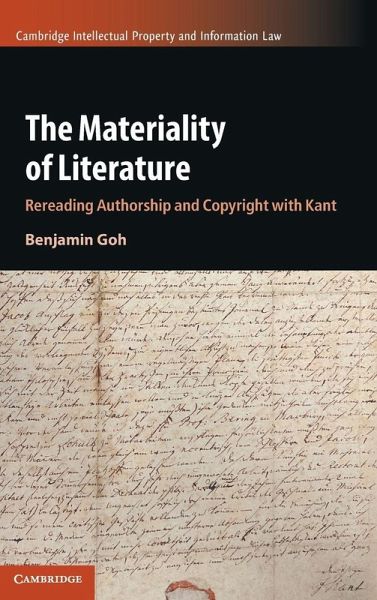
This book retraces the emergence of conceptions of authorship in late-eighteenth-century Germany by studying the material form of Immanuel Kant's 1785 essay, 'On the Wrongfulness of Reprinting'. Drawing upon book history, media theory, and literary studies, Benjamin Goh analyses the essay's paratexts as indices of literary production in the German Enlightenment. Far from being an idealist proponent of intellectual property, Kant is shown to be a media theorist and practitioner, whose critical negotiation with the evolving print machinery in his time helps illuminate our present struggle with digital technology and the mounting pressures borne by copyright as a proprietary institution. Through its novel perspective on established debates surrounding authorship, this book critiques the proprietary conception of authorship in copyright law, and proposes an ethical alternative that responds to the production, circulation, and reading of literature. This title is also available as open access on Cambridge Core.