
Andere Kunden interessierten sich auch für
 Bioactive Glass Materials for Biological Applications94,99 €
 A Study on Next-Generation Materials and Devices147,99 €
 Biomedical Applications of Inorganic Materials124,99 €
 Functionalized Materials Applications in Biomedicine123,99 €
 Antimicrobial and Antiviral Materials47,99 €
 Die digitale Intensivstation39,95 €
 Bio-Glasses116,99 €

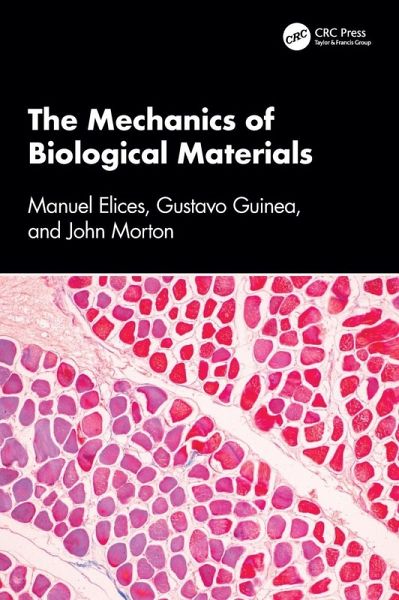
This book introduces the mechanical principles governing the behaviour of a wide range of biological materials, which are materials produced by a biological system. The approach is systematic and based on one-dimensional (fibres), two-dimensional (membrane), and three-dimensional (bulk) biological materials. The essential mathematical tools are developed from first principles and applied to materials as diverse as spider silk, blood vessels, and bone. It offers a progressive introduction of mathematics and mechanics concepts and offers detailed solutions to numerous worked examples.
Provides an essential gateway to access complex treatises in the important and demanding models governing the observed behaviour of biological materialsTeaches readers to exploit the wondrous properties found in nature in the development of biomimetic applicationsOffers a progressive introduction of mathematics and mechanics conceptsIncludes detailed solutions to numerous worked examples, case studies, and homework problems
The text is aimed at students of chemistry, materials engineering, and biology, who do not have a background in mechanics but wish to further their knowledge of the mechanics of biological materials.
A solutions manual is available to qualifying adopting professors.
Provides an essential gateway to access complex treatises in the important and demanding models governing the observed behaviour of biological materialsTeaches readers to exploit the wondrous properties found in nature in the development of biomimetic applicationsOffers a progressive introduction of mathematics and mechanics conceptsIncludes detailed solutions to numerous worked examples, case studies, and homework problems
The text is aimed at students of chemistry, materials engineering, and biology, who do not have a background in mechanics but wish to further their knowledge of the mechanics of biological materials.
A solutions manual is available to qualifying adopting professors.