Sue Taylor Parker / Robert W. Mitchell / H. Lyn Miles (eds.)Comparative Perspectives
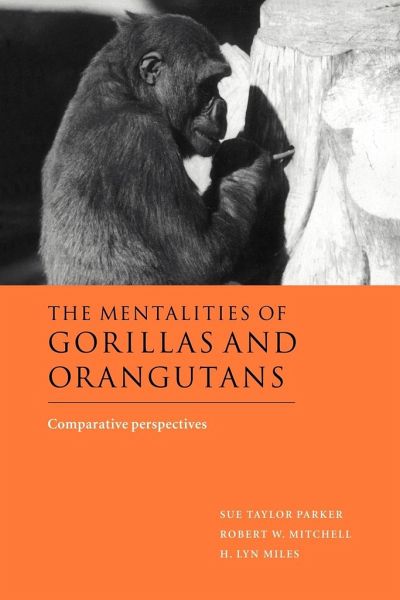
The Mentalities of Gorillas and Orangutans
Comparative Perspectives
Herausgeber: Parker, Sue Taylor; Miles, H. Lyn; Mitchell, Robert W.
Sue Taylor Parker / Robert W. Mitchell / H. Lyn Miles (eds.)Comparative Perspectives
The Mentalities of Gorillas and Orangutans
Comparative Perspectives
Herausgeber: Parker, Sue Taylor; Miles, H. Lyn; Mitchell, Robert W.
- Broschiertes Buch
- Merkliste
- Auf die Merkliste
- Bewerten Bewerten
- Teilen
- Produkt teilen
- Produkterinnerung
- Produkterinnerung
This interesting 1999 study sets gorilla and orangutan cognitive abilities in context with the other great apes and humans.
Andere Kunden interessierten sich auch für
Alan ToyneGorillas in Our Midst12,99 €
The Politics of Species54,99 €
Alan F. Dixson (Victoria University of Wellington)The Mandrill69,99 €
Joanna M. Setchell (Durham University)Studying Primates46,99 €
Brian VickersOccult Scientific Mentalities62,99 €
Trudy R. Turner (Milwaukee University of Wisconsin)Savanna Monkeys100,99 €
Dian FosseyGorillas in the Mist17,99 €-
-
-
This interesting 1999 study sets gorilla and orangutan cognitive abilities in context with the other great apes and humans.
Produktdetails
- Produktdetails
- Verlag: Cambridge University Press
- Seitenzahl: 432
- Erscheinungstermin: 22. September 2006
- Englisch
- Abmessung: 234mm x 156mm x 23mm
- Gewicht: 644g
- ISBN-13: 9780521031936
- ISBN-10: 0521031931
- Artikelnr.: 21884401
- Herstellerkennzeichnung
- Libri GmbH
- Europaallee 1
- 36244 Bad Hersfeld
- gpsr@libri.de
- Verlag: Cambridge University Press
- Seitenzahl: 432
- Erscheinungstermin: 22. September 2006
- Englisch
- Abmessung: 234mm x 156mm x 23mm
- Gewicht: 644g
- ISBN-13: 9780521031936
- ISBN-10: 0521031931
- Artikelnr.: 21884401
- Herstellerkennzeichnung
- Libri GmbH
- Europaallee 1
- 36244 Bad Hersfeld
- gpsr@libri.de
List of contributors; Preface; Acknowledgments; Part I. Comparative
Evolutionary and Developmental Perspectives on Gorillas and Orangutans: 1.
Hominid family values: morphological and molecular data on relations among
the great apes and humans David R. Begun; 2. The life history and
development of great apes in comparative perspective Sue T. Parker; 3. The
frontal lobes of the great apes with a focus on the gorilla and the
orangutan Katerina Semendeferi; Part II. Cognition and Tool Use in Gorillas
and Orangutans: 4. Intelligent tool use in wild Sumatran orangutans
Elizabeth A. Fox, Arnold F. Sitompul and Carel P. van Schaik; 5.
Orangutans' imitation of tool use: a cognitive interpretation Anne E.
Russon; 6. Object manipulation and skill organization in the complex food
preparation of mountain gorillas Richard W. Byrne; 7. Development of
sensorimotor intelligence in infant gorillas: the manipulation of objects
in problem-solving and exploration Juan C. Gómez; 8. Tool use in captive
gorillas Sarah T. Boysen, Valerie A. Kuhlmeier, Peter Halliday and Yolanda
M. Halliday; 9. A survey of tool use in zoo gorillas Sue T. Parker, Mary
Kerr, Hal Markowitz and Jay Gould; Part III. Communication in Gorillas and
Orangutans: 10. Symbolic communication with and by great apes H. Lyn Miles;
11. The development of spontaneous gestural communication in a group of
zoo-living lowland gorillas Joanne E. Tanner and Richard W. Byrne; 12.
Early sign-language acquisition: comparisons between children and gorillas
John B. Bonvillian and Francine G. P. Patterson; 13. Early sign performance
in a free-ranging, adult orangutan Gary L. Shapiro and Biruté M. F.
Galdikas; Part IV. Social Cognition in Gorillas and Orangutans: 14.
Comparative aspects of mirror self-recognition in great apes Karyl B.
Swartz, Dena Sarauw, and Siân Evans; 15. Deception and concealment as
strategic script violation in great apes and humans Robert W. Mitchell; 16.
Levels of imitation and cognitive mechanisms in orangutans Joseph Call; 17.
Parental encouragement in Gorilla in comparative perspective: implications
for social cognition and the evolution of teaching Andrew Whiten; 18. The
development of social roles in the play of an infant gorilla and its
relationship to sensorimotor intellectual development Sue T. Parker; Part
V. Epilogue: 19. The mentalities of gorillas and orangutans in phlyogenetic
perspective Sue T. Parker and Robert W. Mitchell, Index of authors; Index
of subjects.
Evolutionary and Developmental Perspectives on Gorillas and Orangutans: 1.
Hominid family values: morphological and molecular data on relations among
the great apes and humans David R. Begun; 2. The life history and
development of great apes in comparative perspective Sue T. Parker; 3. The
frontal lobes of the great apes with a focus on the gorilla and the
orangutan Katerina Semendeferi; Part II. Cognition and Tool Use in Gorillas
and Orangutans: 4. Intelligent tool use in wild Sumatran orangutans
Elizabeth A. Fox, Arnold F. Sitompul and Carel P. van Schaik; 5.
Orangutans' imitation of tool use: a cognitive interpretation Anne E.
Russon; 6. Object manipulation and skill organization in the complex food
preparation of mountain gorillas Richard W. Byrne; 7. Development of
sensorimotor intelligence in infant gorillas: the manipulation of objects
in problem-solving and exploration Juan C. Gómez; 8. Tool use in captive
gorillas Sarah T. Boysen, Valerie A. Kuhlmeier, Peter Halliday and Yolanda
M. Halliday; 9. A survey of tool use in zoo gorillas Sue T. Parker, Mary
Kerr, Hal Markowitz and Jay Gould; Part III. Communication in Gorillas and
Orangutans: 10. Symbolic communication with and by great apes H. Lyn Miles;
11. The development of spontaneous gestural communication in a group of
zoo-living lowland gorillas Joanne E. Tanner and Richard W. Byrne; 12.
Early sign-language acquisition: comparisons between children and gorillas
John B. Bonvillian and Francine G. P. Patterson; 13. Early sign performance
in a free-ranging, adult orangutan Gary L. Shapiro and Biruté M. F.
Galdikas; Part IV. Social Cognition in Gorillas and Orangutans: 14.
Comparative aspects of mirror self-recognition in great apes Karyl B.
Swartz, Dena Sarauw, and Siân Evans; 15. Deception and concealment as
strategic script violation in great apes and humans Robert W. Mitchell; 16.
Levels of imitation and cognitive mechanisms in orangutans Joseph Call; 17.
Parental encouragement in Gorilla in comparative perspective: implications
for social cognition and the evolution of teaching Andrew Whiten; 18. The
development of social roles in the play of an infant gorilla and its
relationship to sensorimotor intellectual development Sue T. Parker; Part
V. Epilogue: 19. The mentalities of gorillas and orangutans in phlyogenetic
perspective Sue T. Parker and Robert W. Mitchell, Index of authors; Index
of subjects.
List of contributors; Preface; Acknowledgments; Part I. Comparative
Evolutionary and Developmental Perspectives on Gorillas and Orangutans: 1.
Hominid family values: morphological and molecular data on relations among
the great apes and humans David R. Begun; 2. The life history and
development of great apes in comparative perspective Sue T. Parker; 3. The
frontal lobes of the great apes with a focus on the gorilla and the
orangutan Katerina Semendeferi; Part II. Cognition and Tool Use in Gorillas
and Orangutans: 4. Intelligent tool use in wild Sumatran orangutans
Elizabeth A. Fox, Arnold F. Sitompul and Carel P. van Schaik; 5.
Orangutans' imitation of tool use: a cognitive interpretation Anne E.
Russon; 6. Object manipulation and skill organization in the complex food
preparation of mountain gorillas Richard W. Byrne; 7. Development of
sensorimotor intelligence in infant gorillas: the manipulation of objects
in problem-solving and exploration Juan C. Gómez; 8. Tool use in captive
gorillas Sarah T. Boysen, Valerie A. Kuhlmeier, Peter Halliday and Yolanda
M. Halliday; 9. A survey of tool use in zoo gorillas Sue T. Parker, Mary
Kerr, Hal Markowitz and Jay Gould; Part III. Communication in Gorillas and
Orangutans: 10. Symbolic communication with and by great apes H. Lyn Miles;
11. The development of spontaneous gestural communication in a group of
zoo-living lowland gorillas Joanne E. Tanner and Richard W. Byrne; 12.
Early sign-language acquisition: comparisons between children and gorillas
John B. Bonvillian and Francine G. P. Patterson; 13. Early sign performance
in a free-ranging, adult orangutan Gary L. Shapiro and Biruté M. F.
Galdikas; Part IV. Social Cognition in Gorillas and Orangutans: 14.
Comparative aspects of mirror self-recognition in great apes Karyl B.
Swartz, Dena Sarauw, and Siân Evans; 15. Deception and concealment as
strategic script violation in great apes and humans Robert W. Mitchell; 16.
Levels of imitation and cognitive mechanisms in orangutans Joseph Call; 17.
Parental encouragement in Gorilla in comparative perspective: implications
for social cognition and the evolution of teaching Andrew Whiten; 18. The
development of social roles in the play of an infant gorilla and its
relationship to sensorimotor intellectual development Sue T. Parker; Part
V. Epilogue: 19. The mentalities of gorillas and orangutans in phlyogenetic
perspective Sue T. Parker and Robert W. Mitchell, Index of authors; Index
of subjects.
Evolutionary and Developmental Perspectives on Gorillas and Orangutans: 1.
Hominid family values: morphological and molecular data on relations among
the great apes and humans David R. Begun; 2. The life history and
development of great apes in comparative perspective Sue T. Parker; 3. The
frontal lobes of the great apes with a focus on the gorilla and the
orangutan Katerina Semendeferi; Part II. Cognition and Tool Use in Gorillas
and Orangutans: 4. Intelligent tool use in wild Sumatran orangutans
Elizabeth A. Fox, Arnold F. Sitompul and Carel P. van Schaik; 5.
Orangutans' imitation of tool use: a cognitive interpretation Anne E.
Russon; 6. Object manipulation and skill organization in the complex food
preparation of mountain gorillas Richard W. Byrne; 7. Development of
sensorimotor intelligence in infant gorillas: the manipulation of objects
in problem-solving and exploration Juan C. Gómez; 8. Tool use in captive
gorillas Sarah T. Boysen, Valerie A. Kuhlmeier, Peter Halliday and Yolanda
M. Halliday; 9. A survey of tool use in zoo gorillas Sue T. Parker, Mary
Kerr, Hal Markowitz and Jay Gould; Part III. Communication in Gorillas and
Orangutans: 10. Symbolic communication with and by great apes H. Lyn Miles;
11. The development of spontaneous gestural communication in a group of
zoo-living lowland gorillas Joanne E. Tanner and Richard W. Byrne; 12.
Early sign-language acquisition: comparisons between children and gorillas
John B. Bonvillian and Francine G. P. Patterson; 13. Early sign performance
in a free-ranging, adult orangutan Gary L. Shapiro and Biruté M. F.
Galdikas; Part IV. Social Cognition in Gorillas and Orangutans: 14.
Comparative aspects of mirror self-recognition in great apes Karyl B.
Swartz, Dena Sarauw, and Siân Evans; 15. Deception and concealment as
strategic script violation in great apes and humans Robert W. Mitchell; 16.
Levels of imitation and cognitive mechanisms in orangutans Joseph Call; 17.
Parental encouragement in Gorilla in comparative perspective: implications
for social cognition and the evolution of teaching Andrew Whiten; 18. The
development of social roles in the play of an infant gorilla and its
relationship to sensorimotor intellectual development Sue T. Parker; Part
V. Epilogue: 19. The mentalities of gorillas and orangutans in phlyogenetic
perspective Sue T. Parker and Robert W. Mitchell, Index of authors; Index
of subjects.