
Andere Kunden interessierten sich auch für
 The Zaza Civilization41,99 €
 An Irish Voice14,99 €
 The History of the Protestant Associations of Counties Cavan, Donegal, and Monaghan from 1920 to 2016106,99 €
 The Arab Minority in Israel 1967-1991 ' Political Aspects'80,99 €
 The Angels' Voice71,99 €
 A Voice From The West27,99 €
 The Voice of Norway79,00 €


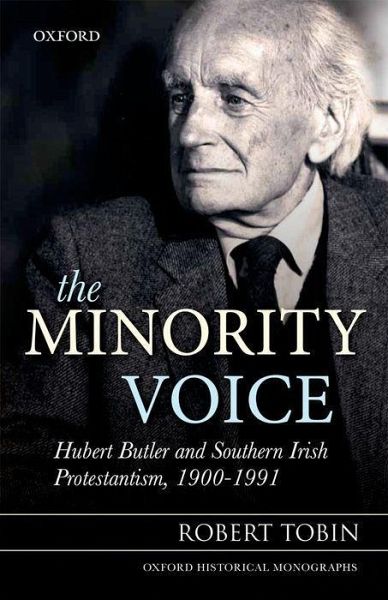
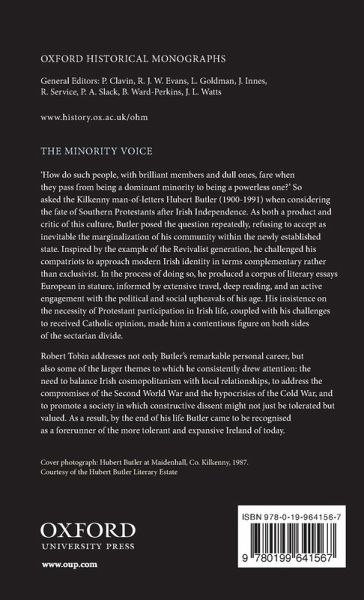
'How do such people, with brilliant members and dull ones, fare when they pass from being a dominant minority to being a powerless one?' So asked the Kilkenny man-of-letters Hubert Butler (1900-1991) when considering the fate of Southern Protestants after Irish Independence. As both a product and critic of this culture, Butler posed the question repeatedly, refusing to accept as inevitable the marginalization of his community within the newly established state. Inspired by the example of the Revivalist generation, he challenged his compatriots to approach modern Irish identity in terms complementary rather than exclusivist. In the process of doing so, he produced a corpus of literary essays European in stature, informed by extensive travel, deep reading, and an active engagement with the political and social upheavals of his age. His insistence on the necessity of Protestant participation in Irish life, coupled with his challenges to received Catholic opinion, made him a contentious figure on both sides of the sectarian divide. This study addresses not only Butler's remarkable personal career, but also some of the larger themes to which he consistently drew attention: the need to balance Irish cosmopolitanism with local relationships; to address the compromises of the Second World War and the hypocrisies of the Cold War; to promote a society in which constructive dissent might not just be tolerated but valued. As a result, by the end of his life, Butler came to be recognised as a forerunner of the more tolerant and expansive Ireland of today.