


Andere Kunden interessierten sich auch für
 The Muslim Conquest of Iberia70,99 €
 The Routledge Handbook of Muslim Iberia262,99 €
 The African Origins of Rhetoric63,99 €
 The African Origins of Rhetoric189,99 €
 Revisiting the Colonial Past in Morocco177,99 €
 The Origins of the Libyan Nation64,99 €
 How the Church Under Pius XII Addressed Decolonization149,99 €
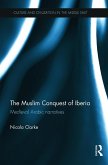



This book explores the medieval Islamic historiography relating to the Arab conquest of Spain in 711, arguing that the body of medieval Arabic tradition about this conquest is a showcase for the diversity and creativity of medieval Islamic history-writing. Developed over six hundred years of writing and rewriting, by scholars from al-Andalus to Iran, the tradition shows how competing priorities shaped myriad variations on a single story - and, in particular, how the scholars and patrons of a corner of the Islamic world distant from Baghdad viewed their own history.
"The Muslim conquest of Iberia contains seven ripping chapters and an excellent conclusion... This carefully balanced monograph is certainly destined to become the standard text on the subject of the causation, contextualization and evolution of traditional Arab accounts of the Andalusian conquest into later tropes, formats and formulae for differing audiences. It is probably one of the best accounts of its kind since Stanley Lane-Poole's The story of the Moors in Spain (1886) and will appeal to quite a broad audience... Clarke has produced something fairly new and exciting here - not yet another discussion of the 711 conquest but rather more precisely a history of medieval historians at work. Above all else, perhaps, Clarke's engaging enthusiasm for her subject - and her sense of humour - resonate through the text and make this book a true pleasure to read." - Abdullah Drury; Islam and Christian-Muslim Relations, 23:4, 543-545 (2012).