
Andere Kunden interessierten sich auch für
 Autism and the Refrigerator Mother Myth15,00 €
![]() "Dreaming the Myth Onwards"127,99 €
"Dreaming the Myth Onwards"127,99 € Philosophy and the Sciences of Exercise, Health and Sport180,99 €
 Childness and the Myth of the Unfinished Human76,99 €
 The Myth of the Chemical Cure83,99 €
 The Myth of Neuropsychiatry39,99 €
 The Myth of the Chemical Cure76,99 €







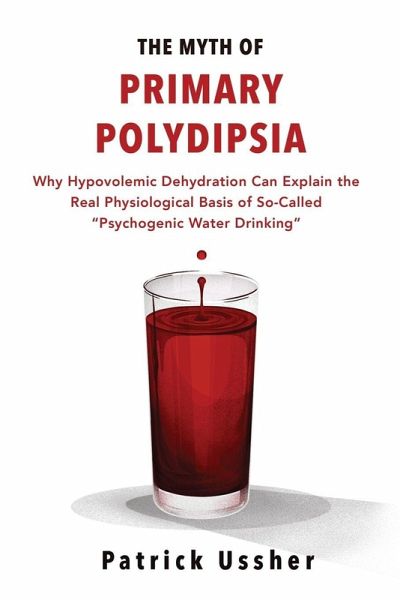
'The diagnosis of compulsive water drinking must be made with care and may represent our ignorance of yet undescribed pathophysiological mechanisms.' - Prof. Daniel Bichet, University of Montreal, 2017. Primary Polydipsia is widely viewed as compulsive over-drinking without physiological cause, often labelled "psychogenic" and linked to mental illness. This book challenges that assumption head-on. Patrick Ussher traces the origins of the diagnosis to early psychiatry and Freudian ideas-hysteria, conversion disorders, sexual repression, childhood trauma-and shows how these psychological assumptions shaped both diagnostic criteria and clinical understanding for decades. Despite advances in medicine, this model has rarely been questioned. Instead, Ussher proposes a new framework: Hypovolemic Dehydration-a physiological condition marked by low blood volume and a thirst mechanism that cannot be satisfied by plain water. This mechanism is seen in illnesses such as ME/CFS, POTS and Long Covid, where patients often drink excessive amounts yet remain thirsty and symptomatic. Could many so-called "psychogenic water drinkers" actually be hypovolemic patients whose real pathology has been overlooked? This book argues that Primary Polydipsia may have been fundamentally misunderstood, placing vulnerable patients at risk of misdiagnosis, stigma, neurological harm and, in rare cases, fatal outcomes. It calls clinicians and researchers to re-evaluate the condition with fresh eyes, grounded in physiology rather than outdated Freudian theory. A compelling and timely challenge to medical orthodoxy-essential reading for nephrologists, endocrinologists, psychiatrists, ME/CFS and POTS researchers, and anyone interested in diagnostic reform.