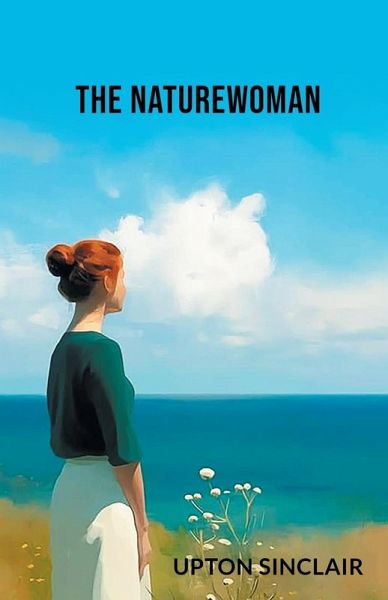
The naturewoman is a dramatic play exploring the clash between individuality and the restrictive conventions of society. The narrative centers on a woman returning to a new environment after spending her formative years on a tropical island. Her wild, unrefined nature, shaped by her time in the South Seas, contrasts sharply with the structured and conventional life of her relatives. The play delves into the tensions between freedom and civilization, questioning the impact of societal norms on natural instincts and identity. Through lively family dialogues, the play introduces mixed reactions…mehr
The naturewoman is a dramatic play exploring the clash between individuality and the restrictive conventions of society. The narrative centers on a woman returning to a new environment after spending her formative years on a tropical island. Her wild, unrefined nature, shaped by her time in the South Seas, contrasts sharply with the structured and conventional life of her relatives. The play delves into the tensions between freedom and civilization, questioning the impact of societal norms on natural instincts and identity. Through lively family dialogues, the play introduces mixed reactions to her arrival, depicting curiosity, skepticism, and concern. One character represents the longing for freedom and excitement, admiring the returnee s carefree spirit. As discussions unfold, the play highlights the clash between inherited expectations tied to her return and her free-spirited nature. The vibrant anticipation surrounding her arrival sets the stage for the exploration of personal identity, freedom, and societal constraints, with a focus on the tensions between these opposing forces.
Upton Sinclair (1878-1968) was a prolific American author and social reformer best known for his muckraking novel "The Jungle" (1906), which exposed the harsh conditions and unsanitary practices in the U.S. meatpacking industry. This groundbreaking work led to significant public outcry and contributed to the passage of the Pure Food and Drug Act and the Meat Inspection Act in 1906. Throughout his career, Sinclair wrote over 90 books, covering a wide range of genres including novels, plays, essays, and non-fiction works. Many of his writings addressed social issues such as labor rights, poverty, political corruption, and the need for reform. He was associated with the Progressive Movement and ran for political office several times, including a notable campaign for Governor of California in 1934 under the platform of the End Poverty in California (EPIC) movement. Sinclair's other notable works include "Oil!" (1927), which inspired the film "There Will Be Blood" (2007), and "The Brass Check" (1919), which critiqued the American press and led to the establishment of the first code of ethics for journalists. Upton Sinclair's commitment to social justice and reform left a lasting impact on American literature and society.
Es gelten unsere Allgemeinen Geschäftsbedingungen: www.buecher.de/agb
Impressum
www.buecher.de ist ein Internetauftritt der buecher.de internetstores GmbH
Geschäftsführung: Monica Sawhney | Roland Kölbl | Günter Hilger
Sitz der Gesellschaft: Batheyer Straße 115 - 117, 58099 Hagen
Postanschrift: Bürgermeister-Wegele-Str. 12, 86167 Augsburg
Amtsgericht Hagen HRB 13257
Steuernummer: 321/5800/1497
USt-IdNr: DE450055826