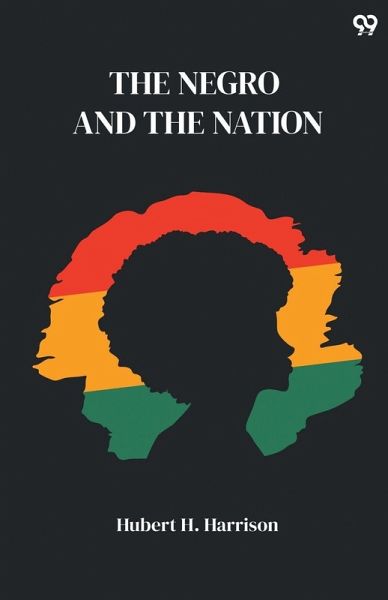
The Negro and the nation serves as a collection of articles that originally appeared in radical publications, focusing on the social, political, educational, and economic conditions faced by African Americans in the United States. It seeks to illuminate the struggles and injustices experienced by the Black community, showcasing how these challenges impact collective consciousness and social standing. In this compelling anthology, the author presents a thorough examination of the systemic issues plaguing the lives of individuals, categorizing problems into four main groups: political…mehr
The Negro and the nation serves as a collection of articles that originally appeared in radical publications, focusing on the social, political, educational, and economic conditions faced by African Americans in the United States. It seeks to illuminate the struggles and injustices experienced by the Black community, showcasing how these challenges impact collective consciousness and social standing. In this compelling anthology, the author presents a thorough examination of the systemic issues plaguing the lives of individuals, categorizing problems into four main groups: political disenfranchisement, economic exploitation, inadequate education, and social discrimination. Through powerful rhetoric and factual evidence, the book critiques the legal and societal frameworks that perpetuate inequality, such as voter suppression laws and the prevalence of lynching. It argues that the struggle for rights is not just a matter of race, but deeply intertwined with social and economic class issues, emphasizing the need for unity and political engagement to combat oppression effectively. By addressing these multifaceted challenges, the narrative calls for a reevaluation of American democracy in terms of inclusivity and equity for all citizens.
Hubert Henry Harrison was born on April 27, 1883, in Saint Croix to parents of African and possibly Indian descent. Raised in poverty, Harrison immigrated to New York City as a teenager and pursued education passionately, eventually attending DeWitt Clinton High School. He became an influential figure in early 20th-century intellectual and political life, known for his sharp criticism of both racial injustice and class oppression. Harrison was deeply involved in socialist politics, aligning briefly with the Socialist Party of America, but later grew disillusioned with its treatment of Black issues. As an advocate for radical thought, he emphasized the need for racial consciousness alongside class struggle and developed a reputation as one of Harlem's leading orators and thinkers. Harrison s marriage to Irene Horton in 1909 supported his personal life as he expanded his influence through writing and activism. A founder of the Liberty League and editor of The Voice, he became a key figure in promoting unity among oppressed groups and advancing a vision of international solidarity. He died on December 17, 1927, in New York City at the age of 44.
Es gelten unsere Allgemeinen Geschäftsbedingungen: www.buecher.de/agb
Impressum
www.buecher.de ist ein Internetauftritt der buecher.de internetstores GmbH
Geschäftsführung: Monica Sawhney | Roland Kölbl | Günter Hilger
Sitz der Gesellschaft: Batheyer Straße 115 - 117, 58099 Hagen
Postanschrift: Bürgermeister-Wegele-Str. 12, 86167 Augsburg
Amtsgericht Hagen HRB 13257
Steuernummer: 321/5800/1497
USt-IdNr: DE450055826