
Andere Kunden interessierten sich auch für
 The Untroubled Mind15,99 €
 Thriving in the Second Half of Life12,99 €
 Codependent No More15,99 €
 Simple Somatic Therapy Solution18,99 €
 Help Yourself To Positive Mental Health41,99 €
 The Nervous Child18,99 €
 The History of the Psychoanalytic Movement9,99 €
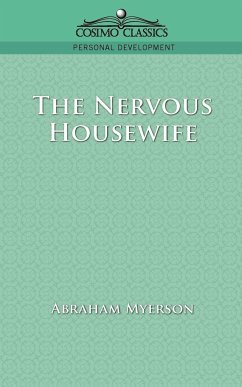
"One of the commonest and saddest of transformations is the change of the gay, laughing young girl, radiant with love and all aglow at the thought of union with her man, into the housewife of a decade -- complaining, fatigued, and disillusioned." So Abraham Myerson describes the "nervous housewife," the discontented woman who finds that marriage isn't all it's cracked up to be. In this book, originally published in 1920, Myerson explores the phenomenon of those who "pass through life with pains and aches of the body and soul." Myerson explains that industrialization has taken away some of the homemaker's basic tasks; that feminism has encouraged women to be taken seriously; and that divorce and the nervousness of the housewife are both manifestations of the discontent of women. Myerson also touches on topics such as the effects of monotony, the types of housewife, childbearing, and happiness. ABRAHAM MYERSON held many prestigious posts, including that of clinical professor of psychiatry at Harvard University, and he was one of the examining psychiatrists for the Sacco-Vanzetti trial. In addition to The Nervous Housewife, Myerson also wrote Foundations of Personality, Inheritance of Mental Diseases, When Life Loses Its Zest, Psychology of Mental Disorders, Social Psychology, and Eugenical Sterilization.