Empires, city states, and nations have long pursued aggressive trade, tax, and investment policies to amass wealth. A new consensus emerged after the Great Depression and World War II supporting liberalized international trade, economic cooperation, and free markets. Today that consensus has shattered, replaced by a "new economic nationalism" of industrial policy, tariffs, and various methods of state support for the economy. Can this new approach deliver stability, national security, and prosperity? This book examines case studies revealing a decidedly mixed record. In some instances,…mehr
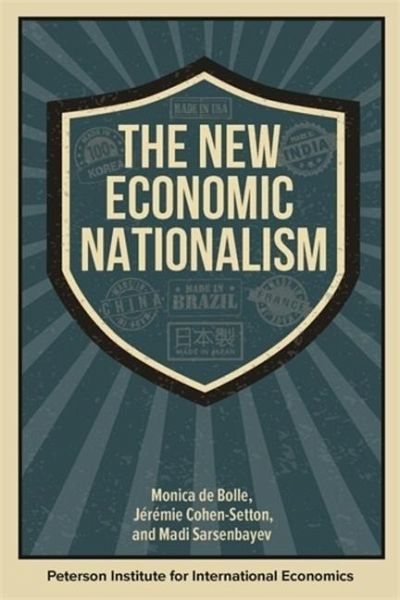
Empires, city states, and nations have long pursued aggressive trade, tax, and investment policies to amass wealth. A new consensus emerged after the Great Depression and World War II supporting liberalized international trade, economic cooperation, and free markets. Today that consensus has shattered, replaced by a "new economic nationalism" of industrial policy, tariffs, and various methods of state support for the economy. Can this new approach deliver stability, national security, and prosperity? This book examines case studies revealing a decidedly mixed record. In some instances, economic nationalist policies have fostered growth and declining unemployment, though accompanied by fiscal costs and inefficiency. In much of the developing world, however, economic nationalist policies have produced corruption, debt burdens, inflation, and ultimately stagnation. By examining the past, The New Economic Nationalism provides a roadmap to an uncertain future.
Monica de Bolle is a senior fellow at the Peterson Institute for International Economics. She is the host of Policy for the Planet, a PIIE podcast about economics, public health, and climate adaptation. She is also a professor at Georgetown University and was director for Latin American studies and emerging markets at the School of Advanced International Studies at Johns Hopkins University. Jérémie Cohen-Setton worked at Bruegel and Her Majesty's Treasury before joining the Peterson Institute for International Economics, where he contributed to this book and also coedited Sustaining Economic Growth in Asia (2018, with Thomas Helbling, Adam S. Posen, and Changyong Rhee). (He subsequently joined the International Monetary Fund [IMF] as a senior economist in the Independent Evaluation Office. The views in this book are his own and those of other coauthors and should not be attributed to the IMF or any organization or entity mentioned herein.) Madi Sarsenbayev is an economist with research interests in macroeconomic policy, international finance, and economic development. He worked at the Peterson Institute for International Economics from 2018 to 2022 and contributed to this book during that time.
Es gelten unsere Allgemeinen Geschäftsbedingungen: www.buecher.de/agb
Impressum
www.buecher.de ist ein Internetauftritt der buecher.de internetstores GmbH
Geschäftsführung: Monica Sawhney | Roland Kölbl | Günter Hilger
Sitz der Gesellschaft: Batheyer Straße 115 - 117, 58099 Hagen
Postanschrift: Bürgermeister-Wegele-Str. 12, 86167 Augsburg
Amtsgericht Hagen HRB 13257
Steuernummer: 321/5800/1497
USt-IdNr: DE450055826