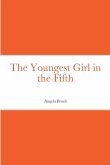
"Oh; don't all begin to expatiate about your feelings!" broke in Chatty Burns. "We know Pauline's symptoms only too well: the first day she shows aggressively red eyes and a damp pocket-handkerchief; the second day she writes lengthy letters home; begging to be allowed to return immediately and have lessons with a private governess; the third day she wanders about; trying to get sympathy from anyone who is weak-minded enough to listen to her; till in desperation somebody drags her into the playground; and makes her have a round at hockey. That cheers her up; and she begins to think life isn't…mehr
"Oh; don't all begin to expatiate about your feelings!" broke in Chatty Burns. "We know Pauline's symptoms only too well: the first day she shows aggressively red eyes and a damp pocket-handkerchief; the second day she writes lengthy letters home; begging to be allowed to return immediately and have lessons with a private governess; the third day she wanders about; trying to get sympathy from anyone who is weak-minded enough to listen to her; till in desperation somebody drags her into the playground; and makes her have a round at hockey. That cheers her up; and she begins to think life isn't quite such a desert. By the fourth morning she has recovered her spirits; and come to the conclusion that Chessington College is a very decent kind of place; and she begins to be alarmed lest her mother; on the strength of the pathetic letter; should have decided to let her leave at once; and should have already engaged a private governess."
Angela Brazil (30 November 1868 - 13 March 1947) was one of the first British writers of "modern schoolgirls' stories", written from the characters' point of view and intended primarily as entertainment rather than moral instruction. In the first half of the 20th century, she published nearly 50 books of girls' fiction, the vast majority being boarding school stories. She also published numerous short stories in magazines. Her books were commercially successful, widely read by pre-adolescent girls, and influenced them. Though interest in girls' school stories waned after World War II, her books remained popular until the 1960s. They were seen as disruptive and had a negative influence on moral standards by some figures in authority during the height of their popularity, and in some cases were banned, or indeed burned, by headmistresses in British girls' schools. While her stories have been much imitated in more recent decades, and many of her motifs and plot elements have since become clichés or the subject of parody, they were innovative when they first appeared. Brazil made a major contribution to changing the nature of fiction for girls. She presented a young female point of view that was active, aware of current issues, and independent-minded; she recognized adolescence as a time of transition and accepted girls as having common interests and concerns which could be shared and acted upon.
Es gelten unsere Allgemeinen Geschäftsbedingungen: www.buecher.de/agb
Impressum
www.buecher.de ist ein Internetauftritt der buecher.de internetstores GmbH
Geschäftsführung: Monica Sawhney | Roland Kölbl | Günter Hilger
Sitz der Gesellschaft: Batheyer Straße 115 - 117, 58099 Hagen
Postanschrift: Bürgermeister-Wegele-Str. 12, 86167 Augsburg
Amtsgericht Hagen HRB 13257
Steuernummer: 321/5800/1497
USt-IdNr: DE450055826