
Andere Kunden interessierten sich auch für
 The Book of Revelation28,99 €
 Commands of the New Testament22,99 €
 The Bible In Names Truth Decoded17,99 €
 1&2 Peter13,99 €
 The Epistle to the Romans24,99 €
 The Gospel of Luke51,99 €
 Evil And Suffering In The Bible20,99 €







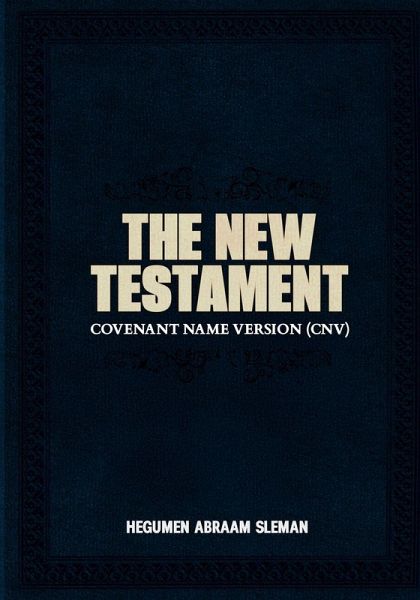
The Covenant Name Version (CNV) of the New Testament is produced with profound reverence for the sacred Scriptures and with gratitude for the many generations of translators who faithfully labored to preserve and transmit God's Word. Building on the textual precision of the American Standard Version (ASV) of 1901, the CNV seeks to bring contemporary readers nearer to the linguistic world, theological richness, and spiritual depth of the biblical text. It aims to present an English translation that is clear and accessible while remaining deeply faithful to the ancient languages in which the Scriptures were originally written. A central feature of this translation is the restoration of the covenant Name of God, Yahweh (¿¿¿¿). In the Hebrew Scriptures, the Tetragrammaton signifies the personal and eternal identity of the one true God. It is the name by which He revealed Himself to Moses and the name by which He declared He wished to be remembered throughout all generations. Many translations render this name as "LORD" or similar substitutes, but such expressions obscure the intimate and covenantal nature of God's self-revelation. In the CNV, "Yahweh" appears wherever New Testament authors quote Old Testament passages that contain the divine Name. This restores theological clarity and reconnects readers with the depth and context of the Hebrew Scriptures, honoring the divine Name not as a sectarian term but as the biblical memorial God Himself assigned. In harmony with this restoration, the CNV renders the Greek name ¿¿¿¿¿¿ (I¿soûs) as Yahshua, reflecting the Hebrew form ¿¿¿¿¿, meaning "Yahweh is salvation." This transliteration highlights the inseparable bond between the Father's Name and the mission of His Son, who declared, "I have come in My Father's name" (John 5:43). While the precious name "Jesus" is cherished by countless believers and remains honored within Christian tradition, the use of "Yahshua" offers readers a richer understanding of the Messiah's Hebraic identity and the divine purpose embedded in His name. It invites renewed reflection on the unity between Yahweh's saving will and the incarnation of His Son. The translation of ¿¿¿¿¿¿ (Kurios) in the New Testament requires careful discernment. This Greek term can signify Yahweh Himself, the divine authority of the Son, or a more ordinary title of respect such as "sir" or "master." In the CNV, when Kurios appears in Old Testament quotations referring to the Tetragrammaton, it is rendered as "Yahweh" to preserve the identity of the covenant Name. When Kurios expresses divine authority-whether of the Father or of His Messiah-it is translated as "Lord" or "Master." In contexts involving human relationships or social customs, the term is translated according to its specific meaning in the passage. This intentional approach maintains theological clarity and respects the nuanced manner in which the New Testament authors employ the term. The Greek term ¿¿¿¿¿ (Logos) is another significant linguistic expression preserved in the CNV. While traditionally translated as "Word," the theological and philosophical depth of Logos reaches beyond a spoken or written word. In the writings of John and the wider biblical canon, Logos describes the eternal self-expression of God, the One through whom creation came into being and through whom God reveals His nature. By rendering ¿¿¿¿¿ as "Logos," the CNV retains the rich theological associations that identify Yahshua as the manifestation of God's glory, the radiance of His nature, and the fullness of His self-revelation. This transliteration invites readers to contemplate the mystery of the Logos of God, who became flesh for the salvation of the world.