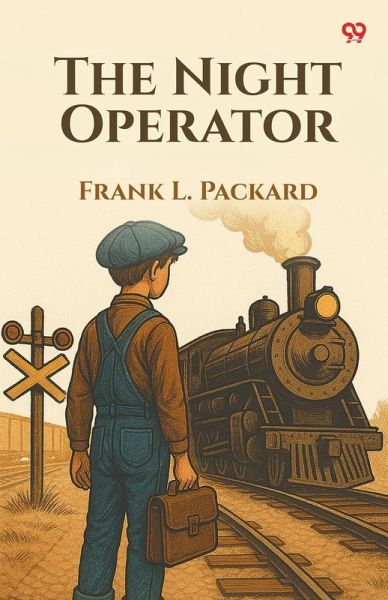
The night operator presents an intensified portrayal of aspiration within rigid structures of labor and masculinity. Central to the work is the pursuit of legitimacy within an unforgiving industrial space, where physical stature and perception act as barriers to dignity and ambition. The environment depicted is one of constant motion and tension, where social hierarchies are shaped by toughness and routine rather than merit. Within this context, determination becomes a subtle form of rebellion. The narrative centers on the persistent tension between personal identity and imposed labels. It…mehr
The night operator presents an intensified portrayal of aspiration within rigid structures of labor and masculinity. Central to the work is the pursuit of legitimacy within an unforgiving industrial space, where physical stature and perception act as barriers to dignity and ambition. The environment depicted is one of constant motion and tension, where social hierarchies are shaped by toughness and routine rather than merit. Within this context, determination becomes a subtle form of rebellion. The narrative centers on the persistent tension between personal identity and imposed labels. It draws attention to the emotional cost of striving for acceptance in places governed by force, ridicule, and hierarchy. Through a landscape carved by machinery and repetition, the novel underscores the desire to be more than a role assigned by others. Physical space mirrors internal conflict, as the sound and rhythm of the railroad underline a deeper psychological rhythm of endurance. The novel examines how the desire for self-worth must contend with institutions that resist change and reward conformity. Rather than focusing on action, the book illuminates the quiet defiance found in resilience. The struggle to redefine oneself within limiting environments becomes a quiet but powerful act of survival.
Frank L. Packard was born in 1877 in Montreal, Quebec, to parents James Packard and Mary Elizabeth Adams. Before becoming a writer, he trained as a civil engineer and spent a significant part of his early career working on railway construction projects, which deeply influenced his later literary work. His technical background provided him with insights into the operations and intricacies of the railroad industry, forming the foundation for much of the setting and realism in his fiction. Packard began writing in the early 1900s and soon gained recognition for his gripping crime and adventure stories. His narratives frequently featured criminal enterprises, encrypted messages, and daring escapades, often led by complex protagonists. Among his most notable characters was a suave, masked figure known as the Gray Seal, who appeared in several books under the identity of Jimmie Dale. These stories blended suspense and action with clever criminal intrigue. Packard s novels, such as The Wire Devils, showcased a unique mix of engineering precision and dramatic storytelling. His work appealed to readers seeking fast-paced plots within vivid and shadowy settings. Frank L. Packard died in 1942, leaving behind a legacy of adventurous fiction rooted in both professional experience and imaginative storytelling.
Es gelten unsere Allgemeinen Geschäftsbedingungen: www.buecher.de/agb
Impressum
www.buecher.de ist ein Internetauftritt der buecher.de internetstores GmbH
Geschäftsführung: Monica Sawhney | Roland Kölbl | Günter Hilger
Sitz der Gesellschaft: Batheyer Straße 115 - 117, 58099 Hagen
Postanschrift: Bürgermeister-Wegele-Str. 12, 86167 Augsburg
Amtsgericht Hagen HRB 13257
Steuernummer: 321/5800/1497
USt-IdNr: DE450055826