
Andere Kunden interessierten sich auch für
 The Emergence of Pre-Cinema38,99 €
 Nineteenth-Century Radical Traditions68,99 €
 How Literary Worlds Are Shaped26,99 €
 Before Photography22,99 €
 Performing Intimacies with Hawthorne, Austen, Wharton, and George Eliot57,99 €
 Performing Intimacies with Hawthorne, Austen, Wharton, and George Eliot38,99 €
 A George Eliot Companion102,99 €



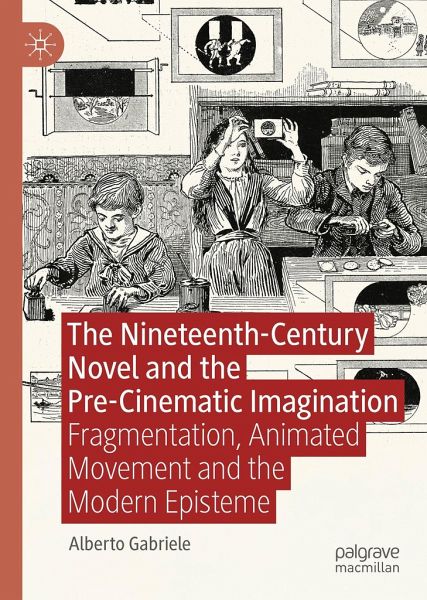
This book fills a gap in existing scholarship on the history of the novel in relation to visual culture by discussing the visual fascination that novelists such as Nathaniel Hawthorne, Herman Melville, Honoré de Balzac and George Eliot show for several types of pre-cinematic spectacle. It also identifies a so far neglected aspect of novel theory that nineteenth-century authors elaborated by incorporating suggestions from pre-cinematic visual spectacles. By shedding light on forms of visuality that were not entertained by the dominant aesthetic modes of painting and photography, The Nineteenth-Century Novel and the Pre-Cinematic Imagination argues that the presence of nineteenth century pre-cinematic optical illusions in works of fiction redefines the notion of mimesis as animated movement and points to a continuity between pre-cinema, the literary imagination and the structures of knowledge production of the modern episteme.
The Nineteenth-Century Novel and the Pre-Cinematic Imagination, he demonstrates that the early modernist novels have used visual strategies similar to the very first cinematic techniques of representation. ... his volume offers a transdisciplinary exploration of how two different mediums the visual and the textual make use of and critique new and classical mimetic tools of the nineteenth century. (Hora iu Tohatan, Metacritic Journal for Comparative Studies and Theory, Vol. 11 (1), 2025)