Andere Kunden interessierten sich auch für
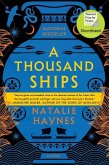
 A Thousand Ships8,99 €
 A Thousand Ships14,99 €
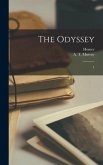
 The Odyssey37,99 €
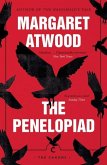
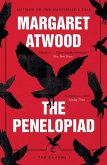
 The Penelopiad8,49 €
 The Penelopiad14,99 €
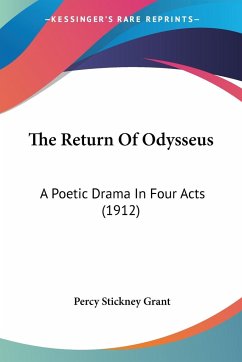
 The Return Of Odysseus22,99 €
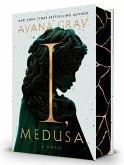
 I, Medusa21,99 €
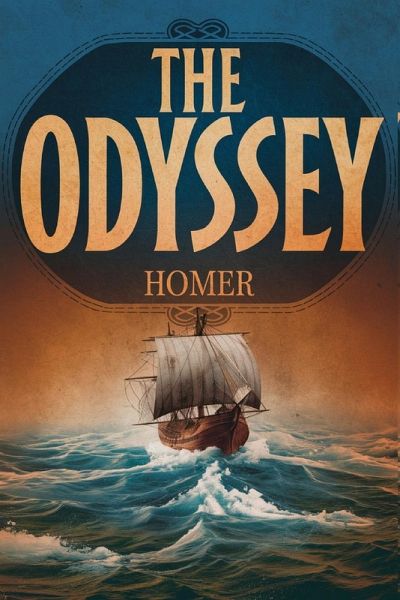
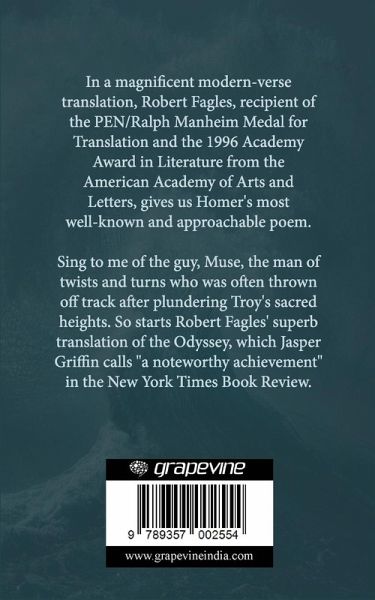
The Odyssey is one of the greatest epic poems in literary history, attributed to the ancient Greek poet Homer. This timeless masterpiece follows the adventures of Odysseus, King of Ithaca, as he embarks on a perilous journey home after the Trojan War. Packed with themes of heroism, loyalty, fate, and the enduring power of the human spirit, this epic has captivated readers for centuries. Plot Summary: The story begins with Odysseus stranded far from home, held captive by the nymph Calypso. Determined to return to his wife, Penelope, and son, Telemachus, Odysseus faces a series of trials orchestrated by vengeful gods and formidable foes. From outsmarting the Cyclops Polyphemus to resisting the enchanting Sirens and surviving the wrath of Poseidon, Odysseus demonstrates cunning, bravery, and resilience at every turn. Meanwhile, in Ithaca, Penelope fends off relentless suitors vying for her hand, using her own wit to remain faithful to Odysseus. Telemachus, inspired by tales of his father's heroics, sets out to find him, adding a parallel story of growth and determination to the epic. Why Read The Odyssey? Timeless Themes: Explores universal ideas of perseverance, loyalty, and the quest for home. Rich Storytelling: Filled with mythical creatures, divine interventions, and vivid adventures. Cultural Significance: A cornerstone of Western literature and a window into ancient Greek values and beliefs. The Odyssey is more than an adventure-it's a profound exploration of the human spirit, making it a must-read for lovers of epic tales and timeless classics.
Ancient readers and hearers, Greek and Latin, considered the poems printed here in translation to be the work of Homer, composer of the Iliad and the Odyssey, so they shared the great authority of the epics. Though we do not know their specific authors, they remain important sources of the mythical tales they recount. The Frog-Mouse-Battle occurs with countless variations in about as many manuscripts as the Odyssey, the most popular of all epics, thereby suggesting its use for instruction in the Byzantine empire, where the MSS of the poem were transcribed. The many variations in these MSS may indicate that some of the writers were teachers adapting the poem to their particular classroom needs. The translator has published dactylic-hexameter translations of the Iliad and the Odyssey at the University of Michigan Press, and privately of the Oresteia of Aeschylus, the Argonautica of Apollonius Rhodius, the Idylls of Theocritus, and Menander's Dyskolos, The Curmudgeon. He is currently working on translations of the works of Virgil, Homer's greatest follower in the Roman world.