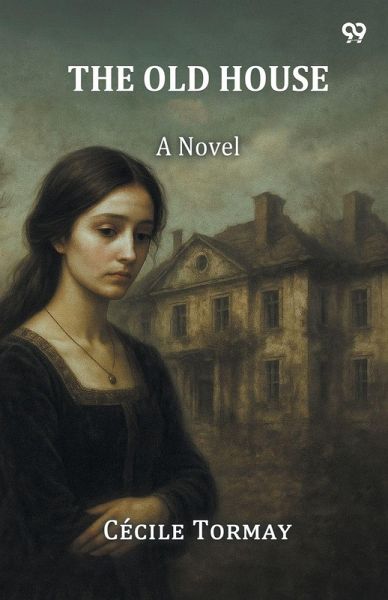
The old house: A novel unfolds against the backdrop of a city in flux, where tradition and modernity intersect in the life of a builder whose identity is bound to legacy. The opening presents a contemplative arrival on a wintry evening, with the protagonist stepping into a newly finished home that is both architectural triumph and familial anchor. This house, though freshly constructed, carries the symbolic weight of generations, grounding the narrative in questions of belonging, continuity, and change. The early scenes shift fluidly between the intimacy of family interaction and the…mehr
The old house: A novel unfolds against the backdrop of a city in flux, where tradition and modernity intersect in the life of a builder whose identity is bound to legacy. The opening presents a contemplative arrival on a wintry evening, with the protagonist stepping into a newly finished home that is both architectural triumph and familial anchor. This house, though freshly constructed, carries the symbolic weight of generations, grounding the narrative in questions of belonging, continuity, and change. The early scenes shift fluidly between the intimacy of family interaction and the undercurrents of a broader social reordering. Domestic rituals are rendered with care, yet beneath them lies a palpable sense of unease a quiet recognition that the world outside is no longer in harmony with the certainties of the past. The narrative's introspective tone and deliberate pace highlight the central figure s internal struggle as he reflects on lineage, duty, and the slow erosion of familiar structures. This is a story of permanence tested by time, of the tensions between idealism and practicality, and of the emotional architecture that binds individuals to both place and purpose.
C cile Tormay was born in Budapest on October 8, either in 1875 or 1876, into a German-speaking family that later embraced Hungarian identity. Her father, B la Tormay, was a noted agricultural expert, State Secretary, and a member of the Hungarian Academy of Sciences. Privately educated, she became fluent in multiple languages and translated works such as the Little Flowers of St. Francis of Assisi into Hungarian. Tormay's literary career began with the novels People of the Rocks and The Old House, both published before World War I. Her most recognized work is An Outlaw s Diary, a sharply critical narrative of Hungary's 1918 1919 revolutions, in which she expressed overt antisemitic sentiments. Though she upheld traditional family values in her political rhetoric, her personal life was marked by controversy over her long-term close relationships with women, including Countess Pallavicini and Francesca D Orsay. Admired by far-right figures such as Mussolini, her legacy has been revived in modern Hungary by nationalist and extremist groups despite longstanding controversy surrounding her views and affiliations.
Es gelten unsere Allgemeinen Geschäftsbedingungen: www.buecher.de/agb
Impressum
www.buecher.de ist ein Internetauftritt der buecher.de internetstores GmbH
Geschäftsführung: Monica Sawhney | Roland Kölbl | Günter Hilger
Sitz der Gesellschaft: Batheyer Straße 115 - 117, 58099 Hagen
Postanschrift: Bürgermeister-Wegele-Str. 12, 86167 Augsburg
Amtsgericht Hagen HRB 13257
Steuernummer: 321/5800/1497
USt-IdNr: DE450055826