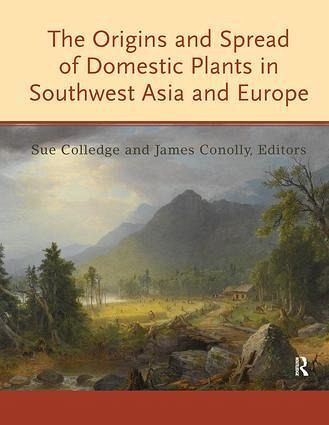
The Origins and Spread of Domestic Plants in Southwest Asia and Europe
Herausgeber: Colledge, Sue; Conolly, James
The Origins and Spread of Domestic Plants in Southwest Asia and Europe
Herausgeber: Colledge, Sue; Conolly, James
- Broschiertes Buch
- Merkliste
- Auf die Merkliste
- Bewerten Bewerten
- Teilen
- Produkt teilen
- Produkterinnerung
- Produkterinnerung
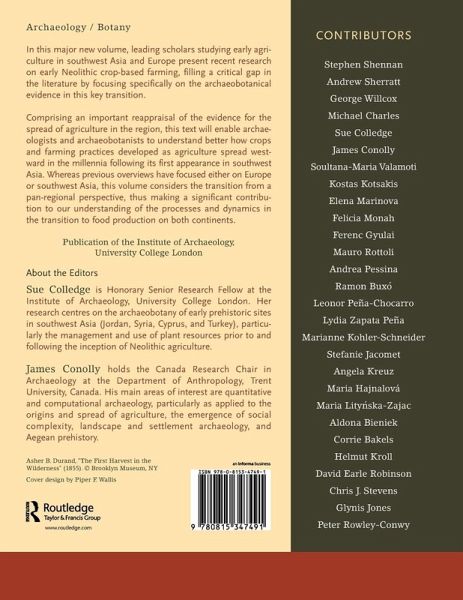
Leading scholars demonstrate the importance of archaeobotanical evidence in the understanding of the spread of agriculture in southwest Asia and Europe.
Andere Kunden interessierten sich auch für
The Origins and Spread of Domestic Plants in Southwest Asia and Europe180,99 €
The Origins and Spread of Domestic Animals in Southwest Asia and Europe48,99 €
The Origins and Spread of Domestic Animals in Southwest Asia and Europe185,99 €
I. J. ThorpeThe Origins of Agriculture in Europe52,99 €
I. J. ThorpeThe Origins of Agriculture in Europe167,99 €
Maxine E. McBrinnArchaeology of the Southwest64,99 €
Tracing Transitions and Connecting Communities in the Archaeology of Southwest Asia52,99 €-
-
-
Leading scholars demonstrate the importance of archaeobotanical evidence in the understanding of the spread of agriculture in southwest Asia and Europe.
Produktdetails
- Produktdetails
- Verlag: Routledge
- Seitenzahl: 464
- Erscheinungstermin: 18. Dezember 2017
- Englisch
- Abmessung: 280mm x 216mm x 25mm
- Gewicht: 1158g
- ISBN-13: 9780815347491
- ISBN-10: 0815347499
- Artikelnr.: 52008567
- Herstellerkennzeichnung
- Libri GmbH
- Europaallee 1
- 36244 Bad Hersfeld
- gpsr@libri.de
- Verlag: Routledge
- Seitenzahl: 464
- Erscheinungstermin: 18. Dezember 2017
- Englisch
- Abmessung: 280mm x 216mm x 25mm
- Gewicht: 1158g
- ISBN-13: 9780815347491
- ISBN-10: 0815347499
- Artikelnr.: 52008567
- Herstellerkennzeichnung
- Libri GmbH
- Europaallee 1
- 36244 Bad Hersfeld
- gpsr@libri.de
Sue Colledge, James Conolly
1: Diverse origins: regional contributions to the genesis of farming; 2:
The adoption of farming and the beginnings of the Neolithic in the
Euphrates valley: cereal exploitation between the 12th and 8th millennia
cal BC; 3: East of Eden? A consideration of neolithic crop spectra in the
eastern Fertile Crescent and beyond; 4: A review and synthesis of the
evidence for the origins of farming on Cyprus and Crete; 5: Transitions to
agriculture in the Aegean: the archaeobotanical evidence; 6:
Archaeobotanical data from the early Neolithic of Bulgaria; 7: The spread
of cultivated plants in the region between the Carpathians and Dniester,
6th-4th millennia cal BC; 8: Seed and fruit remains associated with
neolithic origins in the Carpathian Basin; 9: Neolithic agriculture in
Italy: an update of archaeobotanical data with particular emphasis on
northern settlements; 10: Crop evolution: new evidence from the Neolithic
of west Mediterranean Europe; 11: Early agriculture in central and southern
Spain; 12: First farmers along the coast of the Bay of Biscay; 13: Early
agriculture and subsistence in Austria: a review of neolithic plant
records; 14: Neolithic plant economies in the northern Alpine Foreland from
5500-3500 cal BC; 15: Archaeobotanical perspectives on the beginning of
agriculture north of the Alps; 16: Early farming in Slovakia: an
archaeobotanical perspective; 17: Early neolithic agriculture in south
Poland as reconstructed from archaeobotanical plant remains; 18: Neolithic
plant husbandry in the Kujawy region of central Poland; 19: Nature or
culture? Cereal crops raised by neolithic farmers on Dutch loess soils; 20:
The plant remains from the Neolithic Funnel Beaker site of Wangels in
Holsatia, northern Germany 1; 21: Exploitation of plant resources in the
Mesolithic and Neolithic of southern Scandinavia: from gathering to
harvesting; 22: Reconsidering the evidence: towards an understanding of the
social contexts of subsistence production in neolithic Britain; 23: On the
importance of cereal cultivation in the British Neolithic
The adoption of farming and the beginnings of the Neolithic in the
Euphrates valley: cereal exploitation between the 12th and 8th millennia
cal BC; 3: East of Eden? A consideration of neolithic crop spectra in the
eastern Fertile Crescent and beyond; 4: A review and synthesis of the
evidence for the origins of farming on Cyprus and Crete; 5: Transitions to
agriculture in the Aegean: the archaeobotanical evidence; 6:
Archaeobotanical data from the early Neolithic of Bulgaria; 7: The spread
of cultivated plants in the region between the Carpathians and Dniester,
6th-4th millennia cal BC; 8: Seed and fruit remains associated with
neolithic origins in the Carpathian Basin; 9: Neolithic agriculture in
Italy: an update of archaeobotanical data with particular emphasis on
northern settlements; 10: Crop evolution: new evidence from the Neolithic
of west Mediterranean Europe; 11: Early agriculture in central and southern
Spain; 12: First farmers along the coast of the Bay of Biscay; 13: Early
agriculture and subsistence in Austria: a review of neolithic plant
records; 14: Neolithic plant economies in the northern Alpine Foreland from
5500-3500 cal BC; 15: Archaeobotanical perspectives on the beginning of
agriculture north of the Alps; 16: Early farming in Slovakia: an
archaeobotanical perspective; 17: Early neolithic agriculture in south
Poland as reconstructed from archaeobotanical plant remains; 18: Neolithic
plant husbandry in the Kujawy region of central Poland; 19: Nature or
culture? Cereal crops raised by neolithic farmers on Dutch loess soils; 20:
The plant remains from the Neolithic Funnel Beaker site of Wangels in
Holsatia, northern Germany 1; 21: Exploitation of plant resources in the
Mesolithic and Neolithic of southern Scandinavia: from gathering to
harvesting; 22: Reconsidering the evidence: towards an understanding of the
social contexts of subsistence production in neolithic Britain; 23: On the
importance of cereal cultivation in the British Neolithic
1: Diverse origins: regional contributions to the genesis of farming; 2:
The adoption of farming and the beginnings of the Neolithic in the
Euphrates valley: cereal exploitation between the 12th and 8th millennia
cal BC; 3: East of Eden? A consideration of neolithic crop spectra in the
eastern Fertile Crescent and beyond; 4: A review and synthesis of the
evidence for the origins of farming on Cyprus and Crete; 5: Transitions to
agriculture in the Aegean: the archaeobotanical evidence; 6:
Archaeobotanical data from the early Neolithic of Bulgaria; 7: The spread
of cultivated plants in the region between the Carpathians and Dniester,
6th-4th millennia cal BC; 8: Seed and fruit remains associated with
neolithic origins in the Carpathian Basin; 9: Neolithic agriculture in
Italy: an update of archaeobotanical data with particular emphasis on
northern settlements; 10: Crop evolution: new evidence from the Neolithic
of west Mediterranean Europe; 11: Early agriculture in central and southern
Spain; 12: First farmers along the coast of the Bay of Biscay; 13: Early
agriculture and subsistence in Austria: a review of neolithic plant
records; 14: Neolithic plant economies in the northern Alpine Foreland from
5500-3500 cal BC; 15: Archaeobotanical perspectives on the beginning of
agriculture north of the Alps; 16: Early farming in Slovakia: an
archaeobotanical perspective; 17: Early neolithic agriculture in south
Poland as reconstructed from archaeobotanical plant remains; 18: Neolithic
plant husbandry in the Kujawy region of central Poland; 19: Nature or
culture? Cereal crops raised by neolithic farmers on Dutch loess soils; 20:
The plant remains from the Neolithic Funnel Beaker site of Wangels in
Holsatia, northern Germany 1; 21: Exploitation of plant resources in the
Mesolithic and Neolithic of southern Scandinavia: from gathering to
harvesting; 22: Reconsidering the evidence: towards an understanding of the
social contexts of subsistence production in neolithic Britain; 23: On the
importance of cereal cultivation in the British Neolithic
The adoption of farming and the beginnings of the Neolithic in the
Euphrates valley: cereal exploitation between the 12th and 8th millennia
cal BC; 3: East of Eden? A consideration of neolithic crop spectra in the
eastern Fertile Crescent and beyond; 4: A review and synthesis of the
evidence for the origins of farming on Cyprus and Crete; 5: Transitions to
agriculture in the Aegean: the archaeobotanical evidence; 6:
Archaeobotanical data from the early Neolithic of Bulgaria; 7: The spread
of cultivated plants in the region between the Carpathians and Dniester,
6th-4th millennia cal BC; 8: Seed and fruit remains associated with
neolithic origins in the Carpathian Basin; 9: Neolithic agriculture in
Italy: an update of archaeobotanical data with particular emphasis on
northern settlements; 10: Crop evolution: new evidence from the Neolithic
of west Mediterranean Europe; 11: Early agriculture in central and southern
Spain; 12: First farmers along the coast of the Bay of Biscay; 13: Early
agriculture and subsistence in Austria: a review of neolithic plant
records; 14: Neolithic plant economies in the northern Alpine Foreland from
5500-3500 cal BC; 15: Archaeobotanical perspectives on the beginning of
agriculture north of the Alps; 16: Early farming in Slovakia: an
archaeobotanical perspective; 17: Early neolithic agriculture in south
Poland as reconstructed from archaeobotanical plant remains; 18: Neolithic
plant husbandry in the Kujawy region of central Poland; 19: Nature or
culture? Cereal crops raised by neolithic farmers on Dutch loess soils; 20:
The plant remains from the Neolithic Funnel Beaker site of Wangels in
Holsatia, northern Germany 1; 21: Exploitation of plant resources in the
Mesolithic and Neolithic of southern Scandinavia: from gathering to
harvesting; 22: Reconsidering the evidence: towards an understanding of the
social contexts of subsistence production in neolithic Britain; 23: On the
importance of cereal cultivation in the British Neolithic