116,99 €
inkl. MwSt.
Versandkostenfrei*Erscheint vorauss. 11. Juni 2026
Melden Sie sich
hier
hier
für den Produktalarm an, um über die Verfügbarkeit des Produkts informiert zu werden.

58 °P sammeln
Andere Kunden interessierten sich auch für
 Paradox And The Family System68,99 €
 The Paradox of Internet Groups158,99 €
 Within The Paradox34,99 €
 The Immigrant Paradox in Children and Adolescents59,99 €
 The loneliness paradox13,99 €
 The Wealth Paradox31,99 €
 The Paradox of Loss87,99 €





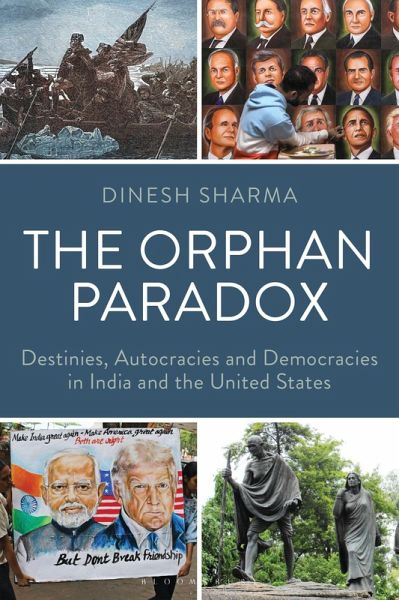
Dinesh Sharma provides a psycho-historical analysis of Indian democratic leaders and US democratic leaders to untangle how Western, educated, industrialized, rich, democratic data assumptions apply not only to psychological sciences but to most of the Western social sciences as well. As democratic institutions around the world come under threat, it is useful to compare the founders of the oldest constitutional democracy, the United States, with the largest populace democracy, India, to examine what the future of democratic societies may hold. Sharma compares the founding fathers of America, George Washington, Thomas Jefferson, and James Madison with their Indian counterparts, namely Mahatma Gandhi, Pandit Jawaharlal Nehru, and B. R. Ambedkar. While the struggle to build democratic institutions is a constant theme in the lives and works of these men over the eighteenth and nineteenth centuries, the cultural and historical contexts of their life narratives offer a critique not only of democracy, but how to better understand leadership across cultures and histories in an increasingly globalized and interconnected world.