
Andere Kunden interessierten sich auch für
 The Oxford Handbook of Human Resource Management81,99 €
 The Oxford Handbook of Organizational Change and Innovation225,99 €
 The Oxford Handbook of Critical Management Studies73,99 €
 The Oxford Handbook of Open Innovation171,99 €
 The Oxford Handbook of Individual Differences in Organizational Contexts168,99 €
 The Oxford Handbook of Regulation193,99 €
 The Oxford Handbook of Sociology and Organization Studies74,99 €







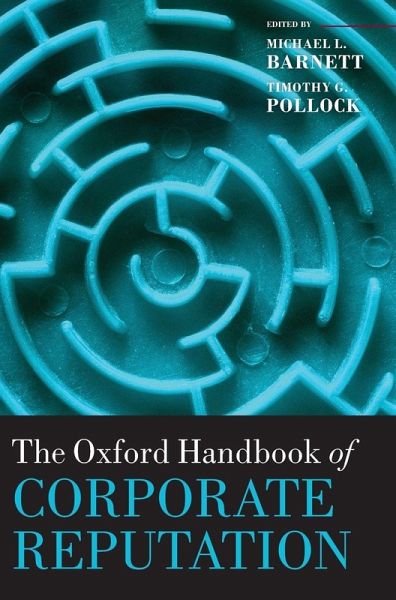
The Handbook offers a diverse set of scholarly perspectives on the nature of corporate reputation: what it is, where it comes from, and how it may be managed to create and protect corporate as well as societal value. Written and organized in an accessible way, it assesses the current state of the field and provides guidance for future research.
What does it mean to have a "good" or "bad" reputation? How does it create or destroy value, or shape chances to pursue particular opportunities? Where do reputations come from? How do we measure them? How do we build and manage them?
Over the last twenty years the answers to these questions have become increasingly important-and increasingly problematic-for scholars and practitioners seeking to understand the creation, management, and role of reputation in corporate life. This Handbook intends to bring definitional clarity to these issues, giving an account of extant research and theory and offering guidance about where scholarship on corporate reputation might most profitably head. Eminent scholars from a variety of
disciplines, such as management, sociology, economics, finance, history, marketing, and psychology, have contributed chapters to provide state of the art definitions of corporate reputation; differentiate reputation from other constructs and intangible assets; offer guidance on measuring reputation;
consider the role of reputation as a corporate asset and how a variety of factors, including stage of life, nation of origin, and the stakeholders considered affect its ability to create value; and explore corporate reputation's role more broadly as a regulatory mechanism. Finally, they also discuss how to manage and grow reputations, as well as repair them when they are damaged.
In discussing these issues this Handbook aims to move the field of corporate reputation research forward by demonstrating where the field is now, addressing some of the perpetual problems of definition and differentiation, and suggesting future research directions.
What does it mean to have a "good" or "bad" reputation? How does it create or destroy value, or shape chances to pursue particular opportunities? Where do reputations come from? How do we measure them? How do we build and manage them?
Over the last twenty years the answers to these questions have become increasingly important-and increasingly problematic-for scholars and practitioners seeking to understand the creation, management, and role of reputation in corporate life. This Handbook intends to bring definitional clarity to these issues, giving an account of extant research and theory and offering guidance about where scholarship on corporate reputation might most profitably head. Eminent scholars from a variety of
disciplines, such as management, sociology, economics, finance, history, marketing, and psychology, have contributed chapters to provide state of the art definitions of corporate reputation; differentiate reputation from other constructs and intangible assets; offer guidance on measuring reputation;
consider the role of reputation as a corporate asset and how a variety of factors, including stage of life, nation of origin, and the stakeholders considered affect its ability to create value; and explore corporate reputation's role more broadly as a regulatory mechanism. Finally, they also discuss how to manage and grow reputations, as well as repair them when they are damaged.
In discussing these issues this Handbook aims to move the field of corporate reputation research forward by demonstrating where the field is now, addressing some of the perpetual problems of definition and differentiation, and suggesting future research directions.