Versandkostenfrei innerhalb Deutschlands
239,99 €
inkl. MwSt.
Versandkostenfrei*
Erscheint vorauss. 16. April 2026
Melden Sie sich
hier
hier
für den Produktalarm an, um über die Verfügbarkeit des Produkts informiert zu werden.

120 °P sammeln
- Gebundenes Buch
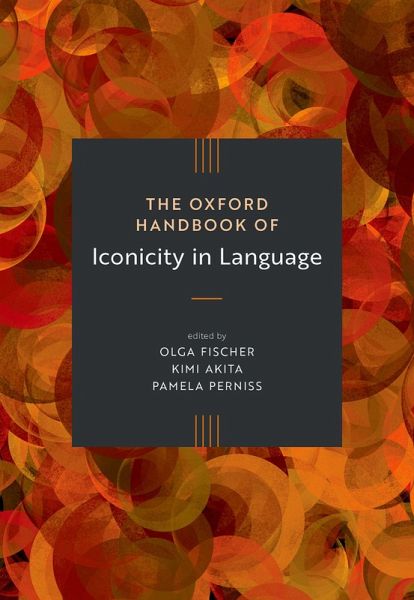
This volume offers a comprehensive guide to the role that iconicity - resemblance between form and meaning - plays in all modes of languages, on all levels of language, and in all aspects of language. It brings together research exploring a wide range of topics in iconicity from a variety of perspectives.
Andere Kunden interessierten sich auch für
 HORN LAURENCE R / WARD G GREGORYThe Handbook of Pragmatics74,99 €
 Mark TurnerThe Literary Mind78,99 €
 The Oxford Handbook of Archaeology and Language239,99 €
 The Oxford Handbook of Ritual Language181,99 €
 The Oxford Handbook of Language Prosody223,99 €
 The Oxford Handbook of the French Language185,99 €
 The Oxford Handbook of Approaches to Language Evolution181,99 €
-
-
-







This volume offers a comprehensive guide to the role that iconicity - resemblance between form and meaning - plays in all modes of languages, on all levels of language, and in all aspects of language. It brings together research exploring a wide range of topics in iconicity from a variety of perspectives.
Produktdetails
- Produktdetails
- Verlag: Oxford University Press
- Seitenzahl: 1104
- Erscheinungstermin: 16. April 2026
- Englisch
- ISBN-13: 9780192849489
- ISBN-10: 0192849484
- Artikelnr.: 74794446
- Herstellerkennzeichnung
- Libri GmbH
- Europaallee 1
- 36244 Bad Hersfeld
- gpsr@libri.de
- Verlag: Oxford University Press
- Seitenzahl: 1104
- Erscheinungstermin: 16. April 2026
- Englisch
- ISBN-13: 9780192849489
- ISBN-10: 0192849484
- Artikelnr.: 74794446
- Herstellerkennzeichnung
- Libri GmbH
- Europaallee 1
- 36244 Bad Hersfeld
- gpsr@libri.de
Olga Fischer is Professor Emerita of Germanic Linguistics at the University of Amsterdam. She is the author of Morphosyntactic Change: Functional and Formal Perspectives (OUP 2007), co-author of A Brief History of English Syntax (CUP 2017), founder and co-editor of the Iconicity in Language and Literature series (Benjamins 1999-present), and chief editor of Folia Linguistica (2016-2023). She has edited volumes on grammaticalization and syntactic change (Benjamins 2000, 2004), and has published widely in these areas in academic journals such as Journal of Linguistics, Diachronica, Transactions of the Philological Society, and Studies in Language. Kimi Akita is Associate Professor in the School of Humanities at Nagoya University. His research interests include ideophones, sound symbolism, and linguistic typology. He has published in major journals, including Linguistics, Cognitive Linguistics, Cognitive Science, and Journal of Linguistics. He is the co-editor of Iconicity: East Meets West (Benjamins 2015), The Grammar of Japanese Mimetics: Perspectives from Structure, Acquisition, and Translation (Routledge 2017), and Ideophones, Mimetics and Expressives (Benjamins 2019). Pamela Perniss is Professor in the Faculty of Human Sciences and Chair of the Sign Language Interpreting (DGS-German) program at the University of Cologne. Her research takes a multimodal approach to language and focuses in particular on the role of iconicity in the visual modality in shaping language structure and processing. She has co-edited volumes and special issues related to the study of iconicity, including in the series Iconicity in Language and Literature (Benjamins 2020) and in Language and Cognition (CUP 2020). She is General Editor of Sign Language & Linguistics and Associate Editor of Cognitive Science.
* 1: Olga Fischer, Pamela Perniss, and Kimi Akita: Introduction:
Iconicity as a general principle underlying language and language
behavior
* Part I. Foundational issues in iconicity
* 2: Luca Nobile: Iconicity in classical philosophy: A legacy of
prehistoric orality
* 3: Winfried Nöth: Peirce on icons and iconicity
* 4: John E. Joseph: Saussure and iconicity: The ghost in the machine?
* 5: Hendrik De Smet: nalogy and iconicity
* 6: Sonia Cristofaro: Iconicity in language typology
* 7: Ludovic De Cuypere: The explanatory power of iconicity in language
* 8: Thomas Berg: Frequency, variation, and iconicity
* Part II. Iconicity in linguistic theorizing
* 9: Diego Gabriel Krivochen and L'udmila Lacková Bennett: Iconicity
and generative grammar
* 10: Elzbieta Muskat-Tabakowska: Iconicity in cognitive and functional
linguistics
* 11: Bodo Winter, Greg Woodin, and Marcus Perlman: Defining iconicity
for the cognitive sciences
* 12: Vincent M. Colapietro: Embodied mind
* Part III. (Morpho)phonology
* 13: Marcus Perlman: Iconic prosody and its connection to iconic
gesture
* 14: David M. Sidhu: Experimental approaches to sound symbolism
* 15: Niklas Erben Johansson: Cross-linguistic vocal iconicity
* 16: Iraide Ibarretxe-Antuñano: The segmentals and suprasegmentals of
ideophones
* 17: Oksana Tkachman: Iconicity in formational properties of signs in
sign languages
* Part IV. Iconicity in writing systems
* 18: Dimitrios Meletis: Phonographic writing systems
* 19: Xinxin Zhao: Logographic writing systems and Chinese characters
* 20: Sybille Krämer: Notational iconicity
* Part V. Morphosyntax
* 21: Wolfgang U. Dressler and Marianne Kilani-Schoch: Iconicity in
word formation
* 22: Thomas Schwaiger: Reduplication in spoken and signed language
* 23: Lívia Körtvélyessy: Iconicity in diminutives and augmentatives
* 24: Carl Börstell: Iconic plurality across modalities
* 25: Isabeau De Smet and Freek Van de Velde: Iconicity in verbal
formation
* 26: Klaas Willems: Principles of diagrammatic iconicity in language
* 27: Stela Manova: The iconicity of affix order
* 28: Anita Slonimska: Iconicity in simultaneous constructions in sign
languages
* Part VI. Lexis and semantics
* 29: Janis B. Nuckolls: The enactive iconicity of ideophone semantics
* 30: Anatoly Liberman: Etymology and folk etymology
* 31: Silva H. Ladewig: Degrees of iconicity in gestures: From richness
to schematicity
* 32: Michal Szawerna and Neil Cohn: Iconicity in the visual lexicons
of comics
* Part VII. Discourse
* 33: James H.-Y. Tai: Iconic sequencing in spoken and signed language
* 34: Yanna Popova: Iconic and non-iconic aspects of storytelling:
Narrative fiction, temporality, and memory
* 35: Lindsay Ferrara: Iconicity in signed narratives
* Part VIII. Iconicity and language learning/ language development
* 36: Catherine Laing and Beyza Sümer: Iconic bootstrapping for
language development: One size does not fit all
* 37: Gerardo Ortega, Yukari Hirata, and Spencer Kelly: Iconicity in L2
learning
* 38: Peter Bakker: Iconicity in pidgins and creoles
* 39: Lotte Meteyard: Effects of iconicity in populations with speech,
language, and communication needs
* Part IX. Iconicity and language processing
* 40: Robin L. Thompson and Corrine Occhino: Iconicity in sign language
processing: Lexical effects in comprehension and production
* 41: Bonnie McLean and Yasamin Motamedi: A robustness approach to
operationalizations of iconicity
* 42: Arash Aryani: Iconicity in the mind: Unravelling the cognitive
and neural pathways linking sound and meaning
* Part X. Iconicity and language evolution and emergence
* 43: Nicolas Fay and Bradley Walker: Sign iconicity and its
contribution to gesture-first theories of language origin
* 44: Christine Cuskley and Kees Sommer: The evolution of linguistic
iconicity and the cross-modal cognitive suite
* 45: Bencie Woll: Iconicity, multi-modality, and language evolution
* 46: Maria Flaksman: De-iconization and (re)-iconization: Diachronic
aspects of lexical iconicity in spoken languages
* 47: William J. Herlofsky: De-iconization and re-iconization in signed
languages: The case of Japanese sign language
* 48: Loïs Dona and Marieke Schouwstra: Iconicity in the evolution of
language: Computational models and laboratory experiments
* 49: Brian D. Joseph: Language contact and iconicity
* Part XI. Applications of iconicity
* 50: Federico Gobbo: Iconicity in invented languages
* 51: Christina Ljungberg: Iconicity in literature
* 52: John Haiman: The aesthetic motivation of icons: 'We first love
things when first we see them painted'
* 53: Imogen Cohen and Eric Metz: Translation of iconicity: Iconicity
of translation
Iconicity as a general principle underlying language and language
behavior
* Part I. Foundational issues in iconicity
* 2: Luca Nobile: Iconicity in classical philosophy: A legacy of
prehistoric orality
* 3: Winfried Nöth: Peirce on icons and iconicity
* 4: John E. Joseph: Saussure and iconicity: The ghost in the machine?
* 5: Hendrik De Smet: nalogy and iconicity
* 6: Sonia Cristofaro: Iconicity in language typology
* 7: Ludovic De Cuypere: The explanatory power of iconicity in language
* 8: Thomas Berg: Frequency, variation, and iconicity
* Part II. Iconicity in linguistic theorizing
* 9: Diego Gabriel Krivochen and L'udmila Lacková Bennett: Iconicity
and generative grammar
* 10: Elzbieta Muskat-Tabakowska: Iconicity in cognitive and functional
linguistics
* 11: Bodo Winter, Greg Woodin, and Marcus Perlman: Defining iconicity
for the cognitive sciences
* 12: Vincent M. Colapietro: Embodied mind
* Part III. (Morpho)phonology
* 13: Marcus Perlman: Iconic prosody and its connection to iconic
gesture
* 14: David M. Sidhu: Experimental approaches to sound symbolism
* 15: Niklas Erben Johansson: Cross-linguistic vocal iconicity
* 16: Iraide Ibarretxe-Antuñano: The segmentals and suprasegmentals of
ideophones
* 17: Oksana Tkachman: Iconicity in formational properties of signs in
sign languages
* Part IV. Iconicity in writing systems
* 18: Dimitrios Meletis: Phonographic writing systems
* 19: Xinxin Zhao: Logographic writing systems and Chinese characters
* 20: Sybille Krämer: Notational iconicity
* Part V. Morphosyntax
* 21: Wolfgang U. Dressler and Marianne Kilani-Schoch: Iconicity in
word formation
* 22: Thomas Schwaiger: Reduplication in spoken and signed language
* 23: Lívia Körtvélyessy: Iconicity in diminutives and augmentatives
* 24: Carl Börstell: Iconic plurality across modalities
* 25: Isabeau De Smet and Freek Van de Velde: Iconicity in verbal
formation
* 26: Klaas Willems: Principles of diagrammatic iconicity in language
* 27: Stela Manova: The iconicity of affix order
* 28: Anita Slonimska: Iconicity in simultaneous constructions in sign
languages
* Part VI. Lexis and semantics
* 29: Janis B. Nuckolls: The enactive iconicity of ideophone semantics
* 30: Anatoly Liberman: Etymology and folk etymology
* 31: Silva H. Ladewig: Degrees of iconicity in gestures: From richness
to schematicity
* 32: Michal Szawerna and Neil Cohn: Iconicity in the visual lexicons
of comics
* Part VII. Discourse
* 33: James H.-Y. Tai: Iconic sequencing in spoken and signed language
* 34: Yanna Popova: Iconic and non-iconic aspects of storytelling:
Narrative fiction, temporality, and memory
* 35: Lindsay Ferrara: Iconicity in signed narratives
* Part VIII. Iconicity and language learning/ language development
* 36: Catherine Laing and Beyza Sümer: Iconic bootstrapping for
language development: One size does not fit all
* 37: Gerardo Ortega, Yukari Hirata, and Spencer Kelly: Iconicity in L2
learning
* 38: Peter Bakker: Iconicity in pidgins and creoles
* 39: Lotte Meteyard: Effects of iconicity in populations with speech,
language, and communication needs
* Part IX. Iconicity and language processing
* 40: Robin L. Thompson and Corrine Occhino: Iconicity in sign language
processing: Lexical effects in comprehension and production
* 41: Bonnie McLean and Yasamin Motamedi: A robustness approach to
operationalizations of iconicity
* 42: Arash Aryani: Iconicity in the mind: Unravelling the cognitive
and neural pathways linking sound and meaning
* Part X. Iconicity and language evolution and emergence
* 43: Nicolas Fay and Bradley Walker: Sign iconicity and its
contribution to gesture-first theories of language origin
* 44: Christine Cuskley and Kees Sommer: The evolution of linguistic
iconicity and the cross-modal cognitive suite
* 45: Bencie Woll: Iconicity, multi-modality, and language evolution
* 46: Maria Flaksman: De-iconization and (re)-iconization: Diachronic
aspects of lexical iconicity in spoken languages
* 47: William J. Herlofsky: De-iconization and re-iconization in signed
languages: The case of Japanese sign language
* 48: Loïs Dona and Marieke Schouwstra: Iconicity in the evolution of
language: Computational models and laboratory experiments
* 49: Brian D. Joseph: Language contact and iconicity
* Part XI. Applications of iconicity
* 50: Federico Gobbo: Iconicity in invented languages
* 51: Christina Ljungberg: Iconicity in literature
* 52: John Haiman: The aesthetic motivation of icons: 'We first love
things when first we see them painted'
* 53: Imogen Cohen and Eric Metz: Translation of iconicity: Iconicity
of translation
* 1: Olga Fischer, Pamela Perniss, and Kimi Akita: Introduction:
Iconicity as a general principle underlying language and language
behavior
* Part I. Foundational issues in iconicity
* 2: Luca Nobile: Iconicity in classical philosophy: A legacy of
prehistoric orality
* 3: Winfried Nöth: Peirce on icons and iconicity
* 4: John E. Joseph: Saussure and iconicity: The ghost in the machine?
* 5: Hendrik De Smet: nalogy and iconicity
* 6: Sonia Cristofaro: Iconicity in language typology
* 7: Ludovic De Cuypere: The explanatory power of iconicity in language
* 8: Thomas Berg: Frequency, variation, and iconicity
* Part II. Iconicity in linguistic theorizing
* 9: Diego Gabriel Krivochen and L'udmila Lacková Bennett: Iconicity
and generative grammar
* 10: Elzbieta Muskat-Tabakowska: Iconicity in cognitive and functional
linguistics
* 11: Bodo Winter, Greg Woodin, and Marcus Perlman: Defining iconicity
for the cognitive sciences
* 12: Vincent M. Colapietro: Embodied mind
* Part III. (Morpho)phonology
* 13: Marcus Perlman: Iconic prosody and its connection to iconic
gesture
* 14: David M. Sidhu: Experimental approaches to sound symbolism
* 15: Niklas Erben Johansson: Cross-linguistic vocal iconicity
* 16: Iraide Ibarretxe-Antuñano: The segmentals and suprasegmentals of
ideophones
* 17: Oksana Tkachman: Iconicity in formational properties of signs in
sign languages
* Part IV. Iconicity in writing systems
* 18: Dimitrios Meletis: Phonographic writing systems
* 19: Xinxin Zhao: Logographic writing systems and Chinese characters
* 20: Sybille Krämer: Notational iconicity
* Part V. Morphosyntax
* 21: Wolfgang U. Dressler and Marianne Kilani-Schoch: Iconicity in
word formation
* 22: Thomas Schwaiger: Reduplication in spoken and signed language
* 23: Lívia Körtvélyessy: Iconicity in diminutives and augmentatives
* 24: Carl Börstell: Iconic plurality across modalities
* 25: Isabeau De Smet and Freek Van de Velde: Iconicity in verbal
formation
* 26: Klaas Willems: Principles of diagrammatic iconicity in language
* 27: Stela Manova: The iconicity of affix order
* 28: Anita Slonimska: Iconicity in simultaneous constructions in sign
languages
* Part VI. Lexis and semantics
* 29: Janis B. Nuckolls: The enactive iconicity of ideophone semantics
* 30: Anatoly Liberman: Etymology and folk etymology
* 31: Silva H. Ladewig: Degrees of iconicity in gestures: From richness
to schematicity
* 32: Michal Szawerna and Neil Cohn: Iconicity in the visual lexicons
of comics
* Part VII. Discourse
* 33: James H.-Y. Tai: Iconic sequencing in spoken and signed language
* 34: Yanna Popova: Iconic and non-iconic aspects of storytelling:
Narrative fiction, temporality, and memory
* 35: Lindsay Ferrara: Iconicity in signed narratives
* Part VIII. Iconicity and language learning/ language development
* 36: Catherine Laing and Beyza Sümer: Iconic bootstrapping for
language development: One size does not fit all
* 37: Gerardo Ortega, Yukari Hirata, and Spencer Kelly: Iconicity in L2
learning
* 38: Peter Bakker: Iconicity in pidgins and creoles
* 39: Lotte Meteyard: Effects of iconicity in populations with speech,
language, and communication needs
* Part IX. Iconicity and language processing
* 40: Robin L. Thompson and Corrine Occhino: Iconicity in sign language
processing: Lexical effects in comprehension and production
* 41: Bonnie McLean and Yasamin Motamedi: A robustness approach to
operationalizations of iconicity
* 42: Arash Aryani: Iconicity in the mind: Unravelling the cognitive
and neural pathways linking sound and meaning
* Part X. Iconicity and language evolution and emergence
* 43: Nicolas Fay and Bradley Walker: Sign iconicity and its
contribution to gesture-first theories of language origin
* 44: Christine Cuskley and Kees Sommer: The evolution of linguistic
iconicity and the cross-modal cognitive suite
* 45: Bencie Woll: Iconicity, multi-modality, and language evolution
* 46: Maria Flaksman: De-iconization and (re)-iconization: Diachronic
aspects of lexical iconicity in spoken languages
* 47: William J. Herlofsky: De-iconization and re-iconization in signed
languages: The case of Japanese sign language
* 48: Loïs Dona and Marieke Schouwstra: Iconicity in the evolution of
language: Computational models and laboratory experiments
* 49: Brian D. Joseph: Language contact and iconicity
* Part XI. Applications of iconicity
* 50: Federico Gobbo: Iconicity in invented languages
* 51: Christina Ljungberg: Iconicity in literature
* 52: John Haiman: The aesthetic motivation of icons: 'We first love
things when first we see them painted'
* 53: Imogen Cohen and Eric Metz: Translation of iconicity: Iconicity
of translation
Iconicity as a general principle underlying language and language
behavior
* Part I. Foundational issues in iconicity
* 2: Luca Nobile: Iconicity in classical philosophy: A legacy of
prehistoric orality
* 3: Winfried Nöth: Peirce on icons and iconicity
* 4: John E. Joseph: Saussure and iconicity: The ghost in the machine?
* 5: Hendrik De Smet: nalogy and iconicity
* 6: Sonia Cristofaro: Iconicity in language typology
* 7: Ludovic De Cuypere: The explanatory power of iconicity in language
* 8: Thomas Berg: Frequency, variation, and iconicity
* Part II. Iconicity in linguistic theorizing
* 9: Diego Gabriel Krivochen and L'udmila Lacková Bennett: Iconicity
and generative grammar
* 10: Elzbieta Muskat-Tabakowska: Iconicity in cognitive and functional
linguistics
* 11: Bodo Winter, Greg Woodin, and Marcus Perlman: Defining iconicity
for the cognitive sciences
* 12: Vincent M. Colapietro: Embodied mind
* Part III. (Morpho)phonology
* 13: Marcus Perlman: Iconic prosody and its connection to iconic
gesture
* 14: David M. Sidhu: Experimental approaches to sound symbolism
* 15: Niklas Erben Johansson: Cross-linguistic vocal iconicity
* 16: Iraide Ibarretxe-Antuñano: The segmentals and suprasegmentals of
ideophones
* 17: Oksana Tkachman: Iconicity in formational properties of signs in
sign languages
* Part IV. Iconicity in writing systems
* 18: Dimitrios Meletis: Phonographic writing systems
* 19: Xinxin Zhao: Logographic writing systems and Chinese characters
* 20: Sybille Krämer: Notational iconicity
* Part V. Morphosyntax
* 21: Wolfgang U. Dressler and Marianne Kilani-Schoch: Iconicity in
word formation
* 22: Thomas Schwaiger: Reduplication in spoken and signed language
* 23: Lívia Körtvélyessy: Iconicity in diminutives and augmentatives
* 24: Carl Börstell: Iconic plurality across modalities
* 25: Isabeau De Smet and Freek Van de Velde: Iconicity in verbal
formation
* 26: Klaas Willems: Principles of diagrammatic iconicity in language
* 27: Stela Manova: The iconicity of affix order
* 28: Anita Slonimska: Iconicity in simultaneous constructions in sign
languages
* Part VI. Lexis and semantics
* 29: Janis B. Nuckolls: The enactive iconicity of ideophone semantics
* 30: Anatoly Liberman: Etymology and folk etymology
* 31: Silva H. Ladewig: Degrees of iconicity in gestures: From richness
to schematicity
* 32: Michal Szawerna and Neil Cohn: Iconicity in the visual lexicons
of comics
* Part VII. Discourse
* 33: James H.-Y. Tai: Iconic sequencing in spoken and signed language
* 34: Yanna Popova: Iconic and non-iconic aspects of storytelling:
Narrative fiction, temporality, and memory
* 35: Lindsay Ferrara: Iconicity in signed narratives
* Part VIII. Iconicity and language learning/ language development
* 36: Catherine Laing and Beyza Sümer: Iconic bootstrapping for
language development: One size does not fit all
* 37: Gerardo Ortega, Yukari Hirata, and Spencer Kelly: Iconicity in L2
learning
* 38: Peter Bakker: Iconicity in pidgins and creoles
* 39: Lotte Meteyard: Effects of iconicity in populations with speech,
language, and communication needs
* Part IX. Iconicity and language processing
* 40: Robin L. Thompson and Corrine Occhino: Iconicity in sign language
processing: Lexical effects in comprehension and production
* 41: Bonnie McLean and Yasamin Motamedi: A robustness approach to
operationalizations of iconicity
* 42: Arash Aryani: Iconicity in the mind: Unravelling the cognitive
and neural pathways linking sound and meaning
* Part X. Iconicity and language evolution and emergence
* 43: Nicolas Fay and Bradley Walker: Sign iconicity and its
contribution to gesture-first theories of language origin
* 44: Christine Cuskley and Kees Sommer: The evolution of linguistic
iconicity and the cross-modal cognitive suite
* 45: Bencie Woll: Iconicity, multi-modality, and language evolution
* 46: Maria Flaksman: De-iconization and (re)-iconization: Diachronic
aspects of lexical iconicity in spoken languages
* 47: William J. Herlofsky: De-iconization and re-iconization in signed
languages: The case of Japanese sign language
* 48: Loïs Dona and Marieke Schouwstra: Iconicity in the evolution of
language: Computational models and laboratory experiments
* 49: Brian D. Joseph: Language contact and iconicity
* Part XI. Applications of iconicity
* 50: Federico Gobbo: Iconicity in invented languages
* 51: Christina Ljungberg: Iconicity in literature
* 52: John Haiman: The aesthetic motivation of icons: 'We first love
things when first we see them painted'
* 53: Imogen Cohen and Eric Metz: Translation of iconicity: Iconicity
of translation